

Mashua
Estimated Inventory, lb : 0

Description/Taste
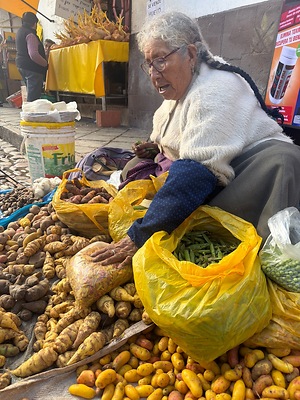
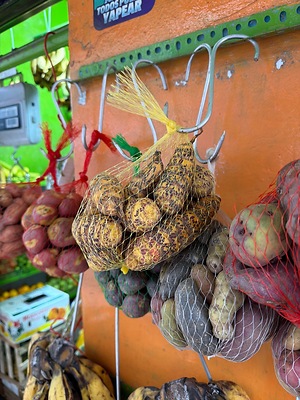
Mashua varies in size and shape depending on the variety and cultivation conditions, with most tubers averaging 5 to 30 centimeters in length. The tubers are cylindrical to conical and often feature one curved, bulbous, sloping end that tapers to a pointed tip. The skin is semi-thick, taut, and waxy, being easily wiped and cleaned due to its smooth surface. The tuber is also covered in shallow to deep-set eyes, giving the surface a bumpy consistency. Each tuber will vary in its irregularity, and some may be smoother while others will have a higher concentration of eyes. Mashua displays shades of white, yellow, orange, variegated, red, and dark purple, sometimes appearing almost black. Variegated tubers exhibit colored eyes, striping, and small markings. Underneath the surface, flesh is dense, firm, crisp, and succulent when raw. Once cooked, they develop a crisp exterior and a tender, soft interior. Mashua will vary in aroma and flavor among varieties. Raw tubers have a characteristic peppery, sharp, sometimes bitter, and pungent flavor. Once cooked, the flavor mellows and develops a sweeter, earthy taste with cabbage or radish-like nuances.
Seasons/Availability
Mashua is available at varying times throughout the year, depending on the specific growing region and elevation. In the Andean highlands, the tubers are typically harvested from April through January.
Current Facts
Mashua, botanically classified as Tropaeolum tuberosum, is a tuberous plant native to the Andean Highlands, belonging to the Tropaeolaceae family. There are over 100 varieties of Mashua, varying in color, shape, and flavor, and these tubers are often sold collectively under the general Mashua name rather than individual varietal monikers. Yellow Mashua is one of the most common colors seen in local markets. The Mashua featured in the photograph above is described as a variegated yellow variety with purple eyes, and popular cultivars with this color pattern include but are not limited to Ahahawat, Lima, and Puca-Añu. Mashua, in general, is not commercially produced on a large scale and is an ancestral Andean tuber grown by communities to preserve its longstanding history as a food and medicine. The tubers are harvested 6 to 9 months after planting and are the least cultivated of the four main Andean tubers, grown in much smaller quantities than potatoes, oca, and ulluco. Mashua is also known as Allausu, Añu, Apiñamama, Mishua, Masua, Yana Mashua, and Maswa in Peru; Apilla, Isaño, Ocaquisaño, Chi'yar isaño, and Isaño Negro in Bolivia; Cubios, Navios, Navos, Pane, and Puel in Colombia; and Majua and Maxua in Ecuador. Despite its limited production, Mashua is a traditional tuber valued for its earthy, peppery, and pungent flavor and high nutritional properties. The tubers are grown by farmers and home gardeners at high altitudes and are harvested by hand, valued for their high yields. Once harvested, the tuber is incorporated into a wide array of sweet and savory culinary preparations.
Nutritional Value
Mashua varies in nutritional properties depending on its color and growing conditions. In general, Mashua is a source of fiber to regulate digestion and contains vitamins A, B, C, and E, which contribute to energy production, protect the cells against free radical damage, maintain healthy organs, and strengthen the immune system. Mashua also provides minerals in varying amounts, including calcium, phosphorus, iron, magnesium, zinc, copper, and manganese. These minerals help the body produce red blood cells, support bone and tooth formation, regulate nerve function, and build the protein hemoglobin, which transports oxygen in the bloodstream. In natural medicines, Mashua is used in folk remedies for its antimicrobial and anti-inflammatory properties. Portions of the plant are also crushed and applied topically to help reduce pain, irritation, and swelling.
Applications
Mashua is a versatile tuber and can be consumed raw or cooked. Each variety will range in flavor intensity, and milder types are sliced thin and tossed into salads. Mashua can also be pickled as a tangy condiment, shredded into slaws, or mixed into rice dishes. In addition to being fresh, Mashua develops a softer consistency when heated, enhancing the flavor and texture in dishes. The tubers are popularly boiled, roasted, baked, and fried, and are simmered into soups and stews as a filling ingredient. They are also tossed into stir-fries, incorporated into gratins and casseroles, or boiled and served as a simple accompaniment to roasted meats. In the Andean Highlands, it is common to leave some of the more bitter varieties of Mashua tubers in the sun for several days to convert their starches into sugar, making them sweeter. They are also traditionally dried into Mashua Chuña, allowing the dehydrated tubers to serve as a food source during times of scarcity. Mashua is primarily used in savory dishes, but it is occasionally found in homemade sweet recipes for jams and desserts. The tubers are also dried, ground into flour, and used to make porridges, puddings, and other baked goods. While less common, the tubers are added to tea and juiced as a health-boosting drink. The flowers and leaves are also eaten and added to soups and salads, or the buds are pickled like capers. Mashua pairs well with flavorings like cinnamon, ginger, and chili peppers, as well as with corn, tomatoes, eggplant, and other Andean tubers such as oca, ulluco, and potatoes. Fresh Mashua will keep for several weeks when stored in a cool, dark place.
Ethnic/Cultural Info
Mashua is known for containing isothiocyanates, naturally occurring phytochemicals that give the plant its spicy, pungent flavor. These compounds, along with glucosinolates, give the plant a natural resistance to pests in fields and gardens. Throughout the Andean Highlands, Mashua plants are often intercropped with other Andean tubers and vegetables as a pest deterrent and companion plant. Their spicy aroma helps mask the scent of other plants, and the roots release compounds to protect against fungi and soil bacteria. Mashua plants also attract beneficial pollinators with their flowers, increasing pollination and harvests.
Geography/History
Mashua is native to the Andean Highlands of South America and has been collected as a food source since pre-Hispanic times. The species is hypothesized to have a native range spanning Colombia, Ecuador, Peru, and Bolivia, and thrives at elevations of 2,800 to 4,300 meters, a region where other crops struggle to survive. Mashua tubers were depicted on ancient pottery, notably from the Nazca culture in Southern Peru, between 100 BCE and 800 CE, and domestication is thought to have occurred extensively in Andean communities across Peru. Over time, several varieties of Mashua arose, varying in flavor, shape, and color. Mashua has historically been cultivated as a smaller crop compared to other native tubers like oca and potatoes. Today, Mashua remains prevalent in its native regions, and smaller quantities have been found in Chile and Argentina. The species was also introduced as an ornamental and possible commercial crop in select gardens worldwide. When in season in South America, Mashua is sold at local markets by vendors. It is also processed into powders and offered through online health retailers.
Recipe Ideas
Recipes that include Mashua. One
 is easiest, three is harder.
| Recetas Andinas |
|
Sopa de Mashua |
| One Community Global |
|
Cooked Mashua |

Mashua for sale around the world shared on the Specialty Produce App