





Etrog Citron
Estimated Inventory, 8 ct : 0

Description/Taste
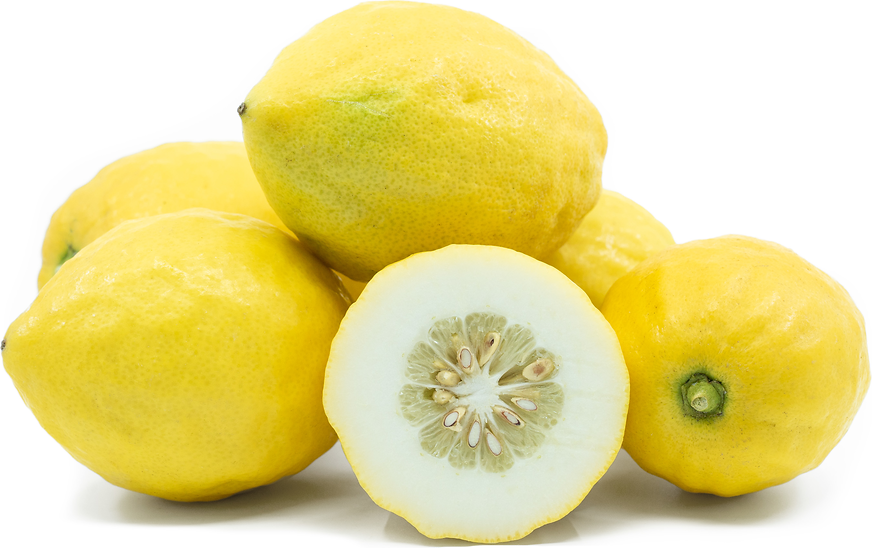
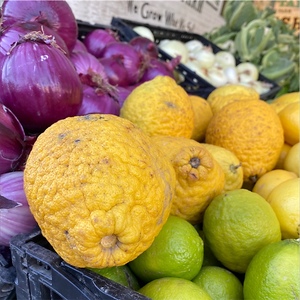
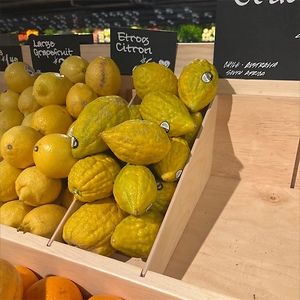
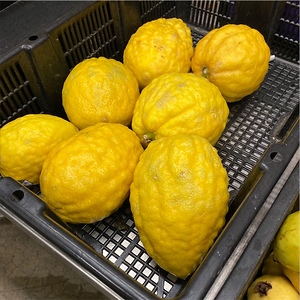
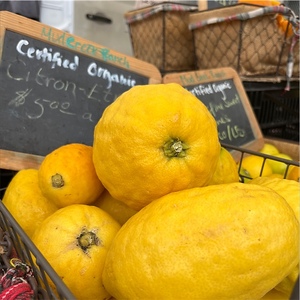
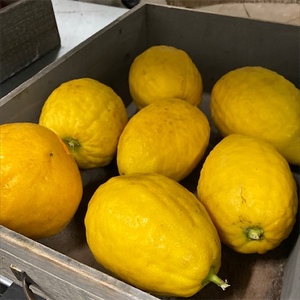
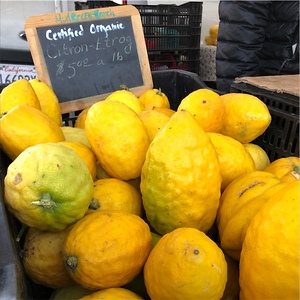
Etrog varies in size and appearance depending on cultivation conditions, but is typically sold in markets when it reaches 10 to 15 centimeters in length. The fruits range from oval, oblong, football, to teardrop-shaped, often with one flattened, curved end and one tapered, pointed end. The surface has a characteristic thick, bumpy, and ridged rind, and the textured, glossy skin is also covered in oil glands that emit an aromatic, floral, bright, and citrusy fragrance when scratched. Etrog ripens from green to golden yellow and is collected at any desired coloring for religious purposes. One defining characteristic of an Etrog is the pitam or dried flower stigma that extends from the non-stem end. This attached pitam is one of the most important traits found in Etrog used for religious purposes. Underneath the rind, there is a thick, white, and spongy pith, and the fruits contain mostly pith with little to no flesh. Depending on the variety, if it has pale-yellow flesh, it is divided into segments and is firm and dry, with little juice, encasing many cream-colored seeds. Etrog pith is generally mild with floral, sour, sweet, and subtly bitter notes, and the flesh is acidic and sour, reminiscent of the taste of lemons.
Seasons/Availability
Etrog is typically available from mid-summer through fall for religious purposes, and from fall through winter for culinary use.
Current Facts
Etrog, botanically classified as Citrus medica, is a specialty type of citron, belonging to the Rutaceae family. The name Etrog is a Hebrew term for citron and is also written as Esrog, Esrig, and Ethrog in the singular form, and Etrogim, Esrogs, and Esrogim in the plural form. It is worth noting that Etrog is not a distinct species, but rather a citron that is grown according to specific standards. The fruits grow on small, evergreen, and shrubby trees, which are less vigorous and productive than other citrus types, making them challenging to cultivate. Etrog is annually used by Jewish communities worldwide during Sukkot, a seven-day Jewish harvest festival and religious commemoration. Popular cultivars include Diamante, Braverman, Lefkovich, Kibilevitch, Yemen, and Halperin types, which are regionally grown in different parts of the world. Despite these named types, most fruits are collectively sold as Etrog and are valued for their fragrance, symbolism, and appearance. Etrog has also expanded in modern Hebrew usage to include any type of citron, both for religious and non-religious purposes, but most fruits under this name worldwide are sold at premium prices for the intention of using the fruits as a symbolic element.
Nutritional Value
Etrog is a source of fiber that aids in digestion and has been used in traditional medicine throughout history as a soothing remedy for nausea and stomach pain. The citron also provides vitamins B6 and C to strengthen the immune system and support brain health. While the species has not been extensively researched for its nutritional properties, it contains some minerals in varying amounts, including calcium, iron, manganese, zinc, and potassium. These minerals help the body develop strong bones and teeth, produce the protein hemoglobin for oxygen transport through the bloodstream, control daily nerve functions, and balance fluid levels within the body. Other historical uses include the citrus being cooked into a syrup for migraines or made into a cosmetic spray to improve the skin. Some Jewish families believe that consuming Etrog jam, made from the fruit used for religious blessings, will ease the pains of childbirth. Etrog is also pierced with dried cloves and used as a natural air freshener in homes, or it is made into homemade soaps.
Applications
Etrog is primarily used for spiritual purposes, but it is sometimes customary for families to incorporate the fruits into various drinks and culinary preparations after the religious festivities. The fruits are prized for their fragrant rind and pith more than their juicy nature. It is important to note that the fruits must be grown organically if they are going to be consumed. The seeds are discarded from the flesh, and the little juice can be squeezed and set aside for dressings, sauces, and drinks. It is common for the juice to be mixed with carbonated beverages to make a fragrant soda or incorporated into cocktails, tea, and other drinks for its floral, bright, and citrusy taste. The Etrog is valued for its pith and is popularly candied or pickled. Candied rind and pith are served as a sweet snack or chopped and sprinkled over cakes and ice cream. When making the candied peels, preserve the syrup created in the pot and use it for fruit parfaits and other desserts. Pickled rind is added to fish dishes, salads, or stuffed into dates with toasted almonds. Etrog is simmered into jams, jellies, and marmalades, or it can be used to flavor roasted chicken and various rice dishes. The citron pairs well with fruits such as peaches, cherries, berries, and pears, nuts like hazelnuts, almonds, and pecans, and flavorings including vanilla and basil. Whole, unsliced Etrog will keep for 2 to 4 weeks when stored in a cool, dry place away from direct sunlight. In the refrigerator, the fruit will last for 3 to 8 weeks.
Ethnic/Cultural Info
Etrog is one of the four species used in Sukkot, a Jewish harvest festival also known as the Feast of the Tabernacles. The seven-day fall celebration is held to remember the Israelites' pilgrimage from Egypt to the Temple in Jerusalem. Etrog is believed to be the “fruit of the Godly tree” mentioned in the Old Testament and is traditionally used during prayers. During the morning blessing, an Etrog is held in one hand while willow branches, myrtle branches, and a palm branch are held in the other. These items are then waved around in six directions to symbolize unity and the respectable characteristics of the Jewish community, including knowledge of the Torah and good deeds. Etrog used in Jewish traditions must meet several standards, including the tree not being grafted, the fruit being unblemished, and the pitam or flower remnants remaining intact on the end of the fruit. Some fruits also exhibit a concave shape in the center, referred to as a gartel. This shape is formed in the early stages of fruiting and is a natural phenomenon. The word “gartel” is derived from Yiddish for “belt” and refers to a type of accessory sometimes worn by select Jewish communities during prayer. Fruits with this tapered shape are valued for their symbolism and are sought after by some, being sold at higher price points for their rarity.
Geography/History
Etrog is a general descriptor for citron species that are descendants of ancient types found in China. Scientists hypothesize that the Yunnan province of southwestern China may have been the site of origin. From China, citron was carried into northeastern India through trade routes and human migration and later spread throughout Asia. Around 518 CE, it is thought that citron may have been transported to Persia after Darius I conquered parts of India, absorbing the regions into the Achaemenid Persian Empire. Over time, citron was established throughout Persia, spreading into the Middle East and Eastern Europe, and eventually became a part of Jewish traditions. The citron used for these traditions was called an Etrog and was depicted on coins during the Great Jewish Revolt, from 66 to 70 CE, and the Bar Kokhba Revolt, from 132 to 136 CE. The Etrog was later spread worldwide and thrived in the warm Mediterranean climate, particularly in Italy, Greece, and Spain. The species was also planted in Turkey and Northern Africa. Today, Etrog is commercially cultivated worldwide and is a challenging crop to grow. The plant is sensitive to temperature and is primarily produced from seed for religious purposes. Other commercial orchards graft the species onto hardier rootstock, but these fruits are not used for Jewish traditions. When in season, Etrog is sold directly through growers, select fresh markets, and retailers. During Sukkot, fruits are prevalent in Jewish communities and are sold by street vendors as well as in stores. Some fruits are also sold to families from orchards in advance, before the fruits have ripened. In the United States, Etrog is grown in small quantities in California and is also imported from Israel, Italy, Morocco, Greece, and a few other countries.
Recipe Ideas
Recipes that include Etrog Citron. One
 is easiest, three is harder.
| Joy of Kosher |
|
Etrog Cake |
| David Lebovitz |
|
Glazed Citron |
| Not Derby Pie |
|
Etrog Marmalade |

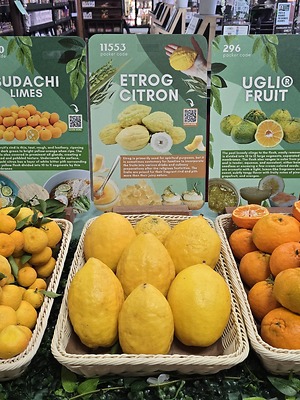
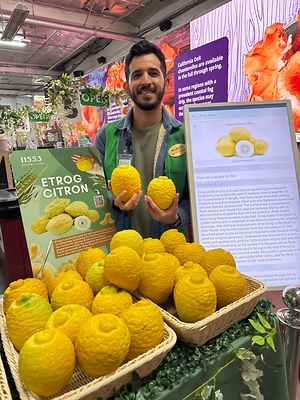
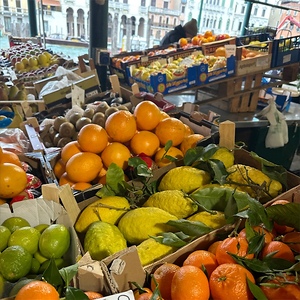
Etrog Citron for sale around the world shared on the Specialty Produce App


Check out our QR code Library to download QR Codes that link to our fruit encyclopedia.
Use on your signage and other promotions to share the knowledge!
Use on your signage and other promotions to share the knowledge!



