This website uses cookies, pixels, and other tracking technologies to personalize content, analyze how our site and apps are used, and create aggregated statistics.
We disclose data about site and app users to third parties so we can target our ads to you on other websites, and those third parties may use that data for their own purposes.
For more information on how we collect, use, and disclose this information, please review our
Privacy Policy.
Continued use of this site means you consent to our Privacy Policy.
Summary generated by our research from the article below.
Description/Taste
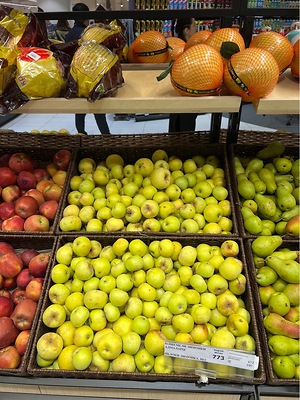
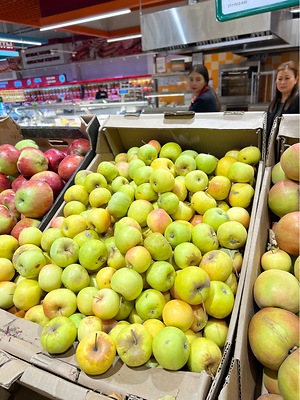
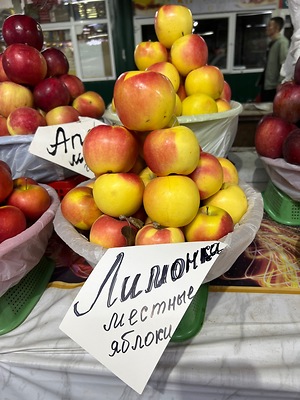
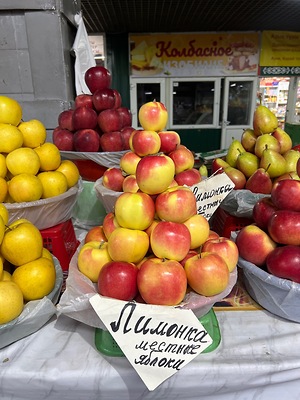
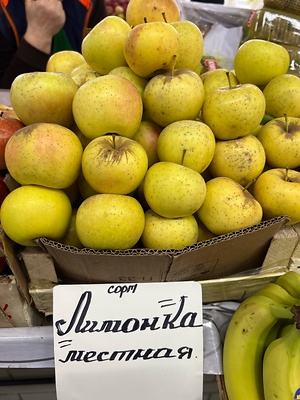
Limonka apples are medium to large fruits with a conical to circular, slightly flattened shape. The skin is thin, smooth, and glossy, appearing yellow-green when unripe, maturing to golden yellow hues with patches of red-orange blush. The skin is also slightly ribbed, dotted with lenticels, and covered in a layer of wax. Underneath the surface, the flesh is pale yellow to ivory, dense, fine-grained, and aqueous, encasing a central core filled with black-brown seeds. Limonka apples bear a subtle, pleasant aroma and have a sweet flavor mixed with a hint of tangy sourness.
Seasons/Availability
Limonka apples are available in the fall and winter.
Current Facts
Limonka apples, botanically classified as Malus domestica, are a rare variety belonging to the Rosaceae family. The golden fruits earned their lemon moniker for the light acidity contained within the flesh, giving the apple a hint of sourness when consumed. Limonka apples are also known as Reneath Burkhard, Lemon apples, and Yabloko Limonka, and the mature trees can reach up to 6 meters in height. The trees begin bearing fruit within 2 to 6 years, and the variety was once highly favored in Central Asian home gardens for its flavor, growth characteristics, and extended storage capabilities. In the modern-day, Limonka apples are challenging to find as they are not commercially cultivated and are mainly used to create new hybrid apples.
Nutritional Value
Limonka apples provide vitamin C to strengthen the immune system and potassium to balance fluid levels within the body. The apples also contain iron, calcium, and some citric acid, a mild acid that contributes to the fruit’s slight sourness.
Applications
Limonka apples are considered a dessert variety valued for their sweet, subtly tart flavor. The apples can be consumed straight, out of hand, or they can be sliced and tossed into salads, grain bowls, fruit bowls, and coleslaws. Limonka apples can also be blended into smoothies, juiced for beverages, or pureed into apple sauce. In addition to fresh preparations, Limonka apples can be incorporated into cakes, pies, tarts, crumbles, and other baked goods, or they can be cooked into jams, jellies, and preserves. Limonka apples are appreciated by home chefs for their bright flavoring and are mainly utilized for compotes. Limonka apples pair well with spices such as cinnamon, nutmeg, and cloves, vanilla, maple syrup, and chocolate. Whole, unwashed Limonka apples will keep for 2 to 3 months when properly stored in a cool, dry, and dark place.
Ethnic/Cultural Info
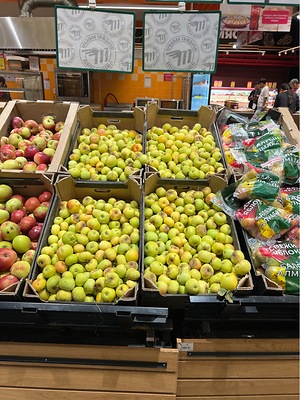
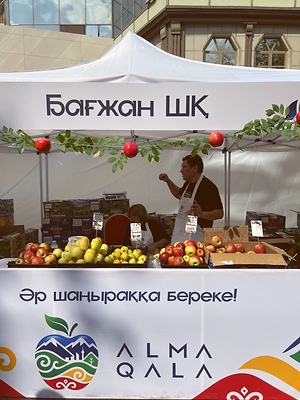
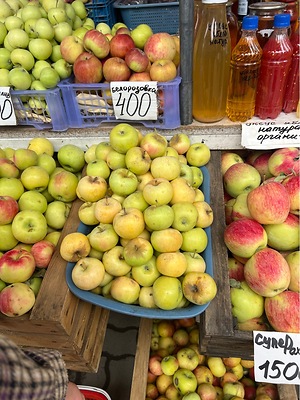
Limonka apples are closely associated with Almaty, Kazakhstan, as the specific terroir of the region is believed by experts to contribute to the apple’s sweet-tart, lemon-like flavor. The variety was once a prevalent home garden cultivar, but due to the influx of imported apples, especially from China, and new hybrids better suited for faster commercial production, Limonka apples have largely been forgotten. In Almaty, the apples are primarily found on abandoned plots of land or in old gardens. Select apple growers in the Almaty region still cultivate a few Limonka trees on their land for local sale. The Limonka apples featured in the photograph above were discovered at the Central Green Market in Almaty, Kazakhstan. The Green Market, also known as the Green Bazar, is a location steeped in tradition where Almaty residents could buy and sell fresh local produce. In the present day, it remains a gathering place for vendors and Almaty residents to purchase quality produce, premade food, and specialty goods.
Geography/History
Limonka apples are native to Central Asia. The exact origin of the variety is unknown, but experts believe the cultivar was created from a natural cross between a renet simirenko and granny smith apple. Limonka apples were registered as an official variety with the Russian Federation in the mid 20th century, and the apples are commonly found in fertile forest growing regions. Today Limonka apples are difficult to find and are mainly grown in Central Russia and in the Kyzylorda, Almaty, and Zhambyl regions of Kazakhstan.
Galmart
Zholdasbekov street, Almaty, Almaty
Limonka apples are still available!...Limonka apples: These rare apples, also known as Reneath Burkhard or Lemon apples, are botanically classified as Malus domestica. Their light acidity gives them a subtle sourness. Originally favored in Central Asian gardens for flavor and resilience, they are now hard to find due to a lack of commercial cultivation. Mature trees can grow up to 6 meters tall and bear fruit in 2 to 6 years, with the apples often used in developing hybrid varieties.
Magnum
Delicious Limonka apples of South East Kazakhstan…Limonka apples exhibit a striking appearance with their golden yellow hues and red-orange blush as they ripen. The smooth, glossy skin is thin and slightly ribbed, dotted with lenticels and a natural waxy coating. Beneath the surface, the flesh is pale yellow to ivory, dense, and fine-grained, offering a juicy texture. Their flavor profile balances sweetness with a tangy sour hint, making them both aromatic and refreshing.
Magnum Cash & Carry
улица Радостовцa, Almaty, Almaty
+7 (800) 070-94-70
Limonka apples grown on rich soil of Ile Alatau foothills…Limonka apples are appreciated as a versatile dessert variety known for their sweet and subtly tart flavor. Beyond eating fresh, they are ideal for salads, smoothies, apple sauce, and baked goods like pies or tarts. They pair beautifully with spices like cinnamon, nutmeg, and cloves, as well as with chocolate and vanilla. Stored unwashed in cool, dry, dark conditions, they can remain fresh for 2 to 3 months.
Applefest
Limonka apples of Kazakhstan…Limonka apples were officially registered as a variety with the Russian Federation during the mid-20th century. They are believed to have originated from a natural cross between Renet Simirenko and Granny Smith apples. While now rare, they grow primarily in the fertile forest regions of Central Russia and Kazakhstan, particularly in Kyzylorda, Almaty, and Zhambyl.
Magnum Express
Есенәлиев көшесі, Almaty
+7 (727) 339-73-40
Limonka apples grown on the foothills of Ile Alatau mountains…Limonka apples are a rare variety of Malus domestica, renowned for their light acidity that gives them a touch of sourness. Also called Lemon apples or Yabloko Limonka, these golden fruits were once popular in Central Asian gardens for their flavor, growth traits, and storability. Although no longer commercially grown, they remain valuable for creating new hybrid apple varieties, and their trees can grow up to 6 meters tall, bearing fruit within 2 to 6 years.
Magnum Cash & Carry
мкр. Орбита-3, Almaty, Almaty
+7 (800) 070-94-70
Limonka apples of Kazakhstan are finally in season!...Limonka apples are a dessert variety known for their sweet, subtly tart flavor. They are versatile and can be consumed fresh, added to salads, fruit bowls, or coleslaws, blended into smoothies, or juiced. They enhance baked goods like pies and tarts and are often used in compotes. Pair them with cinnamon, nutmeg, or vanilla for a delightful flavor combination. When stored unwashed in a cool, dry place, Limonka apples can last for 2 to 3 months.
Зеленый базар
Zhybek Zholy prospekt, Almaty, Almaty
Limonka apples of Kazakhstan…Limonka apples were officially registered as a variety in the mid-20th century by the Russian Federation. Experts believe they originated from a natural cross between a renet simirenko and granny smith apple. These apples thrive in fertile forest regions and are primarily grown in Central Russia and Kazakhstan's Kyzylorda, Almaty, and Zhambyl areas. They are rare and not widely cultivated today.
Зеленый базар// Green Market
Zhybek Zholy prospekt, Almaty, Almaty
Limonka apples are deeply tied to Almaty, Kazakhstan, where the region's unique terroir enhances their sweet-tart, lemon-like taste. Once common in home gardens, these apples have become rare due to the popularity of imported varieties and faster-growing hybrids. They now mainly grow on abandoned lands or in old gardens, though some local farmers continue to cultivate them. You can find Limonka apples at Almaty's historic Green Bazar, a traditional market for fresh, local produce and specialty goods.
Almaty Green Central Market
Zhibek Zholy 53, Almaty, Kazakhstan
Limonka apples of Kazakhstan...Limonka apples are known for their glossy, golden-yellow skin with red-orange blush, giving them a striking appearance. Their thin, slightly ribbed skin features lenticels and a protective wax layer. Inside, the pale yellow to ivory flesh is dense, fine-grained, and juicy, delivering a sweet taste with a tangy sourness. The apples also exude a subtle, enjoyable aroma, making them a delight both visually and in flavor.
Check out our QR code Library to download QR Codes that link to our fruit encyclopedia. Use on your signage and other promotions to share the knowledge!