



Chrysanthemum Leaves
Estimated Inventory, lb : 0

Description/Taste
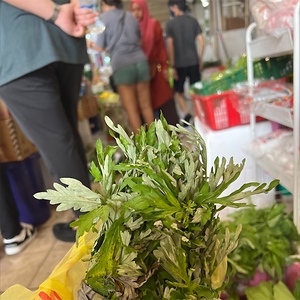
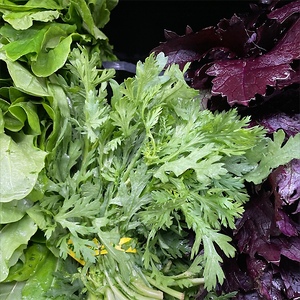
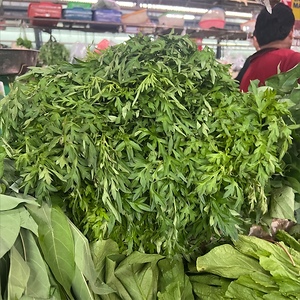
Chrysanthemum leaves vary in size and appearance, depending on maturity at harvest and the specific variety. There are several varieties generally sold under the Chrysanthemum name. The most common type is a small leaf variety that produces flat, frilly leaflets with serrated edges. These leaves grow in an alternating pattern along thinner, elongated stalks, and are featured in the photograph above. The second type found in markets is a round-leaf type. This variety has shorter, thicker stems with wider, rounder, serrated leaves. It is important to note that there may also be intermediate varieties that fall between the two main types sold in markets. Chrysanthemum leaves range in shades of light to dark green, and the leaves are typically tender, succulent, and slightly crunchy. The stems may also have a fibrous nature. The leaves are edible, raw or cooked, and have a slightly sweet, fresh, and herbaceous scent. Chrysanthemum leaves are known for their distinct taste and have a grassy, bright, herbal, semi-floral, and green flavor with bitter nuances. Younger greens will be milder, while more mature greens may carry a strong bitterness.
Seasons/Availability
Chrysanthemum leaves are available year-round, with a peak season in the winter through spring.
Current Facts
Chrysanthemum leaves, botanically classified as Glebionis coronaria, are the edible foliage of a flowering species belonging to the Asteraceae family. The name Chrysanthemum refers to a broad category of plants that once collectively grouped ornamental and culinary species together. Throughout history, some Chrysanthemum plants have been grown solely for their showy flowers, while others have been cultivated for their edible leaves and blooms. The grouping was eventually separated, and Glenbionis coronaria represents the edible plants commonly known as Crown Daisy, Garland Chrysanthemum, and Edible Chrysanthemum. Worldwide, Chrysanthemum leaves in the Glenbioni genus are known by several names in markets, especially in Asia, where they are prized as a culinary ingredient. They are most commonly sold under the names Tóng Hāo, Tong Ho, and Tung Ho in China; Shungiku or Kikuna in Japan; Ssukgat in Korea; and Tan O or Cai Cui in Vietnam. Chrysanthemum leaves are traditionally harvested before the plant flowers to ensure they have a milder, more pleasant taste, and the greens are eaten raw or cooked. Chefs and home cooks seek out Chrysanthemum leaves as a versatile green and incorporate the leaves into a wide array of fresh and cooked culinary preparations.
Nutritional Value
Chrysanthemum leaves are a source of fiber to aid digestion and contain vitamins A, B, C, and K. These vitamins contribute to energy production, maintain healthy organs, strengthen the immune system, and assist in faster wound healing. The leaves also provide varying amounts of minerals, including iron, potassium, and calcium. These minerals help the body produce the protein hemoglobin for oxygen transport throughout the bloodstream, maintain fluid balance, and support bone and tooth development. Chrysanthemum leaves are sometimes steeped as a tea and are valued for their anti-inflammatory, antifungal, and antimicrobial properties. The tea is consumed as a medicinal beverage to help boost the immune system and overall bodily health.
Applications
Chrysanthemum leaves have a distinctly herbal, subtly bitter, earthy, and bright flavor, suited to both fresh and cooked preparations. Young greens are preferred for raw dishes because they have a milder flavor and are more tender. The leaves can be incorporated into salads similarly to kale, endive, or dandelion greens, or slightly wilted in a warm vinaigrette and eaten with other rich, fatty ingredients to balance flavors. In Asia, Chrysanthemum greens are occasionally pickled or blanched and served as a simple side. They are popularly added to hot pot and other soups and stews, mixed into grain-based dishes, or stir-fried with vegetables. One well-known meal in China and Taiwan is adding the greens to oyster omelets, a favored street food. Chrysanthemum greens are also incorporated into noodle and rice dishes. In Japan, the leaves are used to make shungiku goma-ae, a savory sesame-dressed side dish. They are also added to udon, served in a simple dashi-and-soy-sauce marinade, or lightly battered and fried into tempura. In addition to the leaves, the flower petals and young buds are edible and can be cooked with the greens. The petals make an attractive garnish when scattered over dishes. Chrysanthemum leaves pair well with aromatics like shallots, onions, ginger, and garlic, mushrooms, root vegetables, legumes, and flavorings such as soy sauce, sesame, mirin, and tahini. Fresh greens should be consumed immediately for the best quality and flavor, and will only keep for a few days. The leaves, when still attached to their stems, should be wrapped in a damp paper towel and then placed into a sealed container in the refrigerator for 3 to 7 days. The leaves can also be blanched and frozen for extended use.
Ethnic/Cultural Info
Chrysanthemum leaves are a staple ingredient in sukiyaki, a Japanese hot pot dish dating back to the late Edo and Meiji Period. In the late Edo Period, meat was not a common ingredient in Japanese diets due to religious beliefs, but when the country opened its borders to Western influences in the Meiji Period, cuts of meat such as beef began to be incorporated into meals. With this introduction, one-pot dishes became popular, and two prominent cooking styles emerged: sukiyaki from the Kansai District and gyu-nabe from the Kanto District. In the modern day, there are many variations of these dishes, and sukiyaki is typically made with meat simmered in a mixture of sauces, such as soy and sugar. Other ingredients, like vegetables, are also added to the simmering liquid, and each item is removed individually and eaten with a bowl of rice. Chrysanthemum leaves add a refreshing flavor to savory sukiyaki and require only a light cooking time, making them fast and easy to consume.
Geography/History
Chrysanthemum leaves are native to the Mediterranean and have been growing wild since ancient times. The flowering plants are often seen in wild populations along roadways, in fields, and in natural landscapes, but despite their origins, they are not a common culinary ingredient in the Mediterranean. Chrysanthemum leaves are primarily known as a staple green in Asia. The early history of the species in Asia and Africa is unknown, but after its introduction, it became widely cultivated for culinary use. Some sources hypothesize it may have been brought to China sometime during the Song Dynasty, between 960 and 1279 CE. Today, Chrysanthemum leaves are eaten as a vegetable throughout Asia and have become a prominent green readily available in fresh markets, retailers, and wholesalers. The species has also been planted worldwide and is sold as a specialty green in select markets.
Recipe Ideas
Recipes that include Chrysanthemum Leaves. One
 is easiest, three is harder.

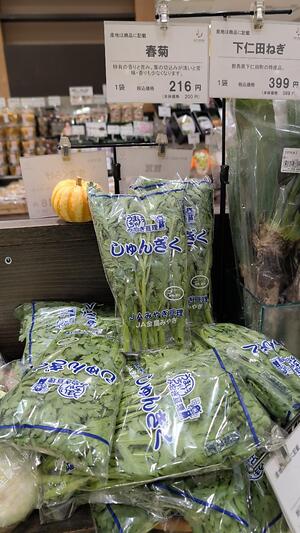
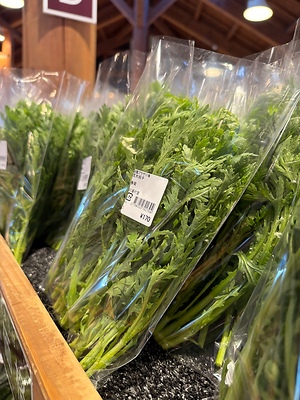
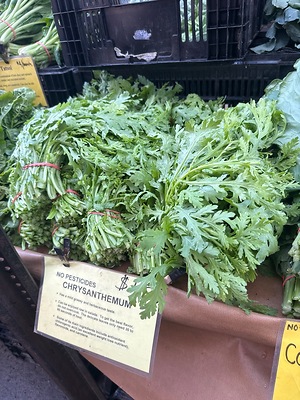
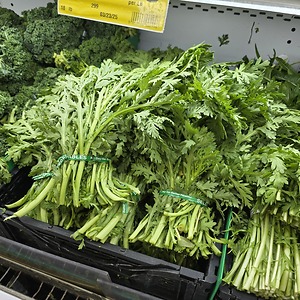
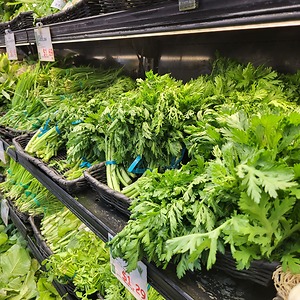
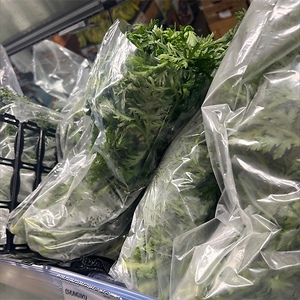
Chrysanthemum Leaves for sale around the world shared on the Specialty Produce App


Check out our QR code Library to download QR Codes that link to our fruit encyclopedia.
Use on your signage and other promotions to share the knowledge!
Use on your signage and other promotions to share the knowledge!



