



Boniato Sweet Potatoes
Estimated Inventory, 40 lbs : 0

Description/Taste
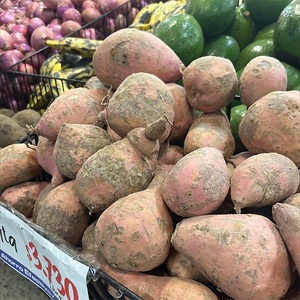
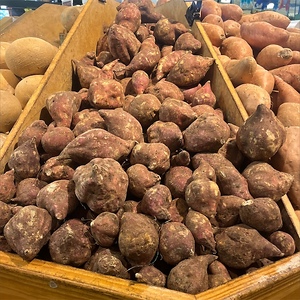
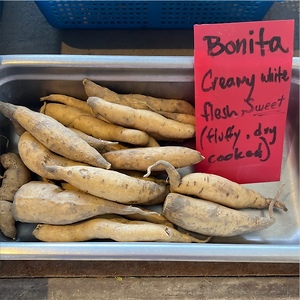
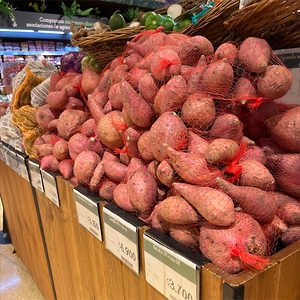
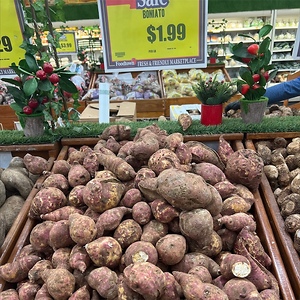
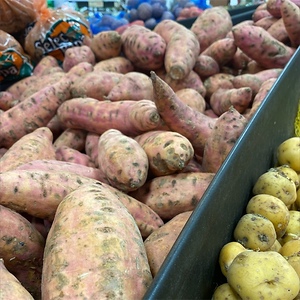
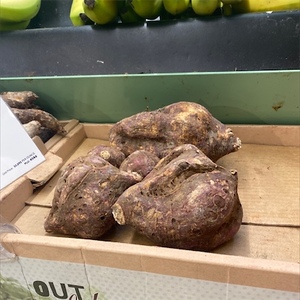
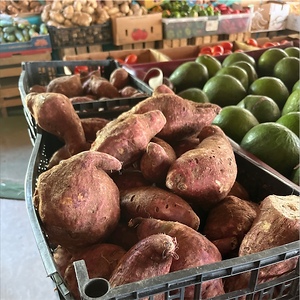
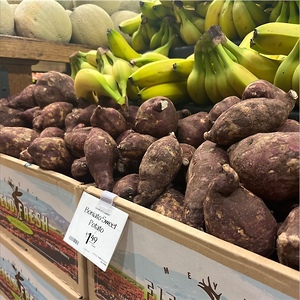
Boniato sweet potatoes vary in size and shape depending on growing conditions. They average 10 to 15 centimeters in length and are roughly ovate and bulbous with a broad center, tapering toward pointed ends. The tubers can be straight or have a slight curve and often bear distinct lumps and bumps. Boniato sweet potatoes have tougher skin than other sweet potato types, and the skin is rough, textured, and raised. The exterior is also prone to bruising as it ages. Boniato sweet potatoes showcase variegated pink, brown-purple, dusty rose, light brown, and dark brown hues. Each tuber will have a different skin color, based on the growing environment, and is speckled with shallow eyes and root hairs. Underneath the surface, the ivory to white flesh is dense, firm, and solid when raw, becoming starchy, fluffy, smooth, and dry once cooked. Boniato sweet potatoes offer a slightly fluffier consistency than other sweet potato types, but can become too dry with extended storage. The variety is edible after cooking and has a subtly sweet, nutty, earthy, and mild taste reminiscent of the flavor of chestnuts.
Seasons/Availability
Boniato sweet potatoes are available year-round.
Current Facts
Boniato sweet potatoes, botanically classified as Ipomoea batatas, are a sweet culinary variety belonging to the Convolvulaceae family. The cultivar has origins in the Americas and was spread as a versatile crop to subtropical and tropical regions worldwide. The name Boniato is said to have been derived from a word used by Spanish explorers for “harmless” or “good,” a descriptor used for their edibility. The tubers were favored for their ability to be carried on voyages and were valued for their sweet, nutty taste and filling nature. Boniato sweet potatoes are typically harvested 120 to 180 days after sowing, and several varieties are grown worldwide, including the popular cultivars Picadito and Campeon. Boniato sweet potatoes are known by many names, including Batata, Cuban sweet potato, Golden sweet potato, White sweet potato, Kumara, Kamuras, Camote, White Yam, Florida Yam, and Caribbean sweet potato. Chefs and home cooks seek the tubers for their lightly fluffy texture, mild, sweet taste, and ability to be incorporated into a wide array of sweet or savory preparations.
Nutritional Value
Boniato sweet potatoes have not been extensively studied for their nutritional properties. Some sources note they may be a source of vitamins A, B, and C to strengthen the immune system, maintain healthy organs, and contribute to energy production. Boniato sweet potatoes may also provide varying levels of minerals like potassium, magnesium, calcium, and iron. These minerals help the body balance fluid levels, control daily nerve functions, produce protein for oxygen transport through the bloodstream, and support bone and teeth health. These tubers also contain fiber to aid digestion and antioxidants to protect the body’s overall health and reduce inflammation. The plant leaves are sometimes used in medicinal healing tea in the Americas.
Applications
Boniato sweet potatoes have a mild, subtly sweet, and nutty taste suited for cooked preparations. The tubers are typically peeled and can be stuffed, baked, mashed, boiled, pureed, fried, or roasted. Boniato sweet potatoes have a short shelf life after harvest and are recommended for immediate use, as they will begin to lose their sweet taste and develop bruising. The tubers are cooked and mashed as a side dish, or the mashed flesh is fried into croquettes filled with ground beef, sometimes called papas rellenas. Boniato sweet potatoes are also used to fill empanadas and tacos, cubed and roasted, or simmered into soups, stews, and curries. The variety grows worldwide and can be used as a substitute for other types of sweet potatoes in pies, roasts, and hand-cut fries. Boiled Boniato potatoes can be served with simple sauces like mojo de ajo or a garlic sauce, or used as a base layer for main dishes. Beyond savory dishes, Boniato sweet potatoes are used in dessert recipes like puddings or pastry fillings. Boniato sweet potatoes pair well with meats like pork, beef, and poultry, raisins, nuts, including pecans, walnuts, and hazelnuts, herbs and spices like sage, cilantro, turmeric, nutmeg, cloves, and cardamom. Whole, unwashed Boniato sweet potatoes will keep for 7 to 10 days when stored in a cool, dry, and dark location.
Ethnic/Cultural Info
Boniato sweet potatoes are often served as an accompaniment to ropa vieja, Cuba’s national dish. Ropa vieja has origins in Spain and is thought to be over 500 years old. The name ropa vieja translates from Spanish to mean “old clothes,” and legend has it that a man once shredded his clothes to feed his starving family. As he cooked the clothes in water, he prayed that the dish would turn into something nourishing for his family. The clothes transformed into beef and vegetables, allowing his family to eat well for the night. While this tale is only lore, the beloved dish was spread worldwide with Spanish colonization, eventually being introduced into Cuba through Sephardic Jews from the Iberian Peninsula. It was customary for Sephardic Jews to cook the stew the night before the Sabbath, as they were not allowed to cook during the time of rest. Ropa vieja is also said to be named after the appearance of the beef in the tomato-based stew, as the beef has a slightly shredded nature after being cooked. The hearty, flavorful dish has evolved over time into many variations, and in Cuba, ropa vieja is customarily served with Boniato sweet potatoes. The potatoes are traditionally mashed and mixed with salt, pepper, cilantro, milk, and butter.
Geography/History
Boniato sweet potatoes are derived from ancient varieties with origins in the Americas. The history of Boniato is mostly unknown, but sweet potatoes, in general, were domesticated over time in the Americas. As new varieties were created, the tubers spread through trade and human migration, expanding availability, cultivation, and diversity. Boniato sweet potatoes were hypothesized to have been introduced to Asia through early explorers before the 13th century and were also carried by European explorers in the 15th and 16th centuries to Europe. Today, Boniato sweet potatoes are found in tropical and subtropical climates worldwide and commercially cultivated in Central and South America, the Caribbean, East and Southeast Asia, and Florida. The tubers are sold through fresh markets, retailers, and select wholesalers in their growing regions.
Recipe Ideas
Recipes that include Boniato Sweet Potatoes. One
 is easiest, three is harder.
| The Domestic Man |
|
Mashed Boniato |

Boniato Sweet Potatoes for sale around the world shared on the Specialty Produce App


Check out our QR code Library to download QR Codes that link to our fruit encyclopedia.
Use on your signage and other promotions to share the knowledge!
Use on your signage and other promotions to share the knowledge!



