



Red Kuri Squash
Estimated Inventory, 25 lbs : 1.80
This item was last sold on : 10/31/26

Description/Taste
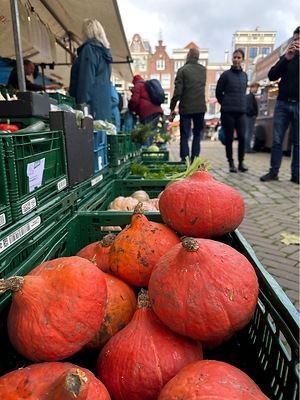
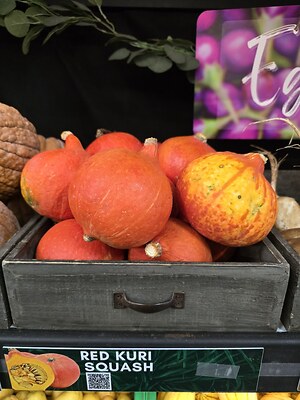
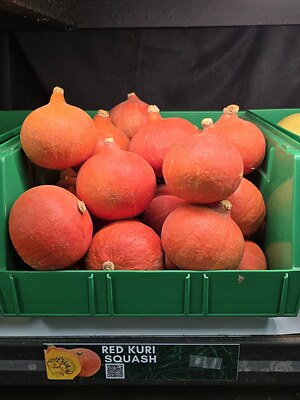
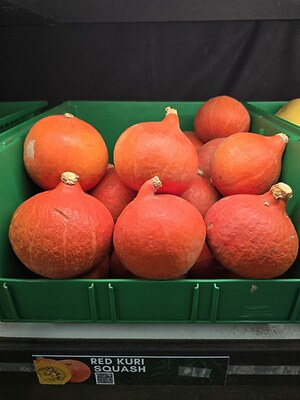
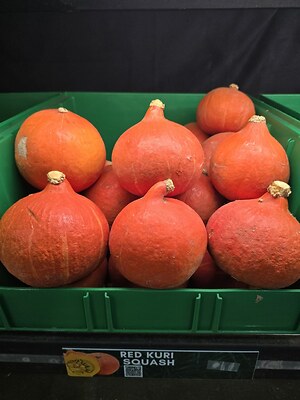
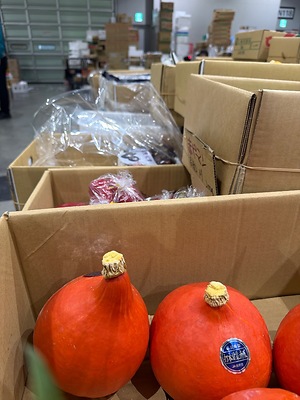
Red Kuri squash varies in size depending on growing conditions, but is primarily a smaller winter squash, averaging 15 to 18 centimeters in diameter. The variety has a tapered, teardrop-like shape with a broad, curved base and is picked between 0.5 and 3 kilograms in weight. The skin, also known as a rind, is thin, semi-smooth, firm, and taut, sometimes bearing a lightly bumpy texture beneath the surface. Some squashes may have superficial scarring that does not affect the quality of the flesh, and the stem is dry, fibrous, and woody. Mature Red Kuri squash showcases a vibrant, red-orange hue with some light orange to tan, vertical striping. Underneath the surface, the pale orange-yellow flesh is dense, thick, and dry when raw, becoming soft and slightly starchy once cooked. The flesh also encases a large central cavity filled with stringy pulp and flat, cream-colored seeds. These seeds are edible and can be used in separate preparations from the flesh. Red Kuri squash is consumed once cooked and is known for its mild, sweet, and nutty flavor.
Seasons/Availability
Red Kuri squash is typically harvested in the summer through fall. Each growing region will have different harvest dates within this range. In Japan, peak season occurs around August and September, while in North America and Europe, the squash is generally found in September through November. Once harvested, Red Kuri squash can be cured and professionally stored for retail sale through the winter and early spring.
Current Facts
Red Kuri squash, botanically classified as Cucurbita maxima, is a type of winter squash belonging to the Cucurbitaceae family. The variety was created in Japan in the early 20th century and was later introduced worldwide as a specialty winter squash for culinary purposes. Red Kuri squash grows on sprawling vines extending 3 to 4 meters in length, and each plant produces around 2 to 3 squashes per season, maturing 95 to 120 days after sowing. The variety was selectively bred to have an easy-to-manage, smaller size, bright coloring, and sweet, nutty flavor. It is worth noting that other cultivars have also been developed over time, showcasing blue and green rinds, but Red Kuri squash is the most popular coloring grown worldwide. Red Kuri squash has a versatile flavor and texture, allowing chefs and home cooks to incorporate the squash into a wide array of sweet and savory cooked culinary dishes.
Nutritional Value
Red Kuri squash is a source of fiber to aid digestion and vitamins A, B, and C to maintain healthy organs, strengthen the immune system, and contribute to energy production. Red Kuri squash also provides minerals in varying amounts, including potassium, iron, magnesium, and calcium. These minerals help the body balance fluid levels, produce proteins for oxygen transport through the bloodstream, control nerve functions, and support bone and teeth health.
Applications
Red Kuri squash has a mild, sweet, and nutty flavor suited for cooked preparations such as roasting, baking, and steaming. The variety is traditionally cooked with intact skin, as its thin nature becomes soft and edible when heated. If chefs desire to remove the skin, they cook the squash, as the heat will help the skin be easily removed. Worldwide, Red Kuri squash is popularly roasted and served as a simple side or incorporated into soups, stews, and curries. Cooked squash can be used in stuffing, mixed into casseroles, or added to risotto and gnocchi. Red Kuri squash is also tossed into grain bowls and salads or pureed and folded into pasta sauce as a savory-sweet addition. Red Kuri can be halved, removing the seeds, and stuffed with ground meats, grains, herbs, and cheeses, and baked. In Japan, Red Kuri is used to make tempura, glazed in miso-based marinades, or mixed into chestnut rice. The squash is also combined into croquette mixers before frying and used to flavor variations of chawanmushi, a steamed egg custard dish. Beyond savory dishes, Red Kuri squash is sometimes used in various desserts and baked goods like puddings, cakes, pies, bread, muffins, and tarts. It is also used to flavor ice cream. When preparing the squash, keep the seeds as they are edible and can be roasted as a snack. The seeds are typically tossed in salt, cumin, or paprika for enhanced flavoring. Red Kuri squash pairs well with aromatics like onion, garlic, and ginger, fresh herbs, including lemongrass, fennel, and coriander, and spices such as curry powder, cinnamon, nutmeg, and turmeric. Whole, unopened Red Kuri squash will keep for 2 to 3 months when stored in a cool, dry, and dark place. The variety may be stored longer, depending on when it was picked. In professional storage, Red Kuri squash keeps up to six months after harvest. Opened or cooked squash will last for 3 to 5 days when stored in a sealed container in the refrigerator. It can also be frozen for extended use.
Ethnic/Cultural Info
Red Kuri squash acquired its name from the Japanese word “kuri,” meaning “chestnut.” The winter squash was given this name in honor of its nutty-tasting flesh and dense, sticky consistency reminiscent of cooked chestnuts, a popular snack in Japan. While Red Kuri is the primary moniker used throughout North America, the squash is commonly known as Hokkaido and Uchiki Kuri squash in Europe. Hokkaido is the name of the Japanese island where the squash was first grown, and Uchiki Kuri is the English translation of the variety’s name in Japan. In France, Red Kuri squash is known as Potimarron, which is a combination of the French words "potiron," meaning "pumpkin," and "marron," meaning "chestnut," another reference to the squash’s chestnut-like flavor.
Geography/History
Red Kuri squash is native to Japan and was first grown on the island of Hokkaido in the early 20th century. The variety’s origins begin with Japan opening its border to trade in 1853. After a treaty was signed between Japan and the United States to open two trade ports in 1858, new agricultural products were introduced, including the American Hubbard squash in 1878. American agricultural consultants brought the winter squash variety to Hokkaido, and Japanese breeders began refining the squash into a smaller type with improved flavor and thin skin. Natural, selective breeding was used for several years to create the new variety, and early types were spread among growers throughout Japan. It is hypothesized that Red Kuri squash became popular after World War II as a versatile culinary squash in Japanese markets. Later in the 1980s and 90s, Red Kuri squash was introduced to European and North American markets and was positioned as a specialty variety. Today, Red Kuri squash has expanded to regions worldwide and is commercially cultivated as a seasonal winter squash. When in season, Red Kuri squash is sold through fresh markets, select retailers, and wholesalers.
Featured Restaurants
Restaurants currently purchasing this product as an ingredient for their menu.
| Paradisaea Restaurant | La Jolla CA | 732-915-6669 |
| Mabel's Gone Fishing | San Diego CA | 619-228-9851 |
| Fleurette | San Diego CA | 858-332-2655 |
| James Coffee Co. Escondido | Escondido CA | 619-961-5805 |
| Catamaran | San Diego CA | 858-488-1081 |
| Huntress | San Diego CA | 619-955-5750 |
| Lodge at Torrey Pines Main | San Diego CA | 858-453-4420 |
| Lilo | Carlsbad CA | 619-385-0914 |
| Lauberge Del Mar | Del Mar CA | 858-259-1515 |
| The Shores | La Jolla CA | 858-459-8271 |
| Urban Kitchen Catering | San Diego CA | 619-276-8803 |
Recipe Ideas
Recipes that include Red Kuri Squash. One
 is easiest, three is harder.

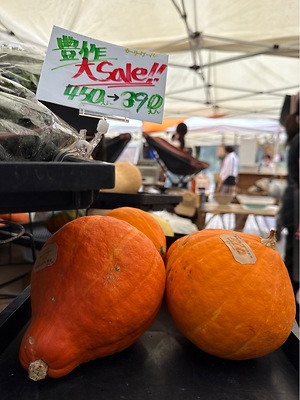
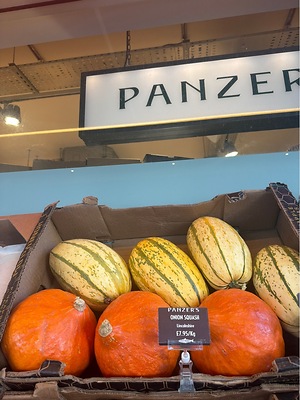
Red Kuri Squash for sale around the world shared on the Specialty Produce App



Check out our QR code Library to download QR Codes that link to our fruit encyclopedia.
Use on your signage and other promotions to share the knowledge!
Use on your signage and other promotions to share the knowledge!



