This website uses cookies, pixels, and other tracking technologies to personalize content, analyze how our site and apps are used, and create aggregated statistics.
We disclose data about site and app users to third parties so we can target our ads to you on other websites, and those third parties may use that data for their own purposes.
For more information on how we collect, use, and disclose this information, please review our
Privacy Policy.
Continued use of this site means you consent to our Privacy Policy.
Summary generated by our research from the article below.
Description/Taste
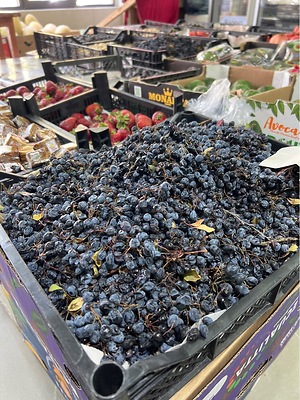
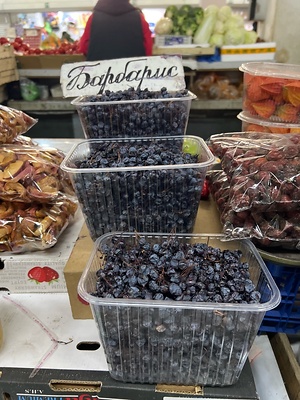
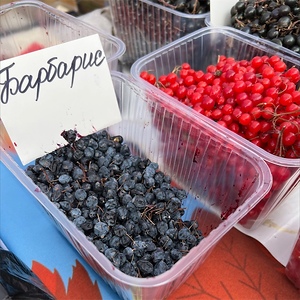
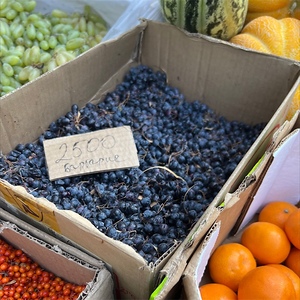
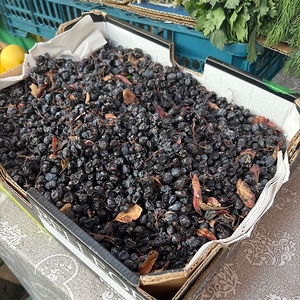
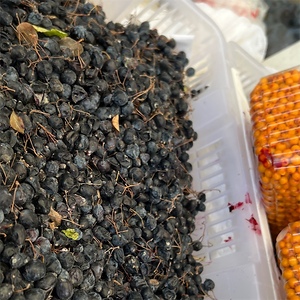
Kashgar barberries are small, globular berries, averaging 1 to 3 centimeters in diameter, and have a round to elliptical shape, attached to slender stems and growing on a spiny and widely branched shrub. The berry’s skin is smooth, waxy, and taut, covered in a pale bloom, and is dark blue-purple, almost appearing black. Underneath the surface, the flesh is aqueous and pale purple with a soft and crisp consistency. Kashgar barberries are considered to have a balanced, sweet and sour flavor with some acidity and tartness.
Seasons/Availability
Kashgar barberries are available in the summer through winter in Asia. In China, the fruits are typically gathered from July through September.
Current Facts
Kashgar barberries, botanically classified as Berberis kaschgarica, are a rare variety belonging to the Barberry family. The fruits grow on deciduous shrubs reaching up to one meter in height and are named after their native region, Kashgar, a city in Western China known as an important stop for trade along the Silk Road. It is also found in limited quantities in the neighboring country of Kyrgyzstan. Kashgar barberries were listed on the Red List of Endangered Species in 1985, which was created by the International Union For Conservation Of Nature and is a list that brings awareness to the status of threatened plants and animals. The variety is now considered stable, but it is still challenging to find due to limited habitat and availability. Despite its rarity, Kashgar barberries are favored as a specialty, ornamental home garden plant in the shrub’s native region and are valued for their resistance to extreme weather temperatures and prolific nature, bearing numerous dark blue-purple berries. These tiny berries can also be used in various culinary applications and add sweet-tart flavors to sweet and savory dishes.
Nutritional Value
Kashgar barberries are a good source of vitamin C, which is an antioxidant that can help protect and boost the immune system. The berries also contain anti-inflammatory properties and acids that can help cleanse the body and remove toxins.
Applications
Kashgar barberries are best suited for both raw and cooked applications such as boiling and baking. The berries can be consumed fresh, out-of-hand, tossed into salads, used as a topping over ice cream, or they can be juiced as a sweet-tart beverage. The berries can also be crushed and steeped in boiling water to make a tea, fermented into wine, boiled into a syrup, compote, or filling for baked goods and pastries, or cooked into jams and jellies. In addition to sweet preparations, Kashgar barberries can be paired with cooked meats, salted and pickled, or dried and mixed into rice dishes. They are also well-suited in spicy dishes for added acidity with a hint of sweetness. Kashgar barberries pair well with pomegranate juice, dark chocolate, horseradish, meats such as veal, goose, poultry, and beef, almonds, and spices such as coriander, cinnamon, and cumin. The fresh berries will keep 1-2 weeks when stored in the refrigerator. Dried berries will keep up to sixteen months when stored in a cool, dry, and dark place.
Ethnic/Cultural Info
In Asia, barberries have been used in traditional folk medicine for thousands of years to help increase immunity and reduce symptoms associated with fevers, loss of appetite, and colds. The berries are commonly infused into decoctions and teas for their antioxidants and vitamin C and are consumed as a natural booster. Dried barberries are also sometimes used in teas, and the acidity found within the berries can act as a substitute for lemon in the healing medicinal drinks.
Geography/History
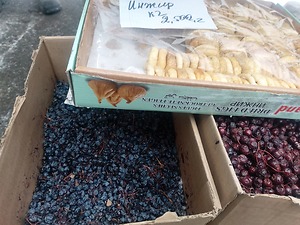
Kashgar barberries are considered native to Asia and have been growing wild since ancient times. The species is found in China's Northwestern and Western regions and extends west to Central Asia. Kashgar barberries thrive on mountainsides, alongside rivers, and in alpine grasslands and are considered rare, only gathered in limited quantities. Today, Kashgar barberries are sold fresh through local markets in their growing regions in China, Kyrgyzstan, Kazakhstan, Tajikistan, Pakistan, Tibet, and the region of Kashmir in India. Dried Kashgar barberries are also imported on a small scale from Kyrgyzstan to Germany.
Fruits and vegetables store “Mango”
Yermek Serkebayev Avenue, Almaty, Almaty
Kashgar berries of Kyrgyzstan…..Kashgar barberries are incredibly versatile and can be enjoyed fresh, juiced, or incorporated into various dishes like salads, baked goods, and jams. They also complement savory meals, pairing well with meats, spices like cumin and cinnamon, or even pomegranate juice. Fresh berries last 1-2 weeks in the fridge, while dried ones can be stored for up to sixteen months in a cool, dark place.
Almaty Green Central Market
Zhibek Zholy 53, Almaty, Kazakhstan
Kashgar berries of Kyrgyzstan...Kashgar barberries, botanically identified as Berberis kaschgarica, are native to the Kashgar region in Western China and also grow in small quantities in Kyrgyzstan. These dark blue-purple berries were once classified as endangered in 1985 but are now considered stable. The berries are popular in their native habitat for their robust nature, withstanding extreme weather, and are often used in culinary dishes for their sweet-tart flavor and their rich vitamin C content, which can support immunity and detoxification.
Almaty Central Green Market
Zhibek zholy str. 53, Almaty, Kazakhstan
View on Instagram
Kashgar berries of Ile Alatau foothills…Kashgar barberries are rare berries native to Asia, growing wild in regions such as Northwestern and Western China, Central Asia, and parts of the Indian subcontinent. These berries thrive in the foothills, mountainsides, and riversides of areas like the Ile Alatau. They are often gathered in limited quantities and sold fresh in local markets across Kyrgyzstan, Kazakhstan, and nearby regions or dried and exported in smaller volumes.
Ecofreshmarket
Kazakhfilm microdistrict, 13, Almaty, Kazakhstan
Endemic berries of Kyrgyzstan…Barberries: Barberries in Kyrgyzstan have historical ties to folk medicine across Asia. These berries are known for their high antioxidants and vitamin C content, making them useful in promoting immunity and alleviating fever, appetite loss, and colds. Often, they are brewed into teas or decoctions, and their natural acidity can even replace lemon in medicinal drinks, serving as a natural healing agent.
Almaty agricultural food fair
ул. имени Валиханова 170, Алматы 050000, Казахстан
Kashgar berries of Kyrgyzstan. Kashgar barberries are small, globular berries measuring 1 to 3 centimeters in diameter. They have smooth, waxy dark blue-purple skin, almost black, and grow on spiny shrubs. Their flesh is pale purple with a soft, crisp texture, showcasing a balanced blend of sweet and sour flavors mixed with tart acidity.
Convenient vegetables and fruits market
улица Ауэзова 99, Алматы 050000, Казахстан
Kashgar barberries of Kyrgyzstan are incredibly versatile in culinary applications. They can be eaten fresh, used in salads, juiced, or steeped for tea. They are perfect for desserts like ice cream, jams, and pastries, or savory dishes like rice and spicy meals. Pairing well with dark chocolate, pomegranate juice, and spices like cinnamon, they add a sweet-tart flavor. Fresh berries last 1–2 weeks refrigerated, while dried ones can be stored for up to sixteen months.
Kazakhfilm weekend food fair
Isinaliyeva 38, Almaty, Kazakhstan
Kashgar berries of Kyrgyzstan. Kashgar barberries are a rare fruit classified as Berberis kaschgarica, originating in Kashgar, Western China, and found in limited quantities in Kyrgyzstan. Once listed as endangered in 1985, the species is now stable but remains hard to find due to its localized habitat. These shrubs are prized for their extreme weather tolerance and ornamental value, producing dark blue-purple berries with sweet-tart flavors that enhance both sweet and savory dishes.
«Orbita» Market
улица Биржана, Алматы, Казахстан
Kashgar berries of Kyrgyzstan. Kashgar barberries are rare and only harvested in limited amounts. They grow wild in regions such as China, Kyrgyzstan, Kazakhstan, Tajikistan, Pakistan, Tibet, and Kashmir in India. These berries thrive in mountain terrains, near rivers, and alpine grasslands. While often sold fresh in local markets, dried Kashgar barberries from Kyrgyzstan are imported to Germany in small quantities.
Weekend food fair
Isinaliyeva 34, Almaty, Kazakhstan
Kashgar berries of Kyrgyzstan. Barberries: Barberries, used in folk medicine for centuries across Asia, are known for their immune-boosting properties. Rich in antioxidants and vitamin C, these berries have been traditionally used to alleviate symptoms like fevers, loss of appetite, and colds. Often infused into teas and decoctions, their natural acidity can even serve as a substitute for lemon in various healing beverages.
Check out our QR code Library to download QR Codes that link to our fruit encyclopedia. Use on your signage and other promotions to share the knowledge!