



White Manalagi Mangoes
Estimated Inventory, lb : 0

Description/Taste
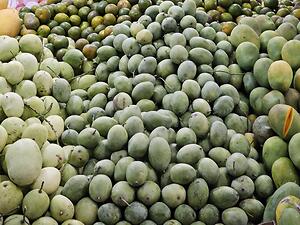
White Manalagi mangoes are moderately sized fruits, averaging 14 to 18 centimeters in length, and are round to oval in shape with curved ends. The skin is thick, waxy, shiny, and covered in prominent white spots and specks. The fruit is also pale green when young and transforms into a darker green when ripe. Underneath the surface, the flesh is dense, aqueous, white with yellow spots in the center, and fibrous, encasing a medium-sized seed. White Manalagi mangoes are aromatic and have a very sweet, sugary, and tropical flavor with low acidity.
Seasons/Availability
White Manalagi mangoes are available in the late summer through early fall.
Current Facts
White Manalagi mangoes, botanically classified as Mangifera indica, are a unique Manalagi variety that belongs to the Anacardiaceae family. In local markets throughout Indonesia, Manalagi mangoes are more commonly found with orange flesh, and the only way to distinguish between the varieties without cutting the flesh open is by the white variety’s slightly larger size. The name Manalagi roughly translates to mean "give-me-more mango," which stems from the cultivar’s popularity throughout Indonesia. White Manalagi mangoes are favored as a fresh eating variety and are consumed for their sweet, non-sour flavor. The variety is also known for having a sweet taste even when unripe, making it a popular variety used in salads.
Nutritional Value
White Manalagi mangoes are a good source of fiber, which can help regulate digestion and provides vitamins A, B, D, and E. The fruits also contain calcium, iron, phosphorus, and potassium, which is a mineral that can regulate fluid levels within the body.
Applications
White Manalagi mangoes are best suited for raw applications as their sweet, fibrous flesh is showcased when consumed fresh, out-of-hand. The fruits can be sliced and tossed into green salads, chopped into fruit bowls, blended into smoothies, shakes, and fruit juices, mixed into ice cream, or used as a fresh topping over desserts. White Manalagi mangoes can also be used in their immature state as a crunchy addition to rujak, which is an Indonesian fruit salad. The firm mangoes are thinly sliced and mixed with shrimp paste, chile peppers, soy sauce, tamarind, and other fruits to create a blend of sweet, spicy, sour, and savory flavors. Beyond fresh eating, the fruits can sometimes be lightly stir-fried with meat and vegetables, served with sticky rice as a sweet addition, pickled as a condiment, or sliced and dried for extended use. White Manalagi mangoes pair well with peanuts, papaya, jicama, grapefruit, cucumber, pineapple, rose apple, guava, apples, carrots, celery, palm sugar, lime juice, tofu, seafood such as fish, shrimp, and cuttlefish, and meats such as beef, pork, and poultry. The fresh fruits should ripen at room temperature, and once ready for consumption, they can be stored whole and unwashed for an additional 5-7 days in the refrigerator.
Ethnic/Cultural Info
In Indonesia, young White Manalagi mangoes are popularly used in sambal mangga. Sambal is an Indonesian condiment that can be made with a wide variety of ingredients to create a spicy flavoring and usually consists of garlic, shrimp paste, chile peppers, and shallots. It is believed that there are over three hundred different varieties of sambals across Indonesia, and they are frequently served as a side dish to grilled meats or added into curries, rice, noodles, stews, and soups. Sambal mangga is a version made with green mango, and the fruit adds a subtly sweet flavoring to the spicy condiment. When made with mango, the crunchy sauce is commonly paired with grilled fish or seafood and is also used as a side dish to poultry and vegetable-based dishes.
Geography/History
White Manalagi mangoes are native to Indonesia and have been growing wild since ancient times. Today the white-fleshed fruits are found at local markets across Java and Bali and are primarily grown in the Probolinggo and Situbondo regions of East Java. White Manalagi mangoes are also commonly grown in home gardens throughout Indonesia.

White Manalagi Mangoes for sale around the world shared on the Specialty Produce App


Check out our QR code Library to download QR Codes that link to our fruit encyclopedia.
Use on your signage and other promotions to share the knowledge!
Use on your signage and other promotions to share the knowledge!



