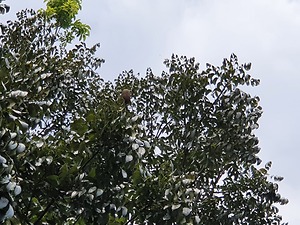


Mahoni Fruit
Estimated Inventory, lb : 0

Description/Taste
Mahoni fruits vary in size depending on the age of the tree and growing conditions. The fruits typically average 6 to 10 centimeters in length and are comprised of a fibrous, hard, woody, ovoid to oblong pod that encapsulates smaller, thin, and tightly overlapping seeds. The fruit’s exterior is textured, rough, dense, and challenging to open. The pods eventually crack open naturally, revealing five valves containing rich, red-brown seeds. Each valve is estimated to release around 10 to 20 seeds, and the seeds are enveloped in a papery, flat wing. The wings range from 4 to 6 centimeters in length, and the brown seeds are extracted from these wings. Mahoni seeds have a bitter flavor and are solely used for medicinal purposes, rather than culinary purposes.
Seasons/Availability
Mahoni fruits are available year-round, with varying seasons in tropical regions worldwide.
Current Facts
Mahoni, botanically a part of the Swietenia genus, is the fruit of tropical trees belonging to the Meliaceae family. The fruits grow on large, deciduous trees that reach 30 to 40 meters in height, and most commonly belong to Swietenia macrophylla, also known as Honduran mahogany, Big-leaf mahogany, or simply Mahogany. Mahoni fruits are utilized worldwide for their seeds in folk medicines and are prevalent in Asia. The trees are also planted in tropical to subtropical regions as a source of timber and as ornamental plants in home garden landscapes. Mahoni fruits are known by many regional names and are a somewhat rare fruit to find in fresh markets due to their limited availability, which has been caused by habitat destruction. The seeds are the most used portion of the fruit and are reserved for various medicinal preparations.
Nutritional Value
Mahoni fruits are utilized for their seeds. The seeds have been noted to contain fiber that aids digestion and vitamins B, C, and E, which strengthen the immune system, contribute to energy production, and protect cells against free radical damage. The seeds also provide minerals in varying quantities, including iron, magnesium, potassium, and zinc. These minerals help the body produce proteins for oxygen transport through the bloodstream, control daily nerve functions, balance fluid levels, and protect the overall health of the body. In natural medicine, Mahoni seeds are incorporated into remedies due to their antimicrobial, anti-inflammatory, and antioxidant properties. The seeds are consumed in various forms, including teas, powders, capsules, and others, to help lower blood pressure, boost immunity, reduce pain, and improve circulation. Communities worldwide have varying uses for the seeds. In Malaysia and Indonesia, portions of the tree are used in topical treatments to heal skin wounds, while in India, they are sometimes used to combat symptoms associated with diarrhea. While these medicinal uses are common in select communities, research and approval from a healthcare provider are necessary before taking any natural supplement to ensure it is safe for individual needs.
Applications
Mahoni fruits are not commonly eaten as a food source and are regarded as a medicinal ingredient. The seeds can be collected as they fall to the ground, or the fruits can be removed from the tree and set aside until they naturally crack open. It is important to note that a discussion with a medical professional should be had before ingesting Mahoni seeds, as they may not be suitable for everyone. This is a general summary of how the seeds are customarily used. Mahoni seeds are shelled and eaten raw in small quantities, sometimes sprinkled over salads, yogurt, or oatmeal. They are also added to soups or baked into bread and muffins. In addition to eating the seeds whole, Mahoni seeds are crushed into powder and blended into smoothies, water, or juices. Crushed powder or smaller pieces can also be steeped into a medicinal tea, but the flavor of the seeds is sometimes bitter. To help dilute the bitter taste, Mahoni is often mixed with honey, sugar, or ginger. Dried Mahoni seeds, when ground into a powder, will keep for over one year when stored in a cool, dry, and dark place. Whole seeds can be kept for a few days in a cool, dry, and dark location.
Ethnic/Cultural Info
Mahoni fruit is also commonly known as Sky fruit, a name derived from the fruit’s natural growth orientation. While the fruit is developing on the tree, it grows in an upright position, pointing toward the sky. In Malay, the fruit is called Buah Tinjuk Langit, which translates to “fruit that points toward the sky.” Several other regional names worldwide also refer to the fruit’s upward direction. Beyond the fruits, the tree is prized for its high-quality timber. The name Mahoni translates from Indonesian to “mahogany.” The species is famously known as Mahogany wood in English and is revered for its dark, rich coloring, straight grain, and fine texture, producing a smooth and shiny finish. Mahogany wood is a durable material used to construct furniture, cabinets, bookcases, decking, and doors. It is also utilized worldwide to make musical instruments, including guitars and pianos.
Geography/History
Mahoni fruits belong to species within the Swietenia genus, which are believed to be native to tropical regions of the Americas, specifically the Neotropics. Mahoni has been growing wild since ancient times, and various portions of the tree have been revered for medicinal and cultural uses. Over time, Swietenia species were introduced into regions of Asia as their wood gained popularity as a construction material. The notoriety of the wood largely began in the 16th century, when European explorers first encountered the trees in the New World. Trees were planted in tropical and subtropical regions worldwide, eventually naturalizing in parts of Asia, and were also cultivated in plantations for commercial use. As Swietenia spread, its medicinal uses also expanded worldwide and became an important ingredient in natural medicines throughout Southeast Asia. Today, Mahoni fruit is sourced from wild and cultivated trees and has become an endangered species in select regions worldwide due to deforestation and the destruction of natural habitats. In the wild, trees thrive in rainforests, as well as in deciduous and semi-deciduous forests. Mahoni fruits are found through fresh markets in their growing regions and are also processed into powders and other health supplements sold through medicinal retailers.

Mahoni Fruit for sale around the world shared on the Specialty Produce App