



Black Cherry Tomatoes
Estimated Inventory, 12 ct : 0

Description/Taste
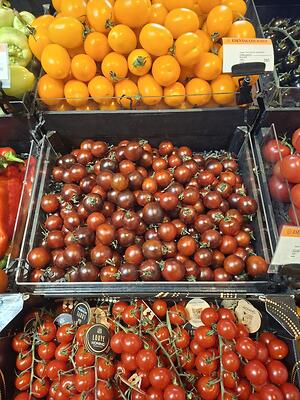
The color of a Black cherry tomato is an indicator of the fruit’s stage of maturity. At its first sign of ripeness, the tomato will have a signature mahogany-brown coloring with green shoulders, and it will be firm to the touch, with a blend of sweet and tart flavors. As it ripens, the green deepens to brown, the flesh becomes slightly tender, and the flavor richens. At the peak of their maturity, Black cherry tomatoes are low in acidity and they develop a smoky and sweet flavor. The Black cherry tomato plant produces large clusters of the one-inch round tomatoes on vigorous, tall, indeterminate plants that are easy to grow, as they are disease resistant and can be grown in the greenhouse or outdoors in a sunny spot.
Seasons/Availability
Black cherry tomatoes are available from late summer into fall.
Current Facts
Tomatoes were first botanically referred to as Solanum lycopersicum, and although horticulturists have opted for the term Lycopersicon esculentum over the years, current molecular DNA evidence is encouraging a return to the original classification of Solanum lycopersicum. Black cherry tomatoes, more specifically distinguished as var. cerasiforme, are a fairly rare variety. The coloring of Black cherry tomatoes develops from a mixture of green and red pigments. As the fruits mature, they accumulate the red carotenoid pigment, lycopene, however they also retain some of the green pigment, chlorophyll. The green pigmentation combined with the crimson-colored interior of the ripened fruit results in their uniquely dark exterior coloration.
Nutritional Value
Cherry tomatoes contain lycopene, an antioxidant that can decrease your risk of cardiovascular disease and cancer. They also contain vitamin A and vitamin C, making them a good snack for maintaining eye health and boosting your immune system. Other significant contents for supporting good health include fiber, iron, and vitamin B-6.
Applications
Black cherry tomatoes are preferred for eating fresh, on their own or in a salad, though they also lend themselves to being flash grilled or roasted. Black cherry tomatoes can easily replace common red tomatoes in pizza and salsa recipes, and they also work nicely in sauces and soups. They pair well with soft, young cheeses, such as chevre and burrata, as well as aged cheeses like pecorino and parmesan. Other complimentary pairings include citrus, melons, eggplant, mushrooms, mild and hot chilies, poultry, pork, seafood, vinaigrettes, aged balsamic vinegar, herbs, such as basil and cilantro, and cream-based sauces, such as béchamel. Like all varieties, store Black cherry tomatoes away from direct sunlight at room temperature until ripe and ready to use, after which refrigeration can slow the process of decay and prevent them from ripening further.
Ethnic/Cultural Info
Black tomatoes are thought to be native to a relatively small area of the Crimean Peninsula in Southern Ukraine, where they were limited to just a handful of varieties. During the early 19th century, soldiers returning home from the front lines of the Crimean War distributed the seeds throughout Western Russia, and now there are at least fifty varieties of black tomatoes found in the territories of the former Soviet Union.
Geography/History
All cherry tomatoes are descendents of the wild tomato, whose origins can be traced to coastal South America millions of years ago. Archeological evidence suggests that the very first strains of cherry tomatoes were cultivated by Mesoamerican farmers at least a thousand miles away in northern Central America. The genetic makeup of cherry tomatoes, unlike larger common tomatoes has remained almost unchanged. Variations in color and shape are natural occuring mutations and often, survival traits of plants. Black cherry tomatoes evolved from the original red cherries as an heirloom and eventually tomato breeders would also develop hybrid Black cherry tomato varieties to suit modern palates.
Recipe Ideas
Recipes that include Black Cherry Tomatoes. One
 is easiest, three is harder.
| Eat, Live, Run |
|
Steak, Gorgonzola and Cherry Tomato Pizza |
Podcast

Black Cherry Tomatoes for sale around the world shared on the Specialty Produce App


Check out our QR code Library to download QR Codes that link to our fruit encyclopedia.
Use on your signage and other promotions to share the knowledge!
Use on your signage and other promotions to share the knowledge!



