



Tokyo Bekana Cabbage
Estimated Inventory, ea : 0

Description/Taste
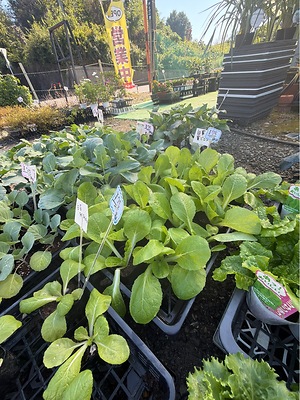
Tokyo Bekana cabbage is comprised of broad leaves connected to flat stems. The variety is harvested in micro, baby, and mature states and will have varying sizes and appearances based on these stages. Young pale yellow-green leaves are lightly ruffled, soft, and tender with slender stems. At this stage, the leaves are eaten raw for their delicate nature, and the plants resemble lettuce more than cabbage. Mature Tokyo Bekana cabbages form semi-loose heads with the base of the leaves curled inward, while the tops of the leaves extend outward and average 10 to 20 centimeters in length. Full-grown green leaves bear a thicker, flat, and prominent white petiole, and the leaves feature veining, a crinkled appearance, and jagged edges. The leaves also have an oval to slightly tapered, teardrop shape and a buttery and smooth texture with a crisp, crunchy consistency. Tokyo Bekana leaves are edible raw or cooked and have a mild, subtly sweet, and slightly peppery taste with green, vegetal
Seasons/Availability
Tokyo Bekana cabbage is available year-round. Young leaves are harvested in the spring, while mature leaves for pickling are typically gathered in the winter.
Current Facts
Tokyo Bekana cabbage, botanically classified as Brassica rapa var. chinensis, is a semi-heading variety belonging to the Brassicaceae family. The cultivar was developed in Japan from Chinese cabbage types and was selected for its fast-growing nature, versatility, and ability to be harvested at multiple stages of maturity. Tokyo Bekana cabbage is a seasonal variety that is only available for a few weeks each year. The leaves are most commonly sold young and tender in markets, harvested around 10 days for microgreens and 21 days for baby greens. When young, the leaves are loose and have not formed a head. If the leaves are left to mature, they form semi-heads and are harvested between 45 and 50 days for use as a cooked or pickled green. Tokyo Bekana cabbage has acquired several names, including Shandong cabbage, Napba, Hakusai-na, Bekana, Santouna, and Santousai. The variety earned its Bekana name from the Japanese word “Beka,” a term for something with a small shape. Beka is also a small boat used in Japan to harvest seaweed. Tokyo Bekana cabbage is favored by growers for its cold and heat tolerance, vivid coloring, and cut-and-come-again quality, allowing the leaves to be collected throughout the season. In markets, Tokyo Bekana cabbage is prized for its mild flavor, delicate texture, and ability to be used in a wide array of fresh or cooked preparations.
Nutritional Value
Tokyo Bekana cabbage is a source of fiber to aid digestion and vitamins A, B, C, E, and K. These vitamins maintain healthy organs, contribute to energy production, support faster wound healing, strengthen the immune system, and guard cells against free radical damage. Tokyo Bekana cabbage also provides minerals in varying quantities, including calcium, potassium, magnesium, phosphorus, iron, and zinc. These minerals help the body support bone and teeth development, balance fluid levels, control daily nerve functions, and produce proteins for oxygen transport through the bloodstream.
Applications
Tokyo Bekana cabbage has a mild, subtly sweet, lightly peppery flavor suited for fresh and cooked preparations. The variety is popularly harvested young when the leaves are tender and soft. These leaves are tossed into salads raw, used as a bed for roasted meats, or as a lettuce wrap. Young Tokyo Bekana cabbage leaves are preferred raw and are sometimes mixed into pasta dishes, rice bowls, or noodles. In addition to fresh preparations, Tokyo Bekana cabbage can be harvested when the greens have reached maturity, making them ideal for lightly cooked methods like blanching, steaming, or stir-frying. The leaves can easily fall apart when cooked, so keeping their exposure to heat short is recommended. Tokyo Bekana cabbage is added to soups, stews, and various hot pot combinations, braised or stir-fried as a simple side dish with soy sauce, or cooked and served with dipping sauces. In Japan, the variety is minced into dumplings, added to fried tofu dishes with a dashi, mirin, and soy sauce flavoring, or stir-fried with meat and vegetables as a light main dish. Mature leaves are also pickled throughout Japan and consumed as a condiment. In other regions worldwide, Tokyo Bekana cabbage is grilled or roasted to create a nutty flavor and is also used as a substitute for other types of cabbage in recipes. Tokyo Bekana cabbage pairs well with fruits such as peaches, grapefruit, cherries, and citrus, herbs including shiso, sansho, and mitsuba, and flavorings like bonito flakes, ginger, garlic, and sesame oil. Whole, unwashed Tokyo Bekana cabbage will keep for a few days to one week when stored upright, wrapped in newspaper, and placed in a plastic bag in the refrigerator. The variety has a short shelf life and should be immediately consumed for the best quality and flavor. The leaves can also be blanched and frozen for extended use.
Ethnic/Cultural Info
Tokyo Bekana cabbage was one of the first types of cabbage to be grown in space. The variety has acquired the nickname “space cabbage” and was a favorite green cultivated in the International Space Station. In 2015, Outredgeous red romaine lettuce was the first vegetable successfully grown on the International Space Station. It was part of a project to research and test methods of sustainable cultivation for longer-duration trips, notably testing for future trips to Mars, as the journey could take over 520 days one way. Tokyo Bekana cabbage was later selected for trials in the program for its fast-growing nature, short stature, and flavor. The greens are grown in a specialized environment called the Vegetable Production System, also called Veggie or Veg-O, its nickname at the station. This system is a small chamber that can hold about six plants and uses a growth medium comprised of calcined clay and controlled-release fertilizer instead of soil to reduce weight. The plants are also sown under LED grow lights with red, green, and blue lights in place of sunlight. In 2014, NASA began testing various vegetables for space cultivation, and later in 2016 and 2017, the first Tokyo Bekana cabbages were being grown, harvested, and eaten by the astronauts on the space station, becoming a favorite of the astronauts.
Geography/History
Tokyo Bekana cabbage is a descendant of cabbage varieties native to China. Early types of cabbage were introduced from the Shandong Province of China to Japan in the Meiji Era, sometime after 1875. The introduced cabbage from China had lobed and wrinkled leaves, but as it was cultivated in Japan, various traits were selected, creating new variations. Tokyo Bekana cabbage was initially grown in the Edogawa area, a ward on the eastern side of Tokyo. The cabbage continued to be selectively bred by Japanese seed companies over time, creating new types with higher yields, a semi-heading nature, tender leaves, and a cut-leaf appearance in the mid to late 20th century. Today, Tokyo Bekana cabbage is cultivated in small quantities throughout Japan and has the highest concentration of production in the southeastern part of the Saitama Prefecture. The variety is considered rare in modern cultivation and is sold as a seasonal, specialty cabbage in fresh markets, high-end retailers, and select wholesalers. Outside of Japan, Tokyo Bekana cabbage is offered through online seed catalogs as a home garden plant and novelty for growers worldwide.

Tokyo Bekana Cabbage for sale around the world shared on the Specialty Produce App


Check out our QR code Library to download QR Codes that link to our fruit encyclopedia.
Use on your signage and other promotions to share the knowledge!
Use on your signage and other promotions to share the knowledge!



