



Curly Endive
Estimated Inventory, 24 ct : 2.00
This item was last sold on : 10/23/26

Description/Taste
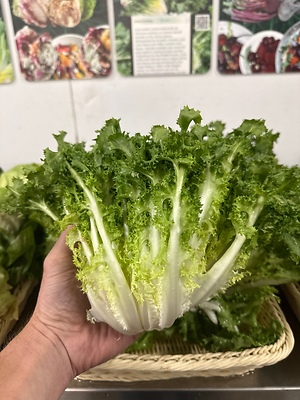
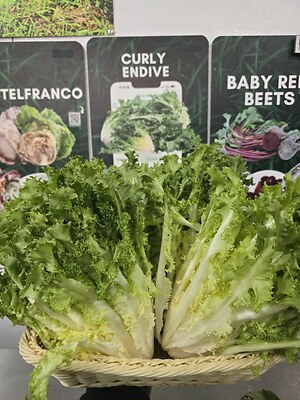
Curly endive grows in loose heads of narrow, lacey outer leaves with curling green-rimmed tips. Inside the head is a compact heart of off-white leaves. The outer, darker leaves have a distinctive, slightly bitter flavor. The inner, lighter colored leaves are milder in flavor and have a subtle sweetness to them with a more delicate texture.
Seasons/Availability
Curley endive is available year-round but its peak season is spring through summer.
Current Facts
Curly endive is botanically known as Cichorium endivia and is part of the chicory genus. Curly endive is a “true” endive and depending upon location is sometimes mistakenly referred to as frisée or chicory. Unlike Belgian endive, Curly endive is field grown in an open growth style. The exterior leaves can be tied up a few days prior to harvest to allow the inner leaves to “field blanch” which will whiten and impart a sweeter flavor to the inner heart of the Curly endive. There are two types of true endives, broad leaved and narrow leaved with Curly endive being the narrow leaved variety.
Nutritional Value
Curly endive contains significant amounts of Vitamin A and Vitamin K as well as some Vitamin C. Additionally, it contains phosphorus, potassium and dietary fiber with the darker green leaves offering more nutrients than the white leaves.
Applications
Curly endive is a bitter green that can add texture and flavor to a number of dishes. Most commonly it is used raw in salad preparations though it can be utilized cooked as well. It can be sautéed, braised, steamed or chopped and added to vegetable or bean soups. Chopped it can be combined with other greens and used in various salad preparations. Its leaves are heartier than some salad greens and can stand up to heavier or warmed dressings or used as a bed of greens when plating proteins. Its bitter flavor marries well with robust and complimentary ingredients such as bacon, salmon, cream or mayonnaise based dressings, anchovies, onion, thyme, basil, citrus such as tangerine and meyer lemon, figs, apple, egg, white beans, chickpeas, toasted pecans or hazelnuts, and cheeses such as feta, brie, blue and gorgonzola. Curly endive keeps best stored tightly wrapped in plastic and refrigerated, it is best used within one to two weeks.
Ethnic/Cultural Info
In Jewish culture Endive is commonly consumed at Passover as part of the Seder plat. It along with other bitter herbs such as horseradish and romaine lettuce serves as a reminder of the bitterness of slavery prior to the Israelites exodus into Egypt.
Geography/History
Endive is believed to have originated near Sicily and the Mediterranean region. It has historical roots in Egypt, Rome and Greece as a salad vegetable. By 1548 it had made its way to England and later on in 1806 it first appeared in a seed catalog in the United States. The narrow leaved type such as Curly endive is believed to be younger than broad leaved varieties such as escarole with earliest documentation of this specific variety taking place in the 13th century. Curly endive can mistakenly be referred to as chicory, loose-leaf chicory, chicory endive, curly chicory and frisée. This is because the term "chicory" in the U.S. or France refers to what the British call endive and endive in Britain turns into chicory in France and America.
Featured Restaurants
Restaurants currently purchasing this product as an ingredient for their menu.
| Reata Glen | Ladera Ranch CA | 949-545-2250 |
| Leu Leu | Leucadia CA | 619-316-5807 |
| The Smoking Goat | San Diego CA | 858-232-4220 |
| Baby Grand Hotel | Coronado CA | 619-853-2229 |
| The Plot | Oceanside CA | 422-266-8200 |
| Isola La Jolla | La Jolla CA | 858-412-5566 |
| Flying Pig Pub & Kitchen | Oceanside CA | 619-990-0158 |
Recipe Ideas
Recipes that include Curly Endive. One
 is easiest, three is harder.
| Bonapetit |
|
Grilled Leg of Lamb with Curly Endive and Romaine |
| Serena Bakes Simply From Scratch |
|
Curly Endive with Spaghetti |

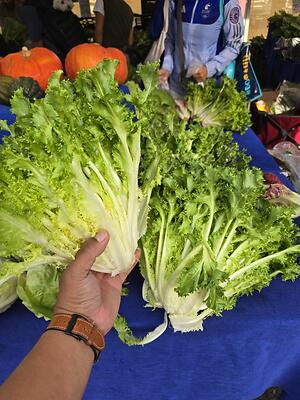
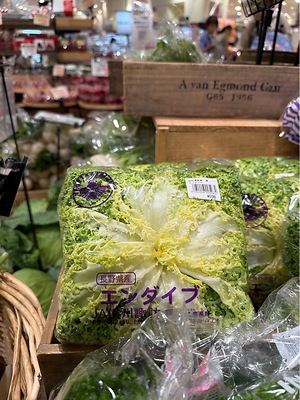
Curly Endive for sale around the world shared on the Specialty Produce App




Check out our QR code Library to download QR Codes that link to our fruit encyclopedia.
Use on your signage and other promotions to share the knowledge!
Use on your signage and other promotions to share the knowledge!



