



White Japanese Eggplant
Estimated Inventory, lb : 0

Description/Taste
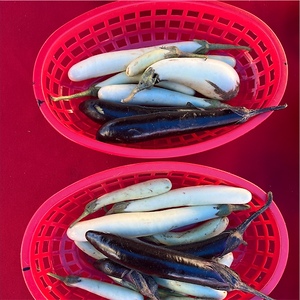
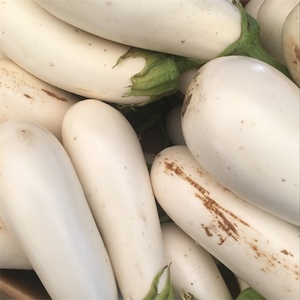
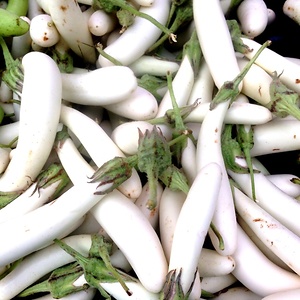
White Japanese eggplants are cylindrical and elongated, ranging from 10-20 centimeters in length depending on the specific variety. The outer skin is smooth, glossy, and ivory with a pointed green calyx, or stem. The inner flesh is white and spongy with a few small, edible seeds. White Japanese eggplants are tender and creamy with a mild and slightly fruity taste.
Seasons/Availability
White Japanese eggplants are available mid to late summer.
Current Facts
White Japanese eggplants, botanically classified as Solanum melongena, are members of the Solanaceae, or nightshade family, which includes potatoes and tomatoes. They are botanically a fruit, but White Japanese eggplants are grown from seed and treated as a vegetable in terms of cooking preparations. Several varieties of White Japanese eggplant exist including Snowy White, White Angel, and Gretel.
Nutritional Value
White Japanese eggplants are an excellent source of potassium and also contain B vitamins, magnesium, and copper.
Applications
White Japanese eggplants are best suited for cooked applications such as grilling, sautéing, stir-frying, and pickling. Their sponge-like flesh readily absorbs accompanying flavors. White Japanese eggplants can be sliced and used in stir-fries, curries, pizza and pasta toppings, stews and warm salads. Complimentary pairings include arugula, artichokes, chickpeas, cumin, summer squash, tomatoes, basil, fresh cheeses such as feta and chevre, citruses such as lemon and lime, peppers, oregano, seafood such as scallops and sea bass, and roasted meats such lamb and pork. White Japanese eggplants will keep up to three days when stored in a cool and dry place. Avoid refrigeration when storing as this can cause the fruit to deteriorate.
Ethnic/Cultural Info
The name eggplant evolved from English explorers who discovered the fruit in Asia. The specific variety they found resembled the shape of an egg and was ivory-white. Many white eggplant varieties still resemble the shape of an egg today, and others such as the White Japanese have since taken on a more lean and lengthy form to meet changing market demand. In modern times new varieties, like the White Japanese, were bred and evolved to offer improved flesh quality and reduced seed size, as seeds often lead to the bitterness that is associated with eggplant.
Geography/History
White Japanese eggplants are native to Japan and are believed to have been created from Chinese varieties. Today many of the White Japanese eggplant varieties can be found at farmers markets and specialty grocers in Asia, Europe, and the United States.
Recipe Ideas
Recipes that include White Japanese Eggplant. One
 is easiest, three is harder.

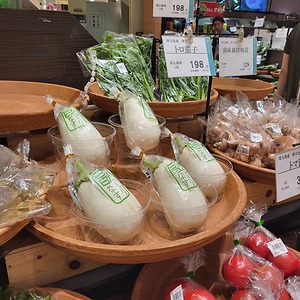
White Japanese Eggplant for sale around the world shared on the Specialty Produce App





Check out our QR code Library to download QR Codes that link to our fruit encyclopedia.
Use on your signage and other promotions to share the knowledge!
Use on your signage and other promotions to share the knowledge!



