



Guanábana
Estimated Inventory, lb : 0

Description/Taste
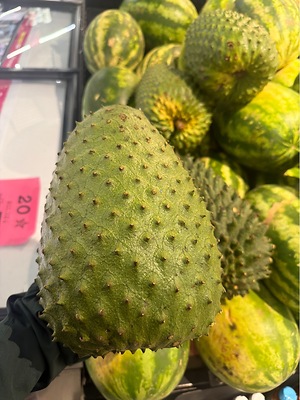
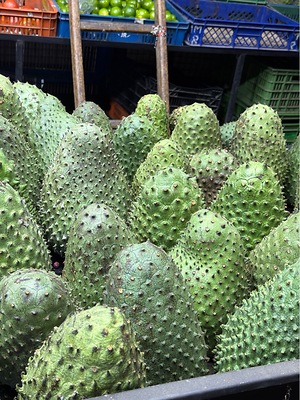
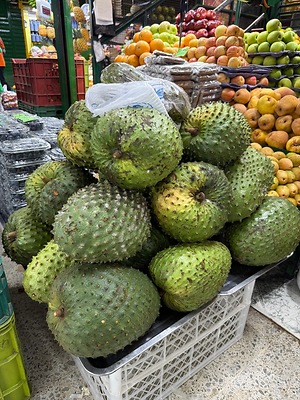
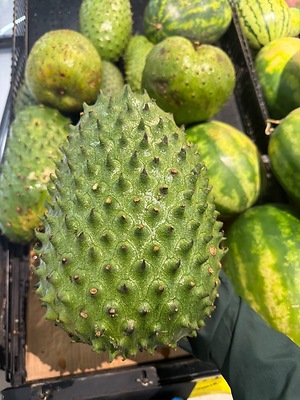
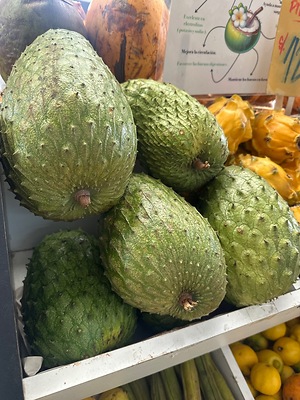
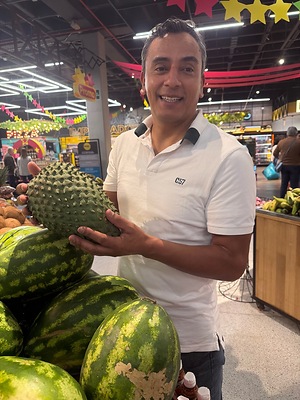
Guanábana varies in size and shape but is generally considered a medium-to-large fruit, averaging 10 to 30 centimeters in length and 12 to 15 centimeters in diameter. The fruits have an irregular appearance, depending on pollination, and are found in cordate, oval, or kidney-like shapes with curved to pointed edges. Guanábana features semi-thin, leathery skin covered in small, prominent, soft spines. The spines are pliable and easily break off when the fruit is ripe, and the skin color transitions from dark green to light yellow-green as it matures. Under the surface, the white-to-ivory flesh is soft, granular, aqueous, and succulent when ripe. The flesh is naturally segmented and can be further separated into pieces by hand. The center of the flesh has a pithy, soft core. In the flesh, there are many small, hard, smooth, and oval seeds ranging from 1 to 2 centimeters in length. These black seeds are inedible and should be discarded during consumption, and there can be anywhere from 0 to over 200 seeds in each fruit, depending on size, variety, and pollination. Guanábana will lighten in color and change from firm to soft, giving slightly under pressure when ripe. The fruits release a tropical aroma, and the flesh has a sweet, slightly acidic, musky, and sour flavor, with fruity nuances of banana, strawberry, coconut, mango, and pineapple.
Seasons/Availability
Guanábana is available year-round in tropical climates. The trees tend to flower and fruit somewhat continuously, and each region will have its own peak season based on the growing environment.
Current Facts
Guanábana, botanically classified as Annona muricata, is a tropical fruit belonging to the Annonaceae family. The distinctly shaped, fleshy fruits grow on evergreen trees that reach 4 to 9 meters in height and are the largest and most tropical species in the genus Annona. The name Guanábana is the primary Spanish moniker used throughout Central and South America, which is also the species’ site of origin. It is worth noting that there are many other regional names for the fruits in indigenous dialects, and in Portuguese-speaking regions, they are called Graviola. Guanábana has also been introduced worldwide, where prevalent names include Soursop in English, Sirsak in Indonesia, and Guyabano in the Philippines. For this article, the species will be discussed in reference to its use in regions where the name Guanábana is used. Guanábana trees average 12 to 24 fruits per season and begin bearing fruit around 3 to 5 years of age. The trees are still found in the wild throughout the Americas, and growers are now commercially producing fruit for sale in markets. In the Americas, some communities have named varieties of Guanábana, while other regions have growers who continually select trees for the quality of their fruit. It is most common to see the fruits, regardless of variety, sold collectively under the general name Guanábana in markets, and they are sought for use in beverages and in fresh and cooked culinary preparations.
Nutritional Value
Guanábana is a source of fiber to regulate digestion and contains vitamins B, C, E, and K, which strengthen the immune system, assist in wound healing, protect the cells against free radical damage, and contribute to energy production. The fruits also contain minerals in varying amounts, including calcium, potassium, magnesium, and phosphorus. These minerals help the body support bone and tooth development, maintain fluid levels, and control nerve functions. In natural medicines, Guanábana has antibacterial, antifungal, and antioxidant properties to contribute to overall bodily health. Other portions of the tree, including the leaves and flowers, are also used in tea and infusions.
Applications
Guanábana has a tropical, sweet, and subtly acidic flavor suited for fresh and cooked preparations. The fruits are typically consumed straight out of hand when ripe, and the flesh becomes so soft that it can be torn open by hand. Guanábana can also be sliced in half or in sections, and the flesh scooped out with a spoon. Only the flesh is edible, and the black seeds and skin should be discarded. Guanábana is popular throughout Central and South America as a refreshing beverage. The flesh is blended with water or milk, sometimes sweetened with sugar, and strained to create a sweet, tangy, and fruity drink. Guanábana beverages can be served over ice, and variations add lime juice, cream, or condensed milk. Other drink recipes include adding the fruits to shakes and smoothies, preparing them into chicha, or using them in agua fresca. In addition to beverages, Guanábana can be eaten fresh on fruit platters or salads, or served as a topping on shaved ice and chia pudding. The fruits are blended and frozen into ice cream and sorbet or used to make popsicles. While less common, Guanábana is added to salad dressings or simmered into flavored syrups. Beyond fresh dishes, the fruits are incorporated into cakes, mousse, custards, and puddings. They are also cooked into jams and other preserves. Guanábana pairs well with fruits like passion fruit, coconut, pineapple, and mangoes, as well as herbs like lemongrass, mint, lavender, and basil. Whole, unopened Guanábana can be ripened at room temperature for a few days to soften the flesh. It is said that the fruits are best around 4 to 6 days after harvest. Once ripe, the fruit should be immediately consumed for the best quality and flavor. Ripe Guanábana will keep for 2 to 3 days in the refrigerator. It is important to note that some fruits may turn black on their surface in the fridge, but the flesh is still edible.
Ethnic/Cultural Info
Guanábana is famous in the municipality of Tununguá in Central Colombia and is one of the region’s primary crops. Tununguá is located in the department of Boyacá and is known for its fertile soils and wealth of natural resources, making it an ideal site for Guanábana cultivation. The species is so revered in the municipality that Tununguá has declared itself the “Guanábana Capital of the World,” and the fruits from this region are known throughout Colombia for their superior flavor. Tununguá also hosts an annual Guanábana festival typically around the first weekend of June. The festival features a food fair, competitions among growers, live entertainment, and locally made goods, attracting residents and visitors from across the country. Guanábana is the star of the agricultural festival, and the annual event helps raise awareness and notoriety for the region’s primary crop.
Geography/History
Guanábana is native to regions of Central and South America and has grown wild since ancient times. The species thrives in tropical, humid lowlands and was spread in the early ages to other parts of the Americas, such as the Caribbean and Mexico, where the trees quickly naturalized. Guanábana was also one of the first New World fruit trees introduced to the Old World and was planted in Asia, Southeast Asia, and tropical Africa. Throughout history, Guanábana trees have been revered for their edible fruits, which are collected from wild and naturalized populations, grown in home gardens, and commercially cultivated. The trees are found from sea level to 3,500 meters in elevation and survive only in frost-free environments. Today, Guanábana is sold in local markets in its growing regions and is also exported on a small scale as a specialty fruit. The species is found worldwide and is commercially and privately cultivated.
Recipe Ideas
Recipes that include Guanábana. One
 is easiest, three is harder.
| Mari's Cakes |
|
Guanabana Cake |

Guanábana for sale around the world shared on the Specialty Produce App




Check out our QR code Library to download QR Codes that link to our fruit encyclopedia.
Use on your signage and other promotions to share the knowledge!
Use on your signage and other promotions to share the knowledge!



