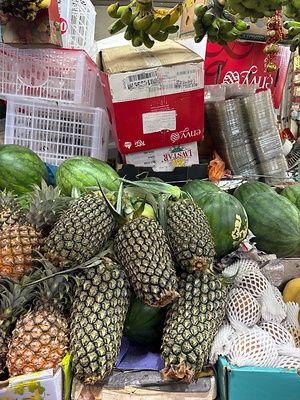
Mauritius Pineapples
Estimated Inventory, lb : 0

Description/Taste
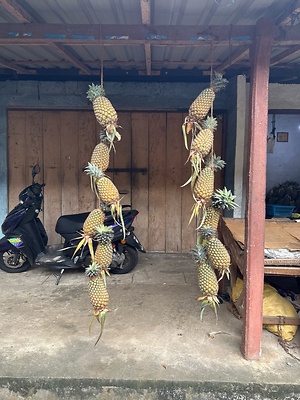
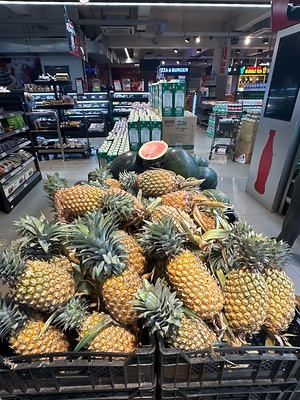
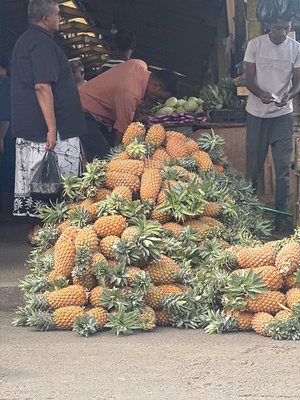
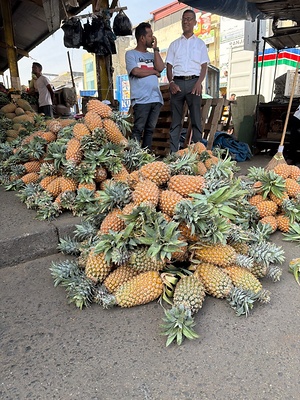
Mauritius pineapples grow on upright plants with spreading leaves that form in a rosette-like shape. A single fruit emerges on a peduncle in the center of this rosette, and the fruits have a conical, cylindrical, or oblong shape. Most Mauritius pineapples weigh between 1.3 and 2.25 kilograms in commercial markets and feature deep-set eyes, giving the exterior a bumpy, textured, and fibrous feel. The variety showcases varying hues, as there are two types sold under the Mauritius name. One has green to golden brown hues, while the other is accented with red and golden brown hues. The crown of leaves at the top of the fruit is dense, thick, and sharp, lined with spines on the leaf margins. The leaves also taper to a point and have a dusty coating over a dark green, matte coloring. Underneath the fruit’s surface, the golden yellow flesh is thick, aqueous, crisp, and chewy, bearing a thin core and minimal fiber. When sliced open, the fruits release a rich, permeating, sweet fragrance. Mauritius pineapples are high in sugar, ranging from 14 to 16 Brix, and have low acidity, resulting in a sweet, tangy, bright, and tropical flavor.
Seasons/Availability
Mauritius pineapples are typically harvested in Southern Asia from May to August.
Current Facts
Mauritius pineapples, botanically classified as Ananas comosus, are a table variety belonging to the Bromeliaceae family. The mid-to-late season cultivar is a herbaceous, perennial plant that produces a non-climacteric fruit, meaning its flavor and sugar content do not increase after harvesting. Mauritius pineapples are harvested once they have reached their desired sugar content and are sold in markets as a flavorful, fresh eating variety. The pineapples are a part of the Queen group, a category of varieties known for their crisp, juicy flesh, sweetness, and rich aroma. Mauritius pineapples are named after the island of Mauritius off the coast of Africa and are a general descriptor encompassing two different types, yellow-skinned and red-skinned fruit. This pineapple is one of the main commercial varieties in India and Sri Lanka and is sometimes sold under names such as Vazhakulam, Malacca Queen, Red Malacca, Red Ceylon, and European Pine. Mauritius pineapples are not suitable for canning due to their high sugar content and are reserved for fresh and cooked culinary preparations as well as beverages.
Nutritional Value
Mauritius pineapples are a source of fiber to aid in digestion and contain vitamins A, B, and C, which help maintain healthy organ functions, contribute to energy production, and strengthen the immune system. Pineapples also provide minerals in varying amounts, including potassium, calcium, manganese, copper, zinc, iron, and phosphorus. These minerals help the body maintain fluid balance, support bone and tooth health, produce red blood cells, and build the protein hemoglobin for oxygen transport throughout the bloodstream.
Applications
Mauritius pineapples have a sweet, tangy, and tropical taste suited for raw and cooked preparations. The variety is sold fresh and is consumed throughout Southern Asia and Southeast Asia as a snack. Mauritius pineapples are positioned as a table variety, meaning they are pressed into juice and used in fresh preparations. The flesh is sliced into pieces and sprinkled with salt, lime, powder, tamarind, or chili flakes for enhanced flavoring, or it is chopped and added to salads and slaws. Mauritius pineapples are also popularly blended into juices, smoothies, and shakes. In Sri Lanka, the pineapples are cooked into chutney, stir-fries, and fried rice dishes. Two notable dishes featuring pineapple include sambol, a condiment or sauce used to balance rich dishes, and curries, which incorporate chunks of the fruit into spice-laden mixtures. Pineapple curry is a signature dish of Sri Lanka, known as annasi maluwa. This dish is often made with coconut milk and served as a side to other curries and rice dishes, complementing spicier plates. It is also a customary dish for weddings, religious celebrations, and festivals. In India, Mauritius pineapples are incorporated into yogurt dips like raita, sweet dishes like pudding or fudge, or added to creamy curries like pachadi and pulissery. The fruits are also simmered into jellies, jams, and syrups or pickled as a tangy condiment. Mauritius pineapples are sometimes peeled and placed on a stick or served with their green stalk as a natural handle. The fruits are eaten raw, and the handle provides a way to prevent the hands from getting sticky. This method is seen on the island of Mauritius. Island locals also make a sweet and spicy relish with the fruits or stuff them into peppers as a main dish. In the variety’s growing regions, Mauritius pineapples are also sliced into pieces or rings and dried for extended use. Mauritius pineapples pair well with aromatics such as ginger, garlic, chiles, and red onion, spices like curry leaves, turmeric, black mustard, cardamom, cloves, and cinnamon, and flavorings like soy sauce, fish sauce, and coconut milk. A whole, unopened Mauritius pineapple will keep for around one week when ripe. The fruit lasts for a couple of days at room temperature, but it is recommended to be kept in the fridge once ripe to extend its shelf life.
Ethnic/Cultural Info
Mauritius pineapples are known as Vazhakulam pineapples when grown in the town of the same name in the state of Kerala in India. The town of Vazhakulam is nicknamed “pineapple city” as it has the largest pineapple market in India and has been commercially growing the fruit for over fifty years. Vazhakulam pineapples are prized for fresh eating and are favored for their sweetness and fragrant aroma. The variety is often planted as an intercrop with rubber trees and coconut palms in Kerala and is produced by small and large-scale farms as a commercial crop. In 2009, Vazhakulam pineapples were awarded a Geographical Indication, or GI Tag, which recognizes that the fruits grown in this region develop distinct qualities that can only be attributed to the area’s soil, climate, and overall terroir. Vazhakulam pineapples are shipped across India and are among the most popular types of pineapples sold in fresh markets.
Geography/History
Mauritius pineapples are derived from ancient varieties native to the Americas. Pineapples were introduced to Asia by Portuguese traders from the Americas in the 16th century, transported along trade routes, and eventually planted in areas such as India, Sri Lanka, and Mauritius. In Sri Lanka, pineapples became a common intercrop in the “coconut triangle,” a region situated between the towns of Gampaha, Puttalam, and Kurunegala, which is home to most of the coconut palms used for commercial production. In India, pineapples were first introduced in southern India, and the state of Kerala eventually became a major center for cultivation. Other Indian states, including Tamil Nadu, West Bengal, Meghalaya, Karnataka, Nagaland, Manipur, and Assam, also grow pineapples for domestic sale and export. Since their introduction, Mauritius pineapples have become one of the top commercial cultivars in Sri Lanka and India, and thrive in humid, tropical to subtropical climates. The variety is also grown in Malaysia and Mauritius. Mauritius pineapples are sold fresh through local markets in their growing regions and are also exported to markets in the Middle East, Europe, and other parts of Asia.

Mauritius Pineapples for sale around the world shared on the Specialty Produce App