This website uses cookies, pixels, and other tracking technologies to personalize content, analyze how our site and apps are used, and create aggregated statistics.
We disclose data about site and app users to third parties so we can target our ads to you on other websites, and those third parties may use that data for their own purposes.
For more information on how we collect, use, and disclose this information, please review our
Privacy Policy.
Continued use of this site means you consent to our Privacy Policy.
Summary generated by our research from the article below.
Description/Taste
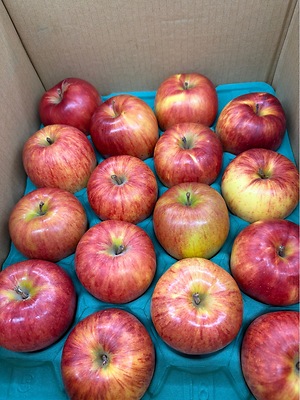
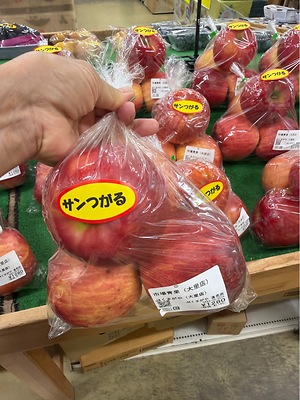
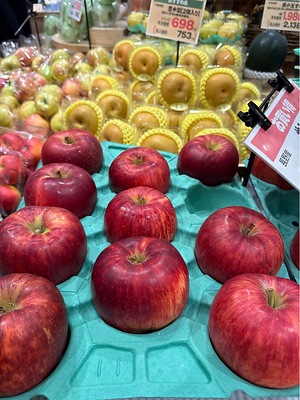
Tsugaru apples are moderately sized, round to conical fruits with a somewhat uniform shape and light russeting within the stem’s cavity. The skin is firm, slightly sticky, and has a yellow-green base that may be covered with red mottling, blushing, and striping. Underneath the surface, the flesh is dense, white, crisp, and aqueous, encasing a small central core filled with black-brown seeds. Tsugaru apples have an intensely sweet flavor with an acidic and mildly tart undertone.
Seasons/Availability
Tsugaru apples are available in late summer through early winter in Japan.
Current Facts
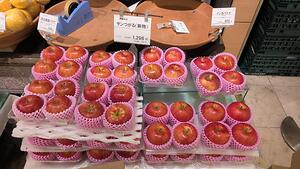
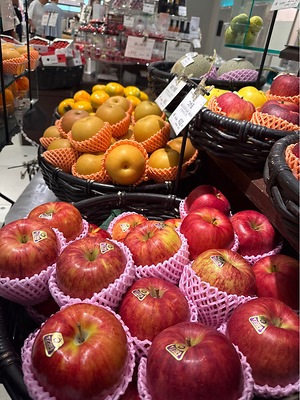
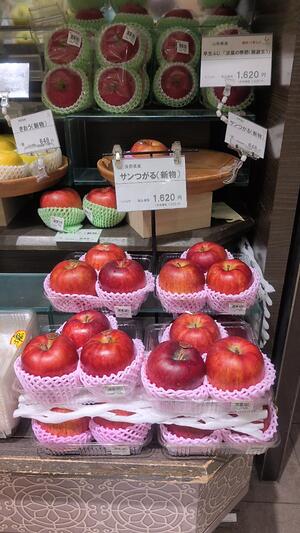
Tsugaru apples, botanically classified as Malus domestica, are an early-ripening variety that belongs to the Rosaceae family. The Japanese cultivar is considered to be one of the sweetest varieties available in commercial markets and was named after the district of Tsugaru, located in the Aomori prefecture. Tsugaru apples are traditionally cultivated with two distinct methods using bags around the fruit. One method is known as San Tsugaru, where the fruits are left to grow on the tree with full sun exposure to develop the highest sugar content. The other method involves covering the Tsugaru fruits in bags to prevent exposure to sunlight, creating a paler skin tone with a tarter flavor.
Nutritional Value
Tsugaru apples are a good source of fiber, which can help regulate digestion and provides vitamin C, which is an antioxidant that can increase collagen production and boost the immune system. The apples also contain some vitamin A, calcium, potassium, and iron.
Applications
Tsugaru apples are best suited for raw applications as their very sweet flavor is showcased when consumed fresh, out-of-hand. The crisp, juicy apples don’t brown quickly when sliced and are a favored snack variety for children’s lunches, fruit bowls, and green salads. The apples can also be blended into smoothies, pressed into juices, used as a topping on pancakes, oatmeal, and cereal, dried for extended use, or served with dips, nuts, and cheeses on appetizer plates. In addition to fresh eating, Tsugaru apples can also be utilized for their sweet flavor in baked preparations such as pies, muffins, tarts, and cakes, or they can be cooked into jams, compotes, and apple butter. Tsugaru apples pair well with cheeses such as blue, cheddar, and goat, nuts such as walnuts, pistachios, almonds, and hazelnuts, spices such as nutmeg, cinnamon, and cloves, vanilla, caramel, and fruits such as oranges, grapes, and pears. The fresh fruits will keep 1-3 months when stored in the crisper drawer of the refrigerator.
Ethnic/Cultural Info
In Japan, the Aomori prefecture is one of the top apple-producing regions, accounting for over fifty-six percent of the apples found in commercial markets. The northern prefecture has a suitable climate for apple cultivation with four distinct seasons, and apples were first introduced to the region in the 1870s through English teacher John Ing and headmaster Kantei Kikuchi. Legend has it that Kikuchi planted apple trees in his garden, and Ing gifted his students with the apples as a sweet, crunchy snack. The students highly favored the new fruit, and with word spreading across the prefecture about the fruits, Kikuchi donated new saplings to families in Tsugaru, encouraging the spread of apple cultivation throughout the region.
Geography/History
Tsugaru apples are native to Japan and were developed at the Aomori Prefectural Apple Experimental Station in the 1930s. The variety is a cross between a kodama and golden delicious apple, and after approximately forty years of trials, Tsugaru apples were officially released to commercial markets in 1975. Today Tsugaru apples are only available for a short season and are cultivated in the Aomori, Yamagata, and Nagano prefectures in Japan. The apples were also introduced to the United States in 1999 and are cultivated through specialty farms and sold at select farmer’s markets.
Restaurant BASHAMICHI
Haneo, Namegawa, Saitama
+81 493 81 7811
Sun Tsugaru Apples…Tsugaru apples are medium-sized fruits with a firm, slightly sticky skin. Their yellow-green base is often covered in red mottling, blushing, and striping. The white, crisp flesh inside is dense and quite juicy, with a small central core holding black-brown seeds. Known for their intense sweetness with acidic and mildly tart notes, they provide a balanced flavor profile ideal for fresh eating.
サンフレッシュ 髙島屋新宿店
5-chōme-24-2 Sendagaya, Shibuya, Tokyo 151-0051, Japan
03-5361-1920
Tsugaru apples have a very sweet, crisp, and juicy texture, making them perfect for eating fresh. They resist browning when sliced, which makes them an ideal choice for snacking, fruit salads, and lunchboxes. These apples can also be incorporated into smoothies, juices, oatmeal, or appetizers with cheeses and nuts. Additionally, they work well in baked goods like pies and tarts, and they can even be made into jams and apple butter. They stay fresh for 1-3 months when refrigerated.
鮪花壇 大丸東京店
丸の内1丁目, 千代田区, 東京都
+81 3 6812 2196
Tsugaru apples: These apples are one of the sweetest varieties in commercial markets and originated in Japan, named after the Tsugaru district in Aomori prefecture. They're grown using two techniques—either exposed to full sunlight to maximize sweetness or shielded with bags for a less vibrant skin and tarter flavor. This unique cultivation impacts their flavor profile and appearance.
サンフレッシュ 髙島屋新宿店
5-chōme-24-2 Sendagaya, Shibuya, Tokyo 151-0051, Japan
03-5361-1920
Tsugaru apples are a Japanese variety developed in the 1930s at the Aomori Prefectural Apple Experimental Station. They are a cross between kodama and golden delicious apples and were officially released in 1975 after forty years of trials. These apples have a short growing season and are primarily cultivated in Aomori, Yamagata, and Nagano prefectures in Japan. Introduced to the U.S. in 1999, they are sold at select specialty farms and farmer's markets.
大里農産物直売所
津田新田, 熊谷市, 埼玉県
Tsugaru apples are moderately sized and round to conical in shape, featuring firm, slightly sticky skin with a yellow-green base that often has red mottling, blushing, or striping. Their dense and crisp white flesh is known for its intensely sweet flavor, accentuated by a mildly tart and acidic undertone, making them a uniquely delicious and refreshing choice.
維新號 グランデュオ立川店
柴崎町3丁目, 立川市, 東京都
+81 42 540 2204
Tsugaru apples are exceptionally sweet and crisp, making them ideal for eating fresh. They resist browning when sliced, which makes them popular in children’s lunches, fruit bowls, and salads. Beyond raw consumption, these apples can be used in smoothies, juices, pies, muffins, jams, and more. They pair wonderfully with cheeses like cheddar and goat, nuts like walnuts and almonds, and spices like cinnamon and nutmeg. Stored properly, they can last 1-3 months in the refrigerator.
Tsugaru Apples are in season now!...Tsugaru Apples are one of the sweetest apple varieties, originating from the Tsugaru district in Japan's Aomori prefecture. They are cultivated using two distinct methods: one lets the fruit bask in sunlight for maximum sweetness, while the other uses bags to create a paler apple with a tarter taste. These apples are rich in fiber, vitamin C, and also provide vitamin A, calcium, potassium, and iron, supporting digestion, collagen production, and immune health.
Tsugaru apples were crossbred from a Kodama and Golden Delicious apple at the Aomori Prefectural Apple Experimental Station in the 1930s. After decades of refinement, they were released to the commercial market in 1975. These apples are now mainly grown in Aomori, Yamagata, and Nagano prefectures. Outside Japan, Tsugaru apples were introduced to the United States in 1999 and are cultivated on specialty farms for limited markets.
Tsugaru apples have a unique taste. Their dense, white flesh is crisp and full of juice, combining an intensely sweet flavor with slightly acidic and mildly tart undertones. The skin is firm and sticky, showcasing a yellow-green base often adorned with red mottling, blushes, and striping. These moderately sized apples feature small central cores containing black-brown seeds, making them both visually appealing and deliciously dynamic.
Check out our QR code Library to download QR Codes that link to our fruit encyclopedia. Use on your signage and other promotions to share the knowledge!