

Honey Apricots
Estimated Inventory, lb : 0

Description/Taste
Honey apricots are small to medium-sized fruits, averaging 15 to 20 grams in weight, and have a uniform round-to-oval shape. The variety features a prominent seam extending the length of the fruit, and the golden yellow-orange skin is firm, semi-thick, and taut, covered in a layer of velvety fuzz. Honey apricots sometimes exhibit some red speckling on their surface, dots which resemble tiny freckles. Underneath the skin, the yellow flesh is dense, aqueous, and tender with a lightly fibrous nature. The flesh also encases a central dark brown, almond-shaped pit that is freestone and does not cling to the fruit. The pit can be easily removed. Honey apricots are edible raw and are known for their sweet flavor and honeyed aftertaste. The variety is not bitter and contains a delicate, subtle tartness that only enhances its sweetness.
Seasons/Availability
Honey apricots are available in mid-summer through fall, typically between late July and early August.
Current Facts
Honey apricots, botanically classified as Prunus armeniaca, are a mid-season variety belonging to the Rosaceae family. The cultivar was developed in Russia in the late 20th century and was released for its frost hardiness, disease resistance, and consistent fruit yields independent of seasonal growing conditions. Honey apricots form on fast-growing deciduous trees reaching 3 to 5 meters in height, and each tree can produce around 15 to 30 kilograms of fruit annually. The fruits can be transported long distances without losing flavor and were named for their sweet, honeyed taste. Honey apricots are an all-purpose variety prized for their versatility in culinary preparations. Chefs and home cooks seek out the fruits for use in sweet and savory dishes and a wide array of beverages.
Nutritional Value
Honey apricots have not been extensively studied for their nutritional properties. Apricots, in general, are a source of fiber to regulate digestion and contain vitamins A, B, C, and E, which protect cells against free radical damage, strengthen the immune system, contribute to energy production, and maintain healthy organs. Apricots also provide minerals in varying amounts, including magnesium, potassium, calcium, iron, phosphorus, zinc, copper, and manganese. These minerals help the body build red blood cells, produce the protein hemoglobin that transports oxygen through the bloodstream, control nerve function, balance fluid levels, and support bone and tooth development.
Applications
Honey apricots have a sweet flavor suited for fresh and cooked culinary preparations. The variety is enjoyed out of hand when ripe, or it is sliced for salads, displayed on fruit platters, and used as a topping on yogurt and porridge. Honey apricots are also blended and frozen into ice cream and sorbet or incorporated into fresh juices, smoothies, and stewed fruit beverages. In addition to raw uses, Honey apricots are simmered into compotes, marmalades, and jams, and these sweet preserves are traditionally served with bread and cheese. The fruits are also cooked into pudding or added to baked goods like pies, dumplings, and cakes. In Central Asia, Honey apricots are often mixed into rice dishes called plov, adding a sweet contrast to the rich, savory ingredients of various meats and vegetables. The fruits are also grilled and served with fresh cheeses, topped with ice cream as a dessert, or used as a simple side to family-style meals. Beyond cooking, Honey apricots are sundried for extended use and consumed as a chewy snack. The dried fruits are also used in drinks like tea as a natural sweetener, chopped and added to savory dishes, or consumed with bread. A well-known Central Asian recipe soaks the dried fruits overnight and cooks them with sugar and lemon. The stewed apricots are served with fresh cream as a dessert or snack. Honey apricots pair well with herbs like mint, basil, and parsley, as well as fruits like berries, citrus, and other stone fruits. Fresh apricots should be ripened at room temperature. Once mature, they can be placed in the refrigerator’s crisper drawer for a few days to one week.
Ethnic/Cultural Info
Apricots are popularly used as flavoring in mevali kompot, a sweet beverage prepared in Uzbekistan and throughout Central Asia and Eastern Europe. The name mevali kompot roughly translates to “fruit compote,” which describes the drink being made from whole or sliced fruit boiled in a mixture of water and sugar. Mevali kompot was historically prepared to preserve summer and autumn fruit harvests and to create a refreshing, flavorful beverage that could be enjoyed year-round, especially during the barren winter months. It was also a preservation method before the introduction of refrigeration, as the high sugar content helped save the mixture for extended periods. In Uzbekistan, mevali kompot is sometimes spiced with honey, vanilla, or cinnamon for added flavor, depending on the fruits used, and is served hot or cold. In mevali kompot, the fruits are kept in the beverage after slow-cooking, creating sweet, flavorful snacks to enjoy in the drink.
Geography/History
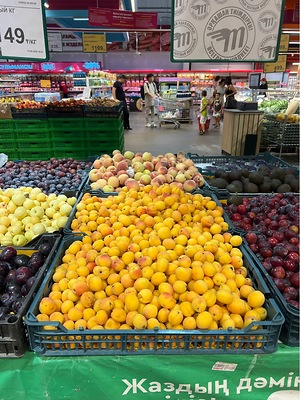
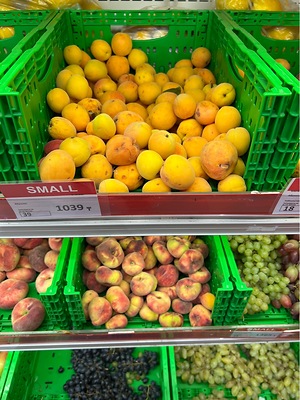
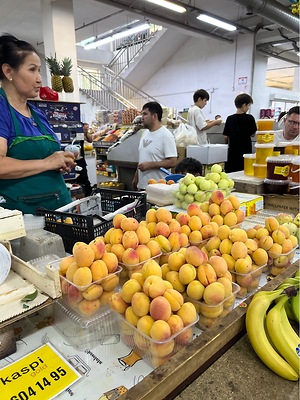
Honey apricots are native to Russia and were developed at the South Ural Research Institute of Fruit, Vegetable, and Potato Growing in Chelyabinsk. The variety was created in 1991 by a breeding team led by K.K. Mullaianov, who open-pollinated Kichiginsky apricots for several years to select a new variety with improved traits. Honey apricots were released to the public in 1996 and were positioned in markets as a cultivar capable of surviving harsh climatic conditions and consistently producing fruit yields regardless of the growing environment. The variety was specifically designed for northern growing regions in Russia, an area once challenging for apricot cultivation, and is found throughout Siberia, the Urals, and the Central Black Earth Region. Honey apricots are also grown throughout Central Asia and sold through local fresh markets. The Honey apricots featured in the photograph above were sourced through growers in Uzbekistan and sold in Almaty, Kazakhstan.

Honey Apricots for sale around the world shared on the Specialty Produce App