Summary generated by our research from the article below.
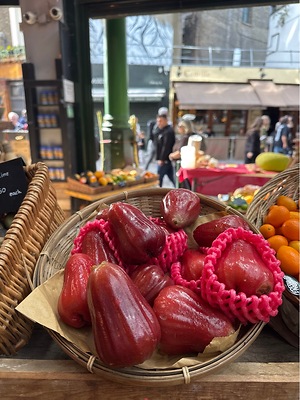
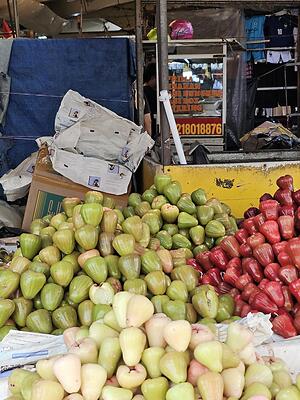
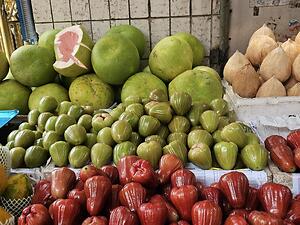
Jambu Jade Rose is a large Jambu fruit, also known as Wax Apple. Jambu Jade Rose is considered to be a "jumbo" variety, with each fruit weighing up to 200 grams. Jambu Jade Rose has a smooth exterior skin that is a bright shade of green with tinges of pink towards the bottom. Where many Jambu fruit grow in a bell-like pear shape, Jambu Jade Rose tends to develop a more oval shape. Jambu Jade Rose have a crisp white interior with few seeds. They are typically sweeter and crunchier than many of their red or pink varieties. In comparison to other varieties, they also tend to be denser and less watery.
Jambu Jade Rose is botanically classified as Syzygium samarangense. It is a variety of Jambu grown in Southeast Asia where Jambu are common and are seen as a cooling summer fruit. Jambu Jade Rose may be referred to as Jade Green Jambu, Green Honey Deli Jambu, and Jambu Giok Hijau in Indonesian. They are not often found at market but when they are, they in high demand, and quickly sell out.
Jambu Jade Rose contains a good amount of vitamin A and vitamin C, and are rich in calcium, potassium and iron.
Jambu Jade Rose fruit are best eaten fresh, out of hand. They can also be juiced, or used in salads. To store Jambu Jade Rose fruit, keep them in a bag in a refrigerator, where they will last for several days.
Jambu fruit are used therapeutically in Taiwan. There, the fruit is cooked in a sugar syrup, and administered to treat dry coughs. They are also seen as an antidote for hangovers.
The origins of Jambu Jade Rose are unknown. However, they are said to be a cultivar from Taiwan, where Jambu fruit are an important food crop. Jambu Jade Rose is said to have been brought to Indonesia (where many varieties of Jambu fruit exist) around 1994. The variety entered the country by way of North Sumatra, and several fruit growers in Medan now grow it. Since then, Jambu Jade Rose has been grow in the orchards of smallholder farmers and garden hobbyists willing to experiment with varieties, often passing on the stock to others through grafts and seeds.
Recipes that include Jambu Jade Rose. One
Jambu Jade Rose
10/06/2026
London, United Kingdom
View Notes
Borough Market
Jambu Jade Rose fruit are not only delicious when eaten fresh but can also be juiced or added to salads for a refreshing twist. For optimal freshness and longevity, store these fruits in a bag inside a refrigerator, where they can stay good for several days.
Jambu Jade Rose
08/29/2026
Bogor, Indonesia
View Notes
Toko Seragam Jaya Giri
Gedung Plaza Dewi Sartika, Jl. Dewi Sartika No.47, RT.05/RW.06, Cibogor, Kecamatan Bogor Tengah, Kota Bogor, Jawa Barat 16121, Indonesia
jambu jade rose…Jambu Jade Rose is botanically categorized as Syzygium samarangense and is commonly grown in Southeast Asia, where it's celebrated as a cooling summer fruit. Also known as Jade Green Jambu or Jambu Giok Hijau in Indonesian, these fruits are highly popular but rarely found in markets due to high demand. Packed with vitamin A, vitamin C, calcium, potassium, and iron, they offer a nutrient-rich profile that makes them both delicious and beneficial for health.
Jambu Jade Rose
06/11/2026
Jakarta, Indonesia
View Notes
Glodok Chinatown Market
Jl. Pancoran, RT.2/RW.1, Glodok, Kec. Taman Sari, Kota Jakarta Barat, Daerah Khusus Ibukota Jakarta 11120, Indonesia
Jambu Jade Rose variety is believed to have originated in Taiwan, where Jambu fruits are a significant food crop. It was introduced to Indonesia around 1994 via North Sumatra. Today, it thrives in the orchards of small-scale farmers and garden enthusiasts, who share its stock through grafts and seeds, helping to spread the cultivation of this variety further.
Jambu Jade Rose
10/14/2024
Depok, Indonesia
View Notes
Jambu Jade Rose is a unique variety of Jambu fruit, also called Wax Apple. It stands out as a "jumbo" type, often weighing up to 200 grams. Unlike the typical bell-like shape of many Jambu fruits, this variety has a more oval form. Its exterior combines bright green tones with pinkish highlights near the base. The crisp white interior contains few seeds and offers a sweeter, crunchier experience compared to red or pink types, with a denser, less watery texture.
Jambu Jade Rose
06/18/2023
Ciomas, Indonesia
View Notes
Jambu Jade Rose fruit are best enjoyed fresh and can also be juiced or added to salads. For optimal storage, place the fruit in a bag in the refrigerator, where it can remain fresh for several days.
Jambu Jade Rose
12/14/2022
Central Jakarta, Indonesia
View Notes
Jambu Jade Rose is botanically classified as Syzygium samarangense and is a variety of Jambu native to Southeast Asia, where it is viewed as a cooling summer fruit. Known by names like Jade Green Jambu and Jambu Giok Hijau, they are in high demand at markets and sell out quickly when available. Rich in vitamin A, vitamin C, calcium, potassium, and iron, these fruits offer several nutritional benefits while showcasing their regional significance.
Jambu Jade Rose
12/14/2022
East Jakarta, Indonesia
View Notes
Jambu Jade Rose is a unique cultivar of Jambu fruit believed to have originated in Taiwan. It made its way to Indonesia in 1994 via North Sumatra. Today, it is grown by smallholder farmers and garden enthusiasts in Indonesia, particularly in Medan, who propagate it through grafts and seeds. This variety is popular among those willing to experiment with different types of Jambu fruit in their orchards and gardens.
Jambu Jade Rose
01/16/2022
North Jakarta, Indonesia
View Notes
Jambu fruit holds therapeutic value in Taiwan, where it is cooked in sugar syrup and used to soothe dry coughs. It is also believed to act as a natural antidote for hangovers.
Jambu Jade Rose
07/21/2019
Cisarua, Indonesia
View Notes
Jambu Jade Rose is a jumbo variety of Jambu fruit, weighing up to 200 grams each. It has a smooth green skin with hints of pink and an oval shape, differing from the bell-like pear shape of other varieties. Its crisp white interior has few seeds, is sweeter, crunchier, and denser compared to red or pink Jambu types, with less water content making it distinctively flavorful.
View Full Share Market®




 is easiest, three is harder.