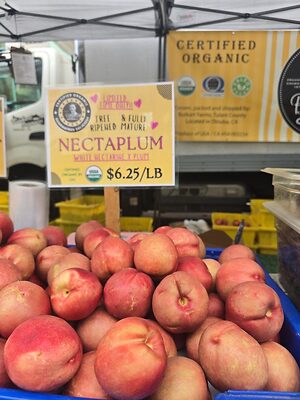
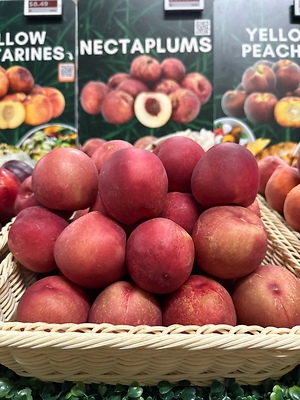
NectaPlums®
Estimated Inventory, cs : 0

Description/Taste
NectaPlums® vary in size depending on growing conditions and generally average 6 to 7 centimeters in diameter. The fruits have a round to oval shape, sometimes tapering to a slight point on the non-stem end. NectaPlums® have smooth, taut, and semi-thick skin, and the surface features a light suture line that extends the length of the fruit. The skin showcases variegated shades of red and pink. When young, the skin is dark red, purple, or maroon, ripening to pale pink and light red hues. Some fruits may also have some mottling, superficial brown scars, and markings acquired during cultivation. Underneath the surface, the white flesh is firm, aqueous, and dense with a succulent consistency. The flesh envelops a central pit with freestone qualities, meaning it does not adhere tightly and can be easily separated. The flesh also has minimal, tender fibers, and some red streaks may occur surrounding the pit. NectaPlums® are aromatic and edible raw once ripe. The fruits are known for their sweet flavor, with a layer of tangy acidity and spice-like nuances. NectaPlums® have a taste reminiscent of nectarines and plums, with bright complexity and lingering fruity notes.
Seasons/Availability
NectaPlums® are available in the summer, typically between mid-June and August.
Current Facts
NectaPlums®, botanically a part of the Prunus genus, are an interspecific hybrid belonging to the Rosaceae family. Interspecific hybrids are fruits created from naturally breeding two or more closely related species. NectaPlums® arose from crosses between plums, nectarines, and peaches and were bred using traditional hand-pollination techniques. They are not genetically modified. The hybrid fruits were developed by Zaiger Genetics in California and were released as an early to mid-season variety known for their complex flavor, low chill hours, high yields, and self-fertile nature. The fruits grow on deciduous trees reaching 4 meters in height and produce consistent crops each year. In commercial markets, the original variety of NectaPlum® was branded as Spice Zee, a moniker derived from the fruit’s distinct spice-like flavor. “Zee” was given in honor of Floyd Zaiger, the variety’s breeder. NectaPlums® are often seen in markets under the Spice Zee name and are sought by chefs and home cooks for their versatility in fresh and cooked culinary preparations.
Nutritional Value
NectaPlums® have not been studied for their nutritional properties. Stone fruits, in general, are a source of fiber to regulate digestion and contain vitamins A, B, C, E, and K, which strengthen the immune system, aid in faster wound healing, maintain healthy organs, and protect the cells against free radical damage. Stone fruits also provide minerals in varying amounts, including calcium, iron, phosphorus, potassium, zinc, copper, and manganese. These minerals help the body support bone and tooth formation, balance fluid levels, build red blood cells, and produce the protein hemoglobin for oxygen transport in the bloodstream.
Applications
NectaPlums® have a rich flavor and are suited for fresh and cooked preparations. The variety is primarily reserved for raw preparations to savor its authentic, natural taste. NectaPlums® are eaten out of hand when ripe and served as a snack or an accompaniment to cheese boards and appetizer platters. They are also sliced and tossed into salads, used as a topping over parfaits, ice cream, and oatmeal, or mixed into fruit medleys. Beyond fresh preparations, NectaPlums® are incorporated into baked goods like pies, crumbles, and crisps. The fruits are also simmered into preserves, cooked into sauces, or combined with sweeteners in homemade syrups. While less common, they can be added to any fresh juices and smoothies, similar to regular nectarines or plums. NectaPlums® pair well with herbs like rosemary, mint, thyme, and basil, spices like cinnamon, nutmeg, and cloves, and other fruits like cherries, apricots, and blueberries. Fresh NectaPlums® will keep for several days to weeks, depending on maturity. The fruit should be kept at room temperature until ripe. Once ripe, the fruits can be stored in the refrigerator to extend their shelf life.
Ethnic/Cultural Info
NectaPlums® are praised by growers for their ornamental qualities as well as their fruit. The trees have low chill requirements, approximately 200 to 300 hours, allowing the variety to be grown in diverse habitats. They are also adaptable to areas with higher chill hours. In early spring, NectaPlums® produce clusters of fragrant, brightly colored pink flowers that add a pop of color to landscapes. Following the flowers, new foliage on the tree is initially pigmented, with a rich crimson to cranberry-red shade, eventually turning dark green around 5 to 6 weeks later. This red foliage continues to appear throughout the summer and becomes mixed with jewel-toned fruits to create visual depth and aesthetic appeal. NectaPlum® leaves turn yellow later in the fall and eventually drop in the winter, but the cycle repeats each year with the brilliant blooms, creating interest year-round.
Geography/History
NectaPlums® are native to the United States and were developed by Zaiger Genetics of Modesto, California. Zaiger Genetics was established by plant breeder Chris Floyd Zaiger in the 1960s and was one of the first American private breeding companies. Zaiger, along with his two sons, Gary and Grant, has released over 420 fruit and nut varieties in the United States, creating these cultivars through hand pollination, decades of evaluation, and natural breeding techniques. NectaPlums® were created from several crosses between nectarine, peach, and plum varieties. These crosses occurred at the company’s experimental orchard in the late 19th century. The maternal parent of the cross, labeled 10LA512, was bred from a combination of a May Grand nectarine and a seedling of a cross from Royal Gold peach and an Early Sungrand nectarine. The paternal parent, called 41GF72, was created from a seedling of a Red Beaut plum and an unknown peach variety crossed with another nectarine of unknown parentage. The product of the cross between 10LA512 and 41GF72 was planted in large numbers in the experimental fields and allowed to develop naturally while breeders evaluated the qualities of each tree. In 1996, a seedling from this selection was selected for commercialization. Spice Zee was the first NectaPlum® to be officially released, and the variety was granted a US Plant Patent in 2003 under the number US PP13,503 P2. Today, NectaPlums® are planted in home gardens and cultivated by specialty gardeners throughout the United States. When in season, the fruits are sold through select local markets and wholesalers, including Specialty Produce.

NectaPlums® for sale around the world shared on the Specialty Produce App