



Cinnamon Cap Mushrooms
Estimated Inventory, lb : 0
This item was last sold on : 01/31/26

Description/Taste
Cinnamon Cap mushrooms are small in size, averaging 3-10 centimeters in diameter, and grow in tight clusters with convex caps on top of tall, slender stems. The caps are firm and can range in color from golden-orange to brick red depending on maturity, and the color gradually fades to white around the edges. The top of the cap may also contain some white flakes. The crowded gills are cream to ivory when young, turning a purple-grey to brown as the mushroom ripens and the stem is slender and off-white to pale yellow. Cinnamon Cap mushrooms have a light, woodsy scent, and when cooked, they retain their firm, crisp texture and offer a mild, earthy, nutty taste, which may become bitter as they mature.
Seasons/Availability
Cinnamon Cap mushrooms are available in the winter through spring.
Current Facts
Cinnamon Cap mushrooms, botanically classified as Hypholoma sublateritium, are an edible variety that is also often classified as Hypholoma lateritium and is a member of the Strophariaceae family. Also known as Brick Cap and Brick Top mushrooms, Cinnamon Cap mushrooms are found growing in the wild and are also commercially cultivated. This mushroom colonizes quickly, growing in dense clusters, and is commonly found on stumps or logs of oak and chestnut trees. Some sources in Britain claim that Cinnamon Cap mushrooms are inedible, while others, primarily in North America, disagree. This variety is often confused with the inedible sulphur tufts mushroom, which may explain the controversy over the Cinnamon Cap mushroom’s edibility. Cinnamon Cap mushrooms are widely consumed in the United States, Canada, and Japan, where they are known as Kuritake and are favored for their nutty flavor and versatility in many culinary dishes.
Nutritional Value
Cinnamon Cap mushrooms are rich in vitamins like thiamin, riboflavin, and niacin, and minerals including calcium, potassium, and sodium.
Applications
Cinnamon Cap mushrooms must be cooked and are best suited for boiling, sautéing, and pan-frying. Due to their small size, they can be used whole, stems included, but they should be cleaned with a damp paper towel or a soft brush and trimmed prior to use. Younger Cinnamon Cap mushrooms are often preferred as older mushrooms may have a bitter taste. They are commonly used in risottos, stir-fries, soups, stews, bruschetta, and egg dishes such as scrambles, frittatas, or omelets. They can also be pan-fried and served as a side dish to salmon or grilled steak, or pickled for extended use. Cinnamon Cap mushrooms pair well with grilled meats, seafood, garlic, onions, chives, sweet peppers, cherry tomatoes, tarragon, parsley, red wine, miso, and creamy cheeses like ricotta, Gruyere, and Emmentaler. They will keep up to a week when stored in an open paper bag in the refrigerator but are recommended for immediate use for best flavor.
Ethnic/Cultural Info
Cinnamon Cap mushrooms are considered a delicacy in Japan and are valued for their crisp, nutty taste. Cultivation of these small mushrooms began at the Mori Mushroom Institute in Kiryu, Japan, and the mushrooms are grown on logs of oak or chestnut with sawdust to create a sustainable, year-round industry. In Japan, mushrooms are a large part of daily diets because they are low in calories, provide vital nutrients, and are available year-round at a somewhat affordable price. Cinnamon Cap mushrooms are commonly incorporated into soups in Japan and can be cooked with amitake and hanaiguchi mushrooms in a base of konbu kelp and soy sauce to create an umami flavored dish. Cinnamon Cap mushrooms should not be confused with the similar-looking Japanese nameko mushroom, which has also been referred to at times as a Cinnamon Cap mushroom.
Geography/History
The origins of Cinnamon Cap mushrooms are largely unknown, but they were first recorded in 1762 by a German mycologist. Today Cinnamon Cap mushrooms can be found growing in the wild and are also cultivated and sold at farmers markets and specialty grocers in Europe, North America, and in the temperate regions of Asia, especially in Japan and Korea.
Recipe Ideas
Recipes that include Cinnamon Cap Mushrooms. One
 is easiest, three is harder.
Podcast

Cinnamon Cap Mushrooms for sale around the world shared on the Specialty Produce App
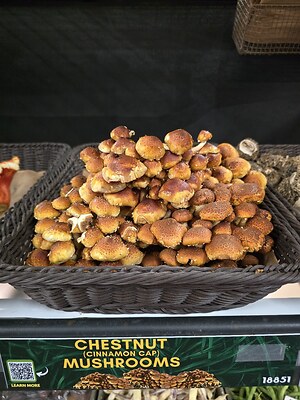


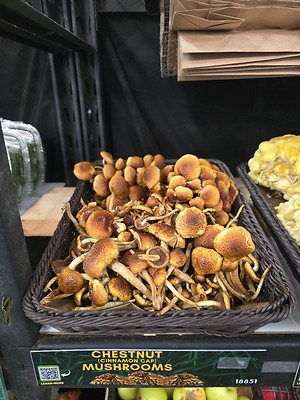
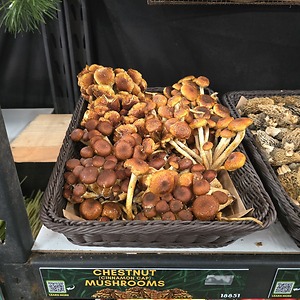


Check out our QR code Library to download QR Codes that link to our fruit encyclopedia.
Use on your signage and other promotions to share the knowledge!
Use on your signage and other promotions to share the knowledge!



