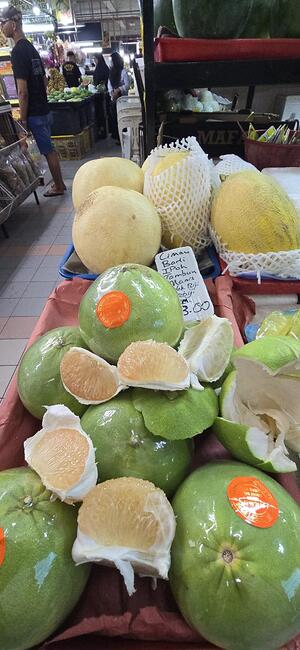
Limau Bali
Estimated Inventory, lb : 0

Description/Taste
Limau Bali varies in size and shape, depending on the specific variety, and is typically large, averaging 10 to 30 centimeters in diameter. The fruits showcase an oblate, round, or teardrop shape and have a curved, sometimes tapered nature. Limau Bali ripens from green to shades of yellow-green, golden yellow, red, and pink-red, and the rind, also referred to as the peel, is semi-thin, rough, and covered in textured, finely pitted oil glands. Each gland contains fragrant essential oils that disperse into the air when the rind is scratched, sliced, or peeled. Underneath the rind, a white pith divides the rind from the flesh and has a spongy, dry, cotton-like consistency. The pith can be thick or thin, changing with the specific variety, and is easily peeled, revealing 9 to 18 segments of flesh divided by membranes. The membranes are thick and can sometimes carry a tough mouthfeel and bitter taste. They are often removed before consumption. The flesh appears in shades of red, white, orange, and pink, and has a firm, aqueous, crisp, and succulent consistency. The flesh is comprised of vesicles, which are translucent sacs of juice and pulp, and these can sometimes be shredded into small pieces in dishes, depending on their size and type. The seeds in the flesh range from a few to many, varying with the variety. Limau Bali emits a soft, citrusy, and floral aroma and is edible raw once ripe. Each variety will have its own flavor profile, ranging from sweet and mild to sweet and tangy, or mild, acidic, and tart with a subtly bitter aftertaste. The fruits are also known for having faint floral, honeyed, or fruity nuances.
Seasons/Availability
Limau Bali is available year-round, with a peak season from late summer to winter in Southeast Asia. Some regions can also extend their seasons into early spring, depending on the climate.
Current Facts
Limau Bali, botanically classified as Citrus maxima, is a general descriptor for pomelos grown in Malaysia and Indonesia, belonging to the Rutaceae family. The name Limau Bali does not refer to a specific variety but encompasses all types of pomelos found in Southeast Asian markets, including white, red, and pink-fleshed types. There are several general terms for pomelos in Malaysia and Indonesia, including Jeruk Bali, Limau Besar, Jeruk Adas, Limau Betwai, and Limau Serdadu. Limau Bali is commercially cultivated throughout Asia and is also planted in home gardens. The fruits grow on trees reaching 5 to 15 meters in height and are sold in local markets as a versatile ingredient for sweet and savory dishes. Limau Bali is also purchased for various medicinal, religious, and cultural uses.
Nutritional Value
Limau Bali varies in nutritional properties, depending on the specific variety. Pomelos, in general, are a source of fiber to aid in digestion and contain vitamins A, B, C, and E, which help maintain healthy organs, contribute to energy production, strengthen the immune system, and protect cells against free radical damage. Pomelos also provide minerals in varying amounts, including potassium, phosphorus, calcium, iron, copper, magnesium, and manganese. These minerals help the body balance fluid levels, support bone and tooth development, produce proteins for oxygen transport throughout the bloodstream, build red blood cells, and control daily nerve functions. In natural medicines practiced throughout Asia, leaves from the species are crushed and topically applied to the skin and joints to lower inflammation and soothe irritations. The rind of the fruit is also inhaled to help lessen symptoms of nausea.
Applications
Limau Bali has a mild, sweet, tangy, and delicate floral taste suited for fresh and cooked preparations. The fruits are primarily peeled, segmented, and eaten out of hand, or these segments are sprinkled with various flavorings, such as chili powder, lemon-lime juice, sugar, or hot sauce, for added flavor. Throughout Southeast Asia, Limau Bali is blended into drinks like smoothies and fruit juices, or the segments are tossed into various salads. Yee sang is a popular raw fish salad traditionally served in Malaysia during the Lunar New Year. This dish is said to welcome prosperity and abundance in the year to come and often includes pomelos for a citrusy, bright addition. Limau Bali is also used in variations of Thai pomelo salads, which combine fresh herbs with nuts, meat, and various dressings. In Malaysia, Limau Bali flesh is tossed into stir-fries or incorporated in pomelo sago, a dessert made from fruit, coconut milk, and sago pearls. In addition to the flesh, the rind is often braised, boiled, or stewed to add flavor to dishes, or candied as a chewy, sweet snack. Limau Bali rind peels and flesh are also added to desserts in Indonesia, especially in halwa kulit, a sweet pudding. The fruits are used as a subtle flavor and aroma enhancement in recipes like lemongrass chicken and are also mixed into sambals in main dishes. They are also incorporated into spicy fruit salads, known as rujak jeruk bali in Indonesian. Beyond utilizing the fresh fruit, the flesh is also boiled to create jams, jellies, and other preserves. Limau Bali pairs well with flavorings like coconut milk, fish sauce, soy sauce, and sesame, fruits including pineapple, mango, and other citrus, aromatics such as chiles, garlic, ginger, and torch ginger, and herbs like basil, mint, lemongrass, and cilantro. Whole, unopened Limau Bali will keep for a few days at room temperature and up to one week when stored in the refrigerator. It is recommended to immediately use ripe fruits for the best quality and flavor.
Ethnic/Cultural Info
Pomelo leaves and fruits are traditionally used in baths throughout Asia as a cleansing ingredient. In China, the leaves are infused into hot baths the night before the New Year and are believed to remove and help wash away bad luck from the previous year. This practice creates space for lightness and a fresh start as the New Year approaches, and the leaves release a natural, fragrant aroma as they are heated due to their essential oil content. In Malaysia, pomelos are sometimes used as a cleansing substitute for limes in the Belimau Bath, an annual ritual performed before the month of Ramadan. Belimau Bath consists of communities venturing to the river to wash their bodies in lime water, purifying both the body and the spirit. Ramadan is a time of fasting, prayer, and reflection observed by Muslims, during which they focus on discipline and spiritual growth. Belimau Bath has become an anticipated practice, and there are many variations and preferences for this cleansing ceremony, which utilize different types of citrus and herbal mixtures.
Geography/History
Limau Bali is a name for pomelos within the Citrus maxima species, which is native to areas of Southeast Asia. Pomelos have been growing wild since ancient times and are thought to have originated in regions of Indonesia, Malaysia, or Thailand. Over time, pomelos expanded in cultivation throughout Southeast Asia and also traveled into East Asia and Southern Asia. Varieties were often exchanged within these regions and selectively bred to create new types with differing colors and flavors. In 1884, it was recorded that a specific kind of pomelo was introduced from Indonesia to Malaysia by Sir Hugh Low, a British naturalist, under the name Limau Bali. This type was planted and cultivated in Penang and Perak. The name Limau Bali eventually became a general name for all varieties of pomelo grown in Malaysia, and the initial variety introduced under this name has been lost. In Malaysia, Limau Bali is famously grown in the Tambun Valley in Ipoh, the capital city of the state of Perak. The fruits cultivated in this region are sought after by pomelo enthusiasts worldwide and are known for their distinct flavor, developed through the terroir. Today, Limau Bali thrives throughout Southeast Asia and has expanded worldwide under the name pomelo. When in season, the fruits are sold through fresh markets, select retailers, and wholesalers.

Limau Bali for sale around the world shared on the Specialty Produce App