This website uses cookies, pixels, and other tracking technologies to personalize content, analyze how our site and apps are used, and create aggregated statistics.
We disclose data about site and app users to third parties so we can target our ads to you on other websites, and those third parties may use that data for their own purposes.
For more information on how we collect, use, and disclose this information, please review our
Privacy Policy.
Continued use of this site means you consent to our Privacy Policy.
Summary generated by our research from the article below.
Description/Taste
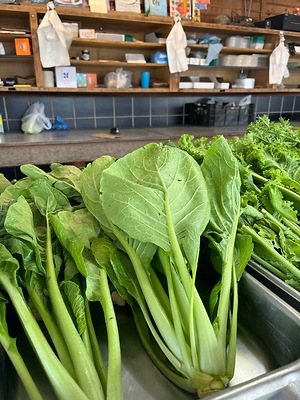
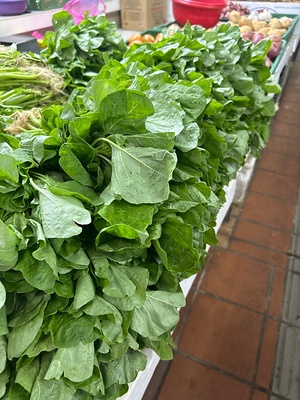
Komatsuna has long, slender stems with large, bright green spoon-shaped leaves. It may be harvested as a micro green, a fully mature leaf and even after the flowering head develops. The leaves become a deeper green color as the plant ages and its delicate stems grow wide, coarse and pale in color. In its young state, Komatsuna is tender and delicate with a sweet flavor and mild mustard bite. Larger leaves develop a more fibrous, hardy texture with an assertive crunch and a peppery mustard finish.
Seasons/Availability
Komatsuna is available year-round, with peak season fall through spring.
Current Facts
Komatsuna, botanically known as Brassica rapa var perviridis, is also commonly referred to as tendergreen or Japanese mustard spinach. Although not a true spinach, Komatsuna is from the mustard family and is a relative of turnips, cabbage, rapini and bok choy. It is almost exclusively grown in Japan, Taiwan, Korea and Vietnam where it is often pickled and known as cai chua. Komatsuna gets its name from the Komatsugawa district of Japan
Nutritional Value
Komatsuna leaves are nutrient dense and rich in beta carotene, calcium and Vitamins A, B2, C, K. Like other members of the Brassica family, it is prized for its potential cancer fighting effects from the presence of glucosinolates.
Applications
Komatsuna has a wide range of cooking applications dictated by the leaf's maturity upon harvest. When young, the leaves are very tender and can be used raw in salads and spring rolls or lightly sautéed in stir fries and wilted in pasta dishes. As the plant grows, the stems develop a hardier texture and require longer cooking times to become tender. Fully mature Komatsuna may be preserved as a pickled vegetable and is also fantastic added into soups and stews or braised with aromatics such as ginger, garlic and scallion. Other complimentary flavors include,tuna, shrimp, salmon, crab, ham, smoked meats, sesame, soy, rice wine vinegar, mirin, miso, lemon, chili peppers and cream.
Ethnic/Cultural Info
Komatsuna is a common staple in the Japanese diet.
Geography/History
Komatsuna spinach has been grown and incorporated into Japanese culture for centuries. It made its North American debut in 1930 but never become a very popular choice on American plates. It is a cool weather crop, but can still tolerate the heat of summer and is often grown year-round in temperate and subtropical climates.
Yukiji Sadsmatsu
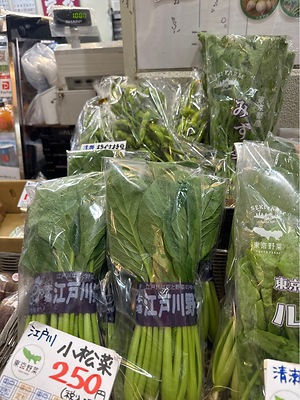
Edgawa Kamatsuna by Tokyo Yasai group…Komatsuna, also referred to as Japanese mustard spinach, is a versatile leafy green that has been a staple in the Japanese diet for centuries, offering a rich source of vitamins A, C, and calcium.
Chino Farm
Rancho Santa Fe, CA
Komatsuna: This versatile green can be enjoyed at various stages of growth – as a tender microgreen, a fully mature leaf, or even after its flowering head develops. Younger Komatsuna boasts a sweet flavor with a mild mustard bite, while larger, mature leaves have a hardy texture, an assertive crunch, and a peppery mustard finish, making it suitable for a variety of culinary uses.
Komatsuna, scientifically named Brassica rapa var. perviridis, originates from the mustard family and is closely related to turnips, bok choy, and cabbage. Its name comes from the Komatsugawa district in Japan. Common in East Asian cuisines, it is appreciated not only for its taste but also for its nutritional profile, being rich in beta carotene, calcium, and Vitamins A, B2, C, and K, along with glucosinolates known for potential cancer-fighting properties.
Komatsuna spinach, a leafy green rooted deeply in Japanese culture, was introduced to North America in 1930. Despite its early debut, it didn't gain widespread popularity among American consumers. This versatile crop thrives in cool weather but remarkably endures the summer heat, making it an excellent option for year-round growth in temperate and subtropical areas.
Komatsuna is a leafy green, often referred to as Japanese mustard spinach, is widely used in Japanese cuisine. Its mild flavor makes it versatile for dishes such as stir-fries, soups, and salads. Rich in vitamins A, C, and K, komatsuna is also valued for its health benefits, including supporting bone health and immune function. Its ability to grow year-round has made it a reliable and popular staple in Japanese households.
Komatsuna: This versatile leafy green has long, slender stems and bright green, spoon-shaped leaves. When young, it offers a sweet flavor with a mild mustard bite, while mature leaves develop a fibrous texture with a peppery finish. It can be enjoyed at various growth stages, from tender microgreens to mature leaves, even after its flowering head forms.
Chino Farm
Rancho Santa Fe, CA
Komatsuna is a versatile leafy green with culinary uses that change as it matures. Young leaves are tender and perfect for raw dishes like salads and spring rolls. As it matures, the stems require longer cooking and work well in soups, stews, or braised dishes. It pairs excellently with flavors like ginger, garlic, sesame, soy, miso, and even smoked meats, making it a favorite in both simple and complex recipes.
Komatsuna: Komatsuna is botanically classified as Brassica rapa var. perviridis and belongs to the mustard family, making it a relative of turnips, cabbage, bok choy, and rapini. It is commonly grown in Japan, Taiwan, Korea, and Vietnam, where it is often pickled. The name originates from the Komatsugawa district in Japan, and its leaves are nutrient-dense, offering beta carotene, calcium, and Vitamins A, B2, C, and K.
Specialty Produce
1929 Hancock St Suite 150 San Diego CA 92110
View on Instagram
(619) 295-3172 [email protected]
Komatsuna spinach has been a staple in Japanese culture for centuries and is an integral part of their diet. Although it was introduced to North America in 1930, it has not achieved significant popularity there. This vegetable is versatile in its growing conditions, thriving as a cool-weather crop while also tolerating summer heat. Its adaptability allows it to be cultivated year-round in temperate and subtropical climates.
Check out our QR code Library to download QR Codes that link to our fruit encyclopedia. Use on your signage and other promotions to share the knowledge!




 is easiest, three is harder.