





Venus Potatoes
Estimated Inventory, lb : 0

Description/Taste
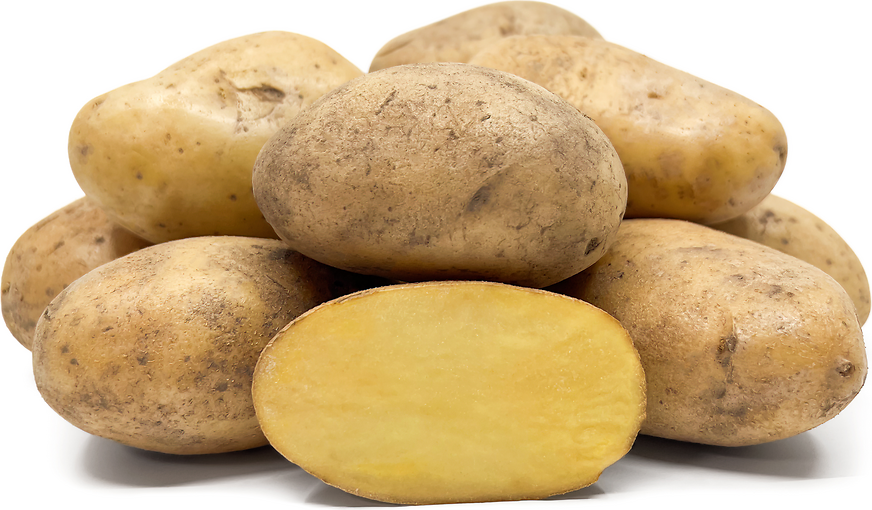
Venus potatoes vary in size and shape, depending on growing conditions, but are generally round to oblong with bluntly curved ends. The tubers are often covered in patches of clay or soil when sold in local markets, giving them a grey-brown hue. Once washed, the skin showcases a tan to golden yellow coloring. The skin is also thin, semi-smooth, and taut with a firm feel. The surface is covered in small, shallow eyes with textured patches, flecks, and small holes. Underneath the skin, the golden yellow flesh is dense, slippery, and grainy when raw, becoming fluffy, tender, and slightly creamy when cooked. Venus potatoes are said to have a high starch content, which will factor into the culinary preparations the tubers are utilized for. The variety must be cooked before eating and has a mild, neutral, subtly sweet, and lightly earthy taste.
Seasons/Availability
Venus potatoes are typically harvested mid-summer through fall in Eastern Europe and Central Asia.
Current Facts
Venus potatoes, botanically classified as Solanum tuberosum, are an Eastern European variety belonging to the Solanaceae or nightshade family. The mid-season cultivar was developed by scientists at a research breeding site in Belarus and selected as a multi-purpose variety. Venus potatoes are regarded as a table cultivar sold throughout Eastern Europe and Central Asia as a filling culinary ingredient. Breeders also designed the variety for processing into various potato products in Belarus. Venus potatoes are a relatively unknown cultivar and are only grown in small quantities commercially. The variety is known for its neutral flavor and resistance to viruses and diseases, making it an improved tuber for home and commercial cultivation. Venus potatoes are used in a wide array of cooked culinary preparations.
Nutritional Value
Venus potatoes have not been studied for their nutritional properties. Yellow potatoes, in general, are a source of fiber to aid digestion and vitamins C and D to strengthen the immune system while assisting the body in absorbing calcium. Potatoes also provide minerals like potassium, iron, phosphorus, and calcium. Potassium helps the body balance fluid levels, iron develops the protein hemoglobin for oxygen transport through the bloodstream, and phosphorus and calcium support bones and teeth.
Applications
Venus potatoes have a mild, earthy, and neutral flavor suited for cooked preparations. The variety is a versatile type positioned in markets as a table cultivar, and it can be used in most recipes calling for potatoes. Venus potatoes have a high starch content, making them suitable for frying, baking, and mashing. When heated, the tubers develop a fluffy interior and can be served as a simple baked side dish to meats. Venus potatoes are also known for being processed into chips. The variety is popularly used in local dishes in Belarus, including babka, a type of potato baked good, and tukmachi, a potato cake-like dish. The country’s national dish, draniki, is a shredded potato pancake fried until golden brown. This dish is often made with domestic potato cultivars in Belarus, including Venus, and is served with sour cream or sugar. Other preparations involve mashing the tubers for casseroles and dumplings or as a base for meat in main dishes. They are also grated, stuffed with cheese, and fried or sauteed as appetizers. In addition to common recipes made in Belarus, Venus potatoes are grown and eaten in Central Asia and served with rich meats like beef and lamb. Venus potatoes pair well with herbs like parsley, dill, thyme, and rosemary, mushrooms, tomatoes, cabbage, and aromatics including garlic, onions, and shallots. Whole, unwashed Venus potatoes will keep for several weeks when stored in a cool, dry, and dark location.
Ethnic/Cultural Info
Venus potatoes are one of the local varieties grown throughout Belarus. Over 184 cultivars of potatoes are grown across the country, and it is estimated that around 65% of tubers produced stem from domestic types. Belarus is known for potato cultivation, and production occurs in every administrative province between commercial fields and home gardens. Potatoes are nicknamed Belarus’s second bread, meaning the tubers are regarded as an essential, everyday, and filling culinary ingredient. They are also often used in literature to symbolize the Belarusian spirit of resilience. Each year in the city of Vitebsk, a gastronomic festival called Bulba-Kartoshka-Potatoes is celebrated to promote and preserve potato-centric recipes made in Belarus. The national dish, draniki, is prevalently featured, along with casseroles, dumplings, and various dishes. A competition is also held during the festival to encourage contestants to share their most creative potato dish.
Geography/History
Venus potatoes were developed in Belarus, a country in Eastern Europe. Potatoes were first planted in Belarus in the late 18th century and became a widely cultivated crop by the mid-19th century. Much of the variety’s history has not been revealed by the breeders beyond the fact that it was created by the Scientific Practical Center of the National Academy of Sciences of the Republic of Belarus. Venus potatoes were chosen as a new commercial variety for their high starch content and ability to be used in home preparations and processing. The variety was released and spread throughout Eastern Europe and Central Asia. Venus potatoes were submitted for state registration in Russia in 2022, but they have remained a rarer cultivar and are not well known. Today, Venus potatoes are a specialty tuber sold through select local markets in Europe and Central Asia. The variety is also planted in home gardens. The Venus potatoes featured in the photograph above were sourced through a vendor in Almaty, Kazakhstan. The potatoes were grown in the Narynkol region of East Kazakhstan, an area famous for potato production, and were carried into Almaty for sale as a culinary ingredient.




