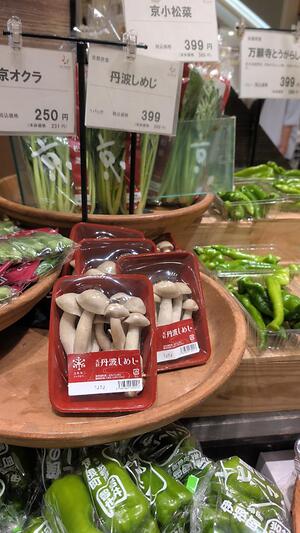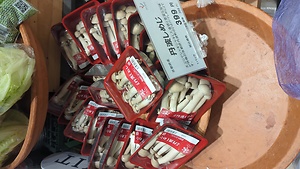


Tanba Shimeji Mushrooms
Estimated Inventory, lb : 0

Description/Taste
Tanba Shimeji mushrooms vary in size depending on cultivation conditions and maturity at harvest, forming clusters of small, round caps and long, semi-thick stems. The caps are thin, convex, and curved when young, averaging 4 to 10 centimeters in diameter, and later open and flatten with maturity, revealing a sunken center. Young caps feature buff, brown, or grey-brown hues, and as they mature, they can develop a white ring around the edges. The caps are also smooth, supple, and springy with a firm, crisp, and elastic consistency. Beneath the caps are densely packed white-to-cream-colored gills. The ivory, white, or light tan stems have a uniform thickness and are dense, fleshy, slightly fibrous, and chewy. Tanba Shimeji mushrooms have a bitter taste when raw, becoming tender, fragrant, earthy, and savory with rich umami-nuances once cooked.
Seasons/Availability
Tanba Shimeji mushrooms are available year-round. Wild versions of this mushroom, Hatake Shimeji, are harvested in the fall.
Current Facts
Tanba Shimeji mushrooms, botanically classified as Lyophyllum decastes, are a Japanese variety belonging to the Lyophyllaceae family. The descriptor Tanba Shimeji is a brand name coined by a joint venture among several companies in the town of Kyotamba in the Kyoto Prefecture of Japan. The name is derived from the region’s historical heritage, once known as the Tanba Province, and the mushrooms are a cultivated form of the wild Hatake Shimeji mushroom. Tanba Shimeji mushrooms retain a firmer texture even after cooking, giving them greater textural complexity, and are larger than Buna Shimeji mushrooms, another commercial variety widely available in Japan. The mushrooms are also valued for their year-round availability and umami-forward flavor. Tanba Shimeji mushrooms are sought by chefs and home cooks for use in a wide array of cooked culinary preparations.
Nutritional Value
Tanba Shimeji mushrooms have not been extensively studied for their nutritional properties. Mushrooms, in general, are a source of fiber to aid in digestion and contain vitamins B and D, which contribute to energy production and assist in calcium absorption for stronger bones. Mushrooms also provide varying amounts of minerals, including iron, potassium, calcium, magnesium, phosphorus, manganese, and copper. These minerals help the body balance fluid levels, promote bone and tooth development, control daily nerve functions, produce the protein hemoglobin for oxygen transport through the bloodstream, and build red blood cells.
Applications
Tanba Shimeji mushrooms have a mild, earthy flavor suited for cooked culinary preparations. The variety is not commonly eaten raw due to its bitter taste, but when cooked, the mushrooms develop a pleasant savoriness. Tanba Shimeji mushrooms should be trimmed to remove any fibrous portions, and smaller caps can be kept in longer pieces, as they are easily picked up with a fork or chopstick, depending on their size. The mushrooms retain their chewy texture when heated and are often battered and fried into tempura, cooked and tossed into salads, or sauteed, roasted, or braised in aromatics as a simple side. Try stir-frying or pan-frying the mushrooms in butter and salt or adding cooked mushrooms to noodle and rice dishes. Tanba Shimeji mushrooms are also simmered into soups, curries, and stews, and are a favorite in hot pot. While less common, they are cooked into omelets and other egg-based dishes, wrapped in thin slices of meat and simmered in savory sauces, or used in vegetable medleys. Tanba Shimeji mushrooms pair well with aromatics like garlic, ginger, and shallots, herbs such as rosemary, tarragon, and thyme, and meats like pork, beef, and wild game. Whole, unwashed Tanba Shimeji mushrooms should be immediately used for the best quality and flavor. The mushrooms will keep for a few days when wrapped in paper or a paper towel and placed in a bag in the refrigerator’s crisper drawer. The mushrooms can also be frozen for extended use.
Ethnic/Cultural Info
Tanba Shimeji mushrooms are known as Hatake Shimeji when found in wild populations. It is important to note that Tanba Shimeji is a marketing name for mushrooms artificially grown year-round in Kyoto Prefecture. Hatake Shimeji mushrooms, their wild counterparts, are found seasonally in the fall and are grown in prefectures throughout Japan, including the Yamanashi, Kyoto, and Nagano Prefectures, as well as in the Tohoku region. Hakata translates from Japanese to mean “field” and was given to the species because they are typically found in pastures, fields, gardens, grasslands, along roadways, forests, and on arable land. The variety is revered for its flavor and is often nicknamed a mushroom that is like “matsutake in aroma and shimeji for flavor.” Hakata mushrooms are commonly used in Japan for hot pot, as they absorb the broth while retaining a crisp, tender texture, adding consistency and a rich, umami-like taste to the soup.
Geography/History
Tanba Shimeji mushrooms are descendants of wild mushrooms in Lyophyllum decastes, a species native to temperate forests of the Northern Hemisphere. Wild populations, known as Hatake Shimeji mushrooms in Japan, have grown naturally since ancient times and are seen seasonally throughout Japan. These mushrooms were traditionally prized as a foraged delicacy for culinary use. Throughout history, efforts have been made to cultivate Hatake Shimeji mushrooms for year-round availability, but the species is notoriously difficult to produce artificially. In 1998, a research partnership was formed between the Mie Prefectural Science and Technology Promotion Center and Oji Paper Co., and this joint venture was the first to successfully cultivate Lyophyllum descastes in Japan. Later in 2003, Takara Bio and the Kyotamba Forestry Cooperative worked together to create the company Mizuho Norin Co. and opened a large-scale production facility in Kyotamba Town. The mushrooms developed in this facility were branded as Tanba Shimeji to distinguish them from other cultivars in the market and to highlight the geographical region where they were grown. Tanba Shimeji mushrooms are cultivated on a bed of cedar sawdust, and the commercial fungi can be grown year-round. Today, Tanba Shimeji mushrooms are grown in Kyotamba Town in the Kyoto Prefecture and are sold through select markets, retailers, and department stores throughout Japan.
Recipe Ideas
Recipes that include Tanba Shimeji Mushrooms. One
 is easiest, three is harder.
| Yukiguni Factory |
|
Tanba Buna-Shimeji and Pork |
| earth to veg |
|
Shimeji Mushroom Stir Fry |
| Yukiguni Factory |
|
Tanba Buna-Shimeji Miso Rice |
Podcast

Tanba Shimeji Mushrooms for sale around the world shared on the Specialty Produce App