



Wasabi Mustard Greens
Estimated Inventory, bunch : 0

Description/Taste
Wasabi mustard greens are comprised of upright, elongated stems that produce frilled leaves. The greens grow in loose, non-heading arrangements and can appear in varying sizes in markets, depending on the age at harvest. Wasabi mustard greens produce light green, yellow-green, or green leaves, depending on cultivation conditions, and have a textured feel with serrated, ruffled, and pointed edges. The leaves are soft, tender, and crisp when young, becoming slightly tougher with maturity. The pale green stems are slender, thick, and firm, bearing a crunchy, sometimes chewy consistency. Wasabi mustard greens are edible raw and typically have a refreshing, spicy, herbaceous, green, and pungent taste. Microgreen versions will have a milder flavor, while more mature greens will become sharper and peppery.
Seasons/Availability
Wasabi mustard greens are available year-round, with open-field cultivation occurring in late fall through spring. They are milder in flavor in warmer months and spicier in colder months.
Current Facts
Wasabi mustard greens, botanically classified as Brassica juncea, are a variety known for their distinct flavoring, belonging to the Brassicaceae family. The soft, leafy greens were developed through natural, selective breeding in Japan and are also commonly referred to as Wasabina for their sharp taste reminiscent of wasabi. It is important to note that Wasabina is unrelated to true wasabi, which belongs to Wasabia japonica. The greens are named Wasabina because of their flavor profile, which is similar to that of wasabi root. Wasabi mustard greens are low-growing, reaching around thirty centimeters in height, and the plant is entirely edible, used in a wide array of fresh and cooked culinary preparations. The leaves can be harvested at multiple stages of maturity, from microgreen to full-grown, and depending on the season, the greens will vary in flavor intensity, being the strongest tasting in the winter. Wasabi mustard greens are favored for their refreshing, peppery nuances and are a specialty green used in savory dishes throughout Japan. The species has also been released worldwide as a home garden crop through online seed catalogs, expanding its presence and notoriety.
Nutritional Value
Wasabi mustard greens are a source of vitamins B, C, E, and K to strengthen the immune system, contribute to energy production, aid in faster wound healing, and guard the cells against free radical damage. Beta-carotene is also present, which is converted into vitamin A in the body to help maintain healthy organs. Beyond vitamins, Wasabi mustard greens provide fiber to improve digestion and minerals like potassium, calcium, magnesium, phosphorus, and iron. These minerals appear in varying amounts and assist the body in balancing fluid levels, supporting bones and teeth, controlling daily nerve functions, and producing proteins for oxygen transport through the bloodstream. Wasabi mustard greens notably contain allyl isothiocyanate, a naturally occurring compound that gives the leaves their spicy taste. This compound is also believed to have antibacterial properties.
Applications
Wasabi mustard greens have a green, pungent, and slightly spicy taste suited for fresh and cooked preparations. The leaves can be eaten in their microgreen, baby, and mature stages, and are popularly added to salads. More mature greens may have firmer stems. The leaves can sometimes be stripped from these stems for a more tender texture. Wasabi mustard greens are also layered into sandwiches, used as a garnish, or incorporated into fresh spring rolls. In addition to raw preparations, Wasabi mustard greens are fried into tempura as a crisp dish or simmered into hot pot and other soups. The greens do not discolor when heated and are often stir-fried, braised, or steamed. In Japan, Wasabi mustard greens are cooked in a dashi broth, usually flavored with soy sauce and mirin, a dish called ohitashi. The greens are also combined with natto, fermented soybeans, and umeboshi, pickled plums, to create a refreshing meal. Wasabi mustard greens have expanded in use outside of Japan, but their role in culinary preparations has remained a specialty green for added flavor and texture. The leaves are also pickled for extended use as a tangy condiment. Wasabi mustard greens pair well with aromatics like ginger, garlic, and scallions, flavorings including soy, sesame, rice wine vinegar, and ponzu, and seafood like crab, shrimp, tuna, and salmon. Whole, unwashed Wasabi mustard greens will keep for a few days when stored between newspaper or paper towels in the refrigerator’s vegetable drawer.
Ethnic/Cultural Info
Wasabi mustard greens are known under the brand name Aisaina in Kusatsu City of the Shiga Prefecture in Japan. The greens have been cultivated in the city since 2006 and were chosen to be the region's signature product. The prefecture has utilized promotional campaigns and strategic marketing to raise awareness surrounding the specialty greens, and one of the most famous events involved breaking a world record. In 2017, a local contest was held to gather as many people as possible in costume to celebrate the opening of a new commercial facility in Kusatsu City. The event was held on April 23rd, and 888 people attended wearing Aisaina costumes to promote the locally grown green. This number of attendees broke the Guinness World Record for the “largest number of people dressed as fruits and vegetables,” which was previously held by 629 participants in the United States who dressed up like bananas. During the event, a market promoting Aisaina through homemade goods, cooked dishes, and fresh bundles that visitors could take home was also held.
Geography/History
Wasabi mustard greens were developed from the selective breeding of other mustard green types originally from regions of Europe and Asia. Early Brassica juncea were wild plants chosen for cultivation and bred over time, creating new types and hybridized plants. These plants were later spread across trade routes into East Asia and eventually Japan, where they continued to be selectively bred for specific traits. Wasabi mustard greens evolved from natural mutations in breeding and were first developed in the Kyushu region of Japan’s third largest and most southern island. The new mustard green naturalized in Japan and became a favored cultivated crop for its frilled texture and sharp flavor. Today, Wasabi mustard greens are primarily grown in Japan and are found directly through growers or local markets. The mustard green is also planted in home gardens or by small producers worldwide and is sold through wholesalers or at farmers’ markets.

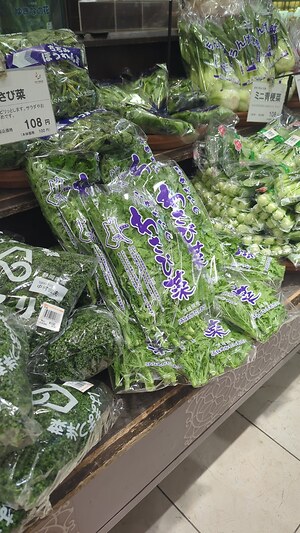
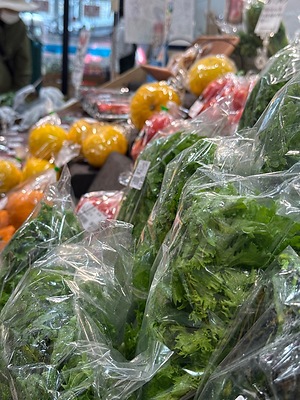
Wasabi Mustard Greens for sale around the world shared on the Specialty Produce App




Check out our QR code Library to download QR Codes that link to our fruit encyclopedia.
Use on your signage and other promotions to share the knowledge!
Use on your signage and other promotions to share the knowledge!



