



Captain Lucky Tomatoes
Estimated Inventory, lb : 0

Description/Taste
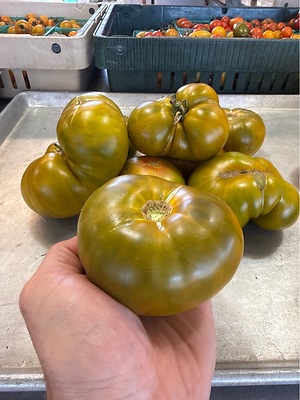
Captain Lucky tomatoes are generally medium to large in size, averaging 200 to 453 grams in weight, and have a round to oblate shape with a flattened bottom and curved edges. The variety is sometimes slightly ribbed around the stem, and the skin is semi-thin, smooth, taut, and glossy. Captain Lucky tomatoes are famous for their marbled nature. The skin showcases a green base flushed with streaks of red, yellow, and bronze. Underneath the surface, the flesh resembles the exterior with a similar marbled coloring. The flesh is also dense, aqueous, and firm with a crisp, tender, and succulent consistency. The variety contains only a few tiny, round, cream-colored seeds suspended in chambers filled with a gelatinous liquid. Captain Lucky tomatoes should be picked when a red blush is visible at the base of the fruit. The skin will also have lightly softened to the touch. The variety is edible once ripe and has a bright, refreshing, and complex sweet and savory flavor with tropical, citrusy, and tangy nuances.
Seasons/Availability
Captain Lucky tomatoes are available from summer through fall. If transplanted, the tomatoes ripen slightly earlier between July and September. If planted from seed outdoors, the variety matures in September through November. Each growing region will have differing maturity dates based on climate and cultivation conditions.
Current Facts
Captain Lucky tomatoes, botanically classified as Solanum lycopersicum, are an American variety belonging to the Solanaceae or nightshade family. The mid to late season cultivar is an open-pollinated beefsteak tomato prized for its unusual marbling, flavor, and size. Captain Lucky tomatoes are an indeterminate variety, meaning the vining plants will continue to grow and produce fruits throughout the season until the first frost. These plants often require support structures to carry the weight of the large tomatoes, and the vines can extend 1.5 to 2 meters in length, depending on growing conditions. Captain Lucky tomatoes have a long growing season and are known for their disease resistance, heat, and drought tolerance. The tomatoes grow in clusters on the vine and mature approximately 75 to 90 days after planting. Captain Lucky tomatoes are sought by chefs and home cooks for their versatility in culinary preparations and ability to be incorporated into a wide array of raw or cooked, sweet or savory dishes. It is also worth noting that there is another variety named Captain Lucky White tomatoes that are distantly related to Captain Lucky and developed by the same breeder, Millard Murdock, but these fruits vary in appearance and flavor and are a distinct cultivar.
Nutritional Value
Captain Lucky tomatoes have not been studied for their nutritional properties. Tomatoes, in general, are a source of fiber to promote digestion and provide minerals like calcium, iron, potassium, magnesium, copper, manganese, and phosphorus. These minerals help the body produce proteins for oxygen transport through the bloodstream, balance fluid levels, control daily nerve functions, build red blood cells, and support bone and teeth health. Tomatoes also contain vitamins A, B, C, E, and K to aid in faster wound healing, guard the cells against free radical damage, strengthen the immune system, contribute to energy production, and maintain healthy organs.
Applications
Captain Lucky tomatoes have a sweet and savory taste suited for fresh and cooked preparations. The variety is favored for its dense, firm flesh, making it an ideal slicing tomato for sandwiches and burgers. Thicker slices can be served as a base for caprese or sprinkled with salt and balsamic as a snack. Captain Lucky tomatoes are also diced into salsa, made into relish, or chopped for bruschetta. Try adding the tomatoes to salads and keeping the slices in larger pieces to showcase the marbled coloring in the flesh. In addition to fresh preparations, Captain Lucky tomatoes can be simmered into chutneys and sauces or incorporated into soups, stews, and chilis. The variety’s savory taste shines on savory tarts and in roasts, and slices can be breaded and fried as a side dish. Captain Lucky tomatoes are popularly hollowed and stuffed with grains, cheeses, and ground meats or roasted with fresh herbs. The variety can be used in any preparation calling for beefsteak tomatoes. Captain Lucky tomatoes pair well with meats like beef, poultry, and pork, herbs such as basil, oregano, parsley, and thyme, and cheeses, including parmesan, burrata, ricotta, and goat. Whole, unwashed Captain Lucky tomatoes should be ripened at room temperature away from direct sunlight. Once mature, they should be immediately consumed for the best quality and flavor.
Ethnic/Cultural Info
Captain Lucky tomatoes are a type of green-when-ripe tomato, meaning their skin coloring remains mostly green, even when mature. It is important to note that green-with-ripe tomatoes are left on the plant to fully ripen and are not harvested early like young green tomatoes to retain an acidic, sour, and tart taste. Green-when-ripe tomatoes are sweeter than young green tomatoes and have a more complex flavor. Some green-when-ripe tomatoes, like Captain Lucky, also produce a small amount of lycopene and other carotenoids, compounds found in tomatoes responsible for turning parts of the flesh and skin shades of red. This coloring will change based on the growing environment and whether it is a colder or warmer climate. Colder climates will cause the tomatoes to stay greener, while warmer climates encourage the tomatoes to turn red. Green-when-ripe tomatoes are green due to their high chlorophyll content, pigments used to help the plant produce food through photosynthesis. Other varieties of tomatoes naturally lose chlorophyll over time and increase in lycopene and carotenoid production, giving them their signature red coloring.
Geography/History
Captain Lucky tomatoes are native to the United States and were developed in the early 21st century. The variety was created by tomato breeder Millard Murdock in East Flat Rock, North Carolina, and was bred from a cross between Lucky Cross tomatoes and an unknown pollen parent. Millard spent several years selecting and stabilizing the new variety, and it is thought that the tomatoes first appeared to the public sometime around 2010. The following year, Captain Lucky tomatoes were noted in the Seed Savers 2011 Yearbook and were co-listed by Millard Murdock and Susan Anderson. Beyond the listed information, much of the history of this variety is unknown. After their commercial release, Captain Lucky tomatoes became a favored specialty beefsteak tomato in the United States and are grown by commercial growers and home gardeners. They are also listed through a few online seed catalogs in Europe. When in season, Captain Lucky tomatoes are found at farmers' markets and through select retailers and wholesalers.

Captain Lucky Tomatoes for sale around the world shared on the Specialty Produce App


Check out our QR code Library to download QR Codes that link to our fruit encyclopedia.
Use on your signage and other promotions to share the knowledge!
Use on your signage and other promotions to share the knowledge!



