



Higo Cactus Fruits
Estimated Inventory, lb : 0

Description/Taste
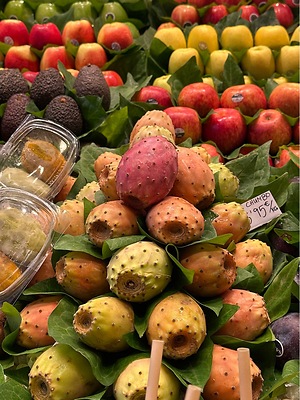
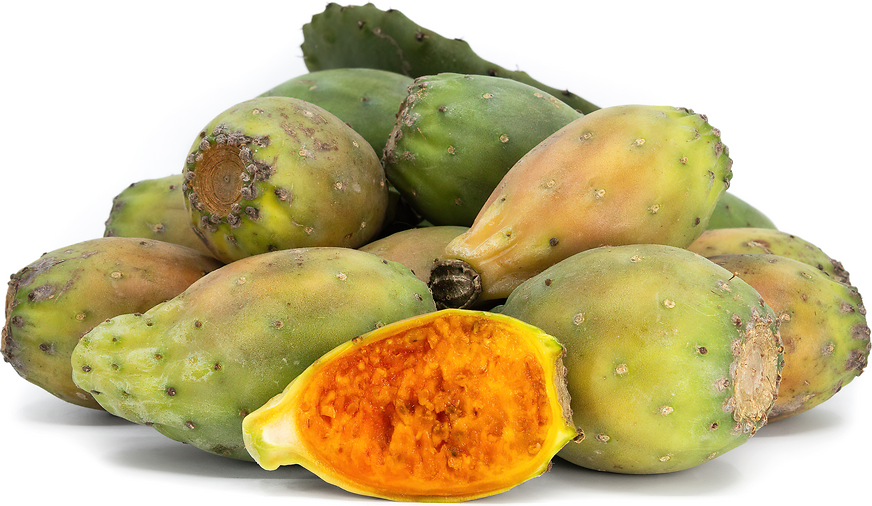
Higo cactus fruits vary in size and shape, depending on the specific variety, and have an oval to cylindrical, slightly tapered, curved shape, averaging 5 to 7 centimeters in diameter and 5 to 11 centimeters in length. The fruits range from 50 to 220 grams in weight when sold in markets, and the skin is thick, tough, and firm. It is important to note that the surface is covered in tiny, thin, sharp spines called glochids. These spines are often removed before sale in markets, but in the wild, the fruits are covered in the almost invisible spikes. Higo cactus fruits showcase variegated green, orange, yellow, and red-purple hues that change with maturity. The skin can be peeled by hand once the fruit is opened, revealing yellow, red, orange, white, or green flesh. The pulp is soft, aqueous, and gelatinous, encasing many small, hard, but edible seeds. The contrasting textures between the slippery flesh and the crunchy seeds create a distinct consistency. Higo cactus fruits are edible raw and have a sweet, refreshing, and mild flavor, sometimes with fruity nuances reminiscent of kiwis, melons, watermelons, and pears.
Seasons/Availability
Higo cactus fruits are available in the summer and fall. Some regions may have an extended season into the winter, depending on the growing climate.
Current Facts
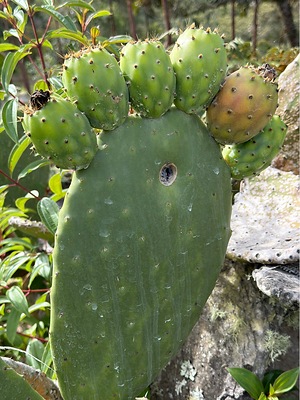
Higo cactus fruit, botanically classified as Opuntia ficus-indica, is a regional name for the fruits of the Opuntia cactus belonging to the Cactaceae family. The name Higo is primarily used in Colombia and throughout Spain, where it is commonly called Higo Chumbo. In other regions worldwide, the fruits are called Prickly Pears, Tuna, Fico d’India, Figue de Barbarie, Indian Figs, and Fig Opuntia. Higo cactus fruits grow on the edges of flattened, oval pads that join together, reaching 4 to 5 meters in height. The fruits are seasonal and an anticipated delicacy each year, favored for their sweet taste, refreshing nature, and versatility. Higo cactus fruits are a unique category of fruit with an extensive culinary history, remaining an important food source in modern-day society. The fruits are a link between the old and the new, and many varieties are grown worldwide, each with distinct characteristics that enrich community diversity. Chefs and home cooks seek out Higo cactus fruit for a wide array of sweet and savory culinary preparations and beverages.
Nutritional Value
Higo cactus fruit is a source of fiber to aid digestion and contains vitamins A, B, and C, which maintain organ health, strengthen the immune system, and contribute to energy production. The fruits also provide minerals in varying amounts, including calcium, potassium, phosphorus, and magnesium. These minerals help the body regulate nerve function, support bone and tooth development, and balance fluid levels. Higo cactus fruit is known for its high water content, making it a natural source of hydration. The fruits have been used in natural medicines throughout Europe and Mexico to lower fevers, lessen toothaches, and support liver health. The fruit’s seeds are pressed into oil and used in various cosmetic products, such as creams and shampoos.
Applications
Higo cactus fruit has a mild, sweet, and subtly fruity taste suited for fresh and cooked culinary preparations. The fruits are typically sold in markets with the spines removed, but care should be taken to inspect and remove any lingering spines. The skin can be sliced and peeled from the flesh, and once trimmed, the flesh is popularly served as a chilled snack. Higo cactus fruit can be eaten out of hand or sprinkled with lemon, salt, or tajin for enhanced flavoring. The flesh is also sliced over yogurt, added to fruit medleys, or tossed into salads. Try blending Higo cactus fruit into smoothies and juices or freezing it into homemade popsicles and ice cream. Worldwide, the fruits are simmered into jams, jellies, syrups, and marmalades, often served with cured meats and cheeses. They are also cooked into sauces for sweet and savory preparations or candied to create sweet, chewy treats. In Europe, Higo cactus fruits are infused into various spirits, with well-known types made in Italy, Spain, and Portugal. Infused beverages are also made throughout the Americas, notably in Mexico. While less common, Higo cactus fruits can be halved and grilled for a savory taste. Higo cactus fruits pair well with other fruits like apples, figs, melons, passion fruit, and citrus, herbs such as basil, mint, and cilantro, and proteins like seafood, beef, pork, and poultry. Higo cactus fruits can be stored at room temperature while they ripen, generally for up to one week. Once mature, they should be placed in the refrigerator’s crisper drawer to extend their shelf life for a few days.
Ethnic/Cultural Info
Higo cactus fruit is often associated with the summer and fall seasons in Spain, where vendors set up roadside and city market stalls to sell the fruit. Higo cactus fruits are celebrated as a historical food, and local vendors collect them from naturalized and home-garden plants. There are specific rules and methods for harvesting the fruits that are passed down through generations, including the rule of never harvesting in windy conditions, as the small spines can travel through the air and land on the skin, in the eyes, and on clothing. Higo cactus fruits are customarily knocked off the plant using cane tongs or sticks with a specialized pronged end. Once the fruits are on the ground, they are moved around on sand, grass, or straw with brooms to remove the spines. Cleaned fruits are washed before being transported to markets, and vendors often sell them peeled or remove the skin in front of the buyer. Higo cactus fruit vendors roam city streets during peak season and sell the peeled, chilled fruits as a sweet, hydrating snack. These vendors also often have various promotional phrases they call out into crowds to catch attention and increase sales, a sound that has become nostalgic and associated with the summer season in Spain.
Geography/History
Higo cactus fruit is native to the Americas and has origins in Mexico, where the species has been growing wild since ancient times. The fruits have been consumed as a food in Mexico for thousands of years, and the plant was historically a favored natural property barrier. In the 16th century, Spanish explorers encountered cactus fruits in Mexico and brought them back to Europe, where they were first planted in Spain, initially traveling through Cadiz and Seville. The species is easily propagated by cuttings of the pads, also called the cladodes, contributing to its expansion throughout temperate, semi-arid, and warm climates. Higo cactus fruit spread across Europe and became an integrated species. Later in the 17th century, Muslim communities leaving Spain carried cactus fruits to North Africa, where they were planted in home gardens. In the 18th century, fruits were stored in ship hulls as a vital source of vitamin C during long voyages. This contributed to the species’ spread, with plants being sown in Asia, Africa, and Australia by Spanish ships and trade. Franciscan missionaries also planted cactus fruits along the California coast. Today, Higo cactus fruit is grown worldwide and favored as a seasonal, fresh-eating fruit. The species is extensively cultivated and sold in fresh markets across the Mediterranean, and is also found in Africa, Asia, Australia, and the Americas. In Spain, where Higo cactus fruit is primarily known under the Higo descriptor, production occurs mainly in the Axarquía, Almería, Murcia, and Madrid regions. They are also sold under the Higo name in Colombia. When in season, Higo cactus fruits are offered fresh through farmers’ markets, select retailers, and distributors.

Higo Cactus Fruits for sale around the world shared on the Specialty Produce App