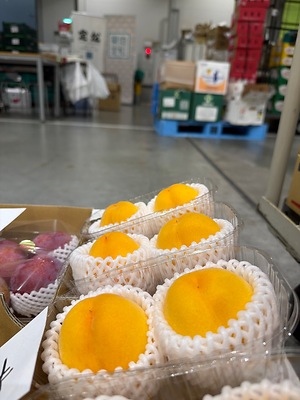


Fukuotome Peaches
Estimated Inventory, lb : 0

Description/Taste
Fukuotome peaches are generally a smaller variety, averaging 150 to 180 grams, and have a round to oval shape with a uniform, curved profile. The skin is thin, smooth, and taut, showcasing golden yellow hues once ripe. Some fruits may also develop a dark red blush during cultivation, depending on sun exposure. This blush can be solid to mottled. The surface also has a velvety feel, being covered in a layer of soft fuzz. The skin can be easily peeled by hand after slicing, and the suture line extending the length of the fruit is shallow. Underneath the surface, the bright yellow flesh is firm, coarse, and lightly fibrous with an aqueous, crisp, and succulent consistency. The flesh also envelops a large, rough, tightly adhered central brown oblong pit. Fukuotome peaches are edible raw once ripe and are known for their high sugar content, ranging from 10 to 12 degrees Brix, sometimes reaching up to 16 degrees Brix. The peaches have balanced sugar and acidity levels, creating a refreshing, sweet, fruity, floral, and tangy taste.
Seasons/Availability
Fukuotome peaches are available in early summer, between mid and late June in Japan.
Current Facts
Fukuotome peaches, botanically classified as Prunus persica, are a Japanese variety belonging to the Rosaceae family. The peach cultivar is known as an extra-early-maturing type, meaning it arrives earlier than other main commercial varieties, helping to extend Japan’s peach season. Fukuotome peaches are somewhat rare and considered a delicacy of the Fukushima Prefecture. The variety is known for its golden hues, firm flesh, and juicy nature, creating a refreshing, pleasant eating experience. It is important to note that if Fukuotome peaches are partially bagged or protected from the sun during cultivation, they will exhibit more golden-yellow hues on the surface. If exposed to the sun during production, the fruits can also develop a saturated, dark-red blush, giving them a varied appearance depending on growing methods. Chefs and peach enthusiasts seek out Fukuotome peaches for their balanced, sweet-tart flavors and versatility in a wide array of fresh and cooked culinary preparations.
Nutritional Value
Fukuotome peaches have not been extensively studied for their nutritional properties. Peaches, in general, are a source of fiber to aid digestion and contain vitamins A, B, C, E, and K, which strengthen the immune system, promote faster wound healing, support organ health, contribute to energy production, and protect cells against free radical damage. Peaches also provide minerals in varying amounts, including potassium, calcium, copper, iron, magnesium, manganese, phosphorus, and zinc. These minerals help the body balance fluid levels, build red blood cells, regulate nerve functions, produce the protein hemoglobin for oxygen transport through the bloodstream, and support bone and tooth development.
Applications
Fukuotome peaches have a sweet-tart taste suited for fresh and cooked preparations. The variety has a very juicy texture and firmer flesh, creating a memorable eating experience. The flesh is enjoyed out of hand as a snack or sliced and tossed into salads. Fukuotome peaches are also chopped into fruit medleys, used as a topping over dishes like parfaits, porridge, and cottage cheese, or diced as a fresh garnish. Try adding Fukuotome peaches as salsa on seafood dishes. The peaches are also used as fillings for baked foods like crisps, crumbles, and pies, incorporated into tarts, or used as a decoration on top of cakes. In Japan, peaches are often simmered into syrups, jams, and jellies. They can also be blended into smoothies and fresh fruit juices or canned and preserved for extended use. Fukuotome peaches pair well with flavorings like vanilla, maple syrup, honey, and brown sugar, spices such as cinnamon, ginger, and nutmeg, and other fruits like strawberries, citrus, and stone fruits. Fresh peaches should be ripened at room temperature and kept in a cool, dry, and dark location. Once ripe, they should be consumed immediately for the best quality and flavor, and can be placed in a ventilated container in the crisper drawer for a day or two.
Ethnic/Cultural Info
Fukuotome peaches are one of several varieties grown in the Fukushima Prefecture in Japan. The prefecture is located in the Tōhoku region of Honshu Island and is the third-largest prefecture in the country. Fukushima is nicknamed the “fruit kingdom,” as the prefecture cultivates various fruits year-round and is the second-largest peach producer in Japan. The prefecture’s climate consists of large temperature swings between day and night, an ideal environment for concentrating sugars in the flesh. Peaches are primarily grown in the Fukushima Basin, a region with colder-than-average temperatures compared to other peach-growing prefectures. Over 60 varieties of peaches are grown in Fukushima, and the prefecture has the highest peach consumption per household, eating roughly seven times the national average. In Fukushima, peaches are a staple fruit in households and are enjoyed throughout their season, fresh and cooked.
Geography/History
Fukuotome peaches are native to Japan and were developed in the Fukushima Prefecture in the late 20th century. The variety was bred from a cross made in 1984 at the Fruit Tree Research Institute of the Fukushima Agricultural Technology Center, using Kurakata Wase as the female parent and Chiyohime peaches as the male parent. After the cross was made, seedlings were evaluated for several years before one was selected as a new commercial cultivar. The seedling was named Fukuotome and was officially registered as a variety in November 2003. Today, Fukuotome peaches are still being grown in Fukushima and are a signature variety of the prefecture. The peaches are also produced in Yamanashi and Wakayama Prefectures. When in season, the variety is sold through select growers, retailers, and distributors in Japan.

Fukuotome Peaches for sale around the world shared on the Specialty Produce App