



Red Mizuna Lettuce
Estimated Inventory, bunch : 0

Description/Taste
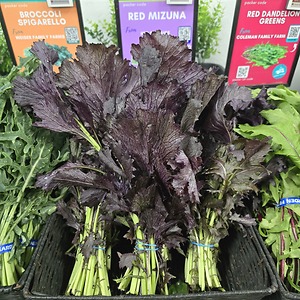
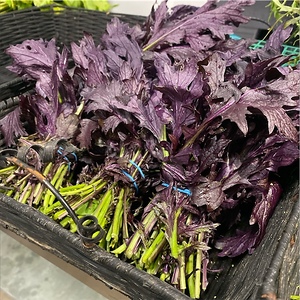
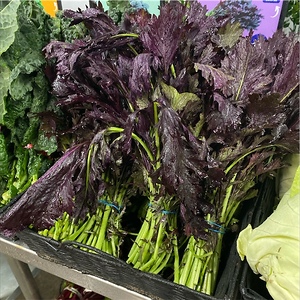
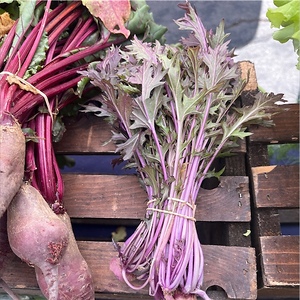
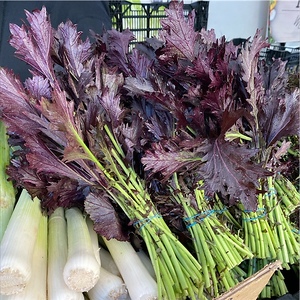
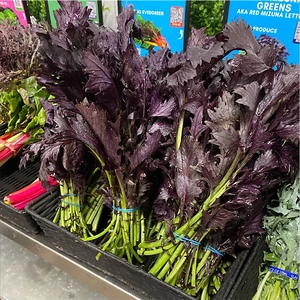
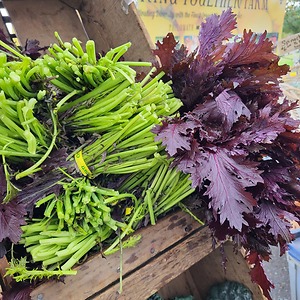
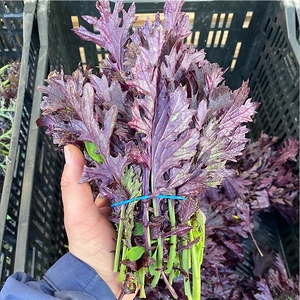
Red Mizuna varies in size and appearance, depending on the specific variety, maturity, and growing conditions. The upright leaves form in bunches connected to a central base and have an elongated, slender, and straight nature. The stems range in color from pale green to red-purple shades and are thin, firm, and narrow with a crunchy consistency. The branching leaves are smooth, glossy, textured, and pliable, showcasing saturated dark purple, red, maroon, and green hues. Some varieties will have entirely colored leaves, while some may bear green patches. Red Mizuna leaves are known for their deeply serrated, jagged edges, giving them a distinctly sharp, saw-toothed appearance with prominent veins across the surface. When chewed, the stems and leaves have high water content, creating a crisp and succulent texture. Red Mizuna is edible raw at multiple stages of maturity, from baby to full-grown, and emits a grassy aroma. Younger leaves will be milder, vegetal, and tender, while mature greens will have a peppery, sweet, sometimes bitter, and tangy bite.
Seasons/Availability
Red Mizuna is available year-round, with a peak season in the winter through early spring.
Current Facts
Red Mizuna, botanically classified as Brassica juncea, is a category of pigmented varieties belonging to the Brassicaceae family. Mizuna is a fast-growing plant that is commercially produced and planted in home gardens worldwide as a culinary green. Red Mizuna is a specialty type comprised of stems and leaves with red-purple hues. It is important to note that there are several types of Red Mizuna. In Japan, there are specific groupings for Red and Purple Mizuna, while in most markets outside of Asia, the two terms are used interchangeably under the Red Mizuna name. Red Mizuna in Japan describes varieties with green leaves and red stems. These types are also called Aka Mizuna and have a similar size and appearance to common Green Mizuna cultivars. Purple Mizuna encompasses varieties that have purple-red leaves and green stems, the opposite coloring of Red Mizuna. There is also a cultivar with pigmented leaves and stems, called Benigoromo. Popular varieties of Red Mizuna found worldwide include Benihoushi, Red Streaks, Red Coral, Red Kingdom, Red Priest, and Red Rain. The pigmented greens were once native to East Asia and have expanded throughout history into a global culinary ingredient favored for its taste, coloring, and texture. Red Mizuna is less common than Green Mizuna and is favored for its versatility in raw and cooked culinary preparations.
Nutritional Value
Red Mizuna has not been studied for its nutritional properties. Mizuna, in general, is a source of fiber to promote digestion and vitamins A, B, C, E, and K to maintain healthy organs, guard cells against free radical damage, aid in faster wound healing, and strengthen the immune system. Mizuna also provides minerals like potassium, manganese, calcium, and magnesium. These minerals help the body balance fluid levels, support bone and teeth health, produce proteins for oxygen transport through the bloodstream, and control daily nerve functions. The pigmented coloring in the varieties indicates the presence of anthocyanins, which are organic compounds naturally found in plants. Anthocyanins have antioxidant properties that reduce inflammation and protect the body’s health.
Applications
Red Mizuna has a mild, lightly peppery, vegetal, and subtly sweet taste suited for raw and cooked preparations. The pigmented greens can be used interchangeably with Green Mizuna in recipes and shine in raw preparations as their coloring remains intact. Red Mizuna is famous for its distinct shape, crisp texture, and red-purple coloring in salads, especially in mesclun or spring mixes when paired with shades of green lettuces. They are also layered into sandwiches, used as a bed or garnish for various dishes, blended into smoothies, or incorporated into fresh spring rolls. In addition to raw preparations, Red Mizuna is occasionally used in cooked dishes. Some varieties of Red Mizuna will retain a faint, pigmented coloring, while other types will lose their hues and turn green. The leaves can be wrapped in thinly sliced pork and cooked, blanched as a simple side, or steamed for rice dishes. They are also added to curries, stews, and soups or tossed into pasta dishes. Red Mizuna pairs well with fruits like apples, pears, grapefruit, nectarines, and herbs such as tarragon, parsley, dill, and mint. Whole, unwashed fresh leaves will keep for 2 to 3 days when wrapped in a damp towel and stored upright in the refrigerator. The greens can also be blanched and frozen for extended use.
Ethnic/Cultural Info
The name Mizuna is derived from Japanese, meaning “water greens,” and was given to the plants for their traditional cultivation methods of being grown in flooded fields. Red Mizuna is hypothesized to be a newer introduction to commercial markets than Green Mizuna types, and the stemmed leaves are revered for their versatility. Mizuna can be harvested at multiple stages of maturity, giving the leaves varying textures, appearances, flavors, and culinary uses. In Japan, Red Mizuna is favored for lightly pickled preparations, as some varieties with pigmented stems develop an aesthetically pleasing light pink-red coloring when fermented. Each Mizuna cultivar will either retain its coloring or fade in preparations, and the types that hold their pigments are enjoyed as an appetizer with rice and beer. These bite-sized pickled dishes are called tsukemono in Japan and are popularly served at izakayas, or Japanese-style pubs.
Geography/History
Mizuna is believed to be native to Asia and has hypothesized origins in China, where it was bred from ancient varieties of Brassica juncea. Much of the plant’s early history is unknown, but some sources note that Mizuna may have been introduced from China to Japan sometime in the 8th century. Throughout history, Mizuna has been extensively produced in Japan, and has remained such an integral green in cultivation that many assume the plant is native. The first written document referring to Mizuna in Japan dates to the Edo Era, between 1603 and 1868 CE. Mizuna is most closely associated with Japan's Kansai region, an area encompassing Kyoto, where the vegetables were widely grown by the 19th century. In the late 20th century, Mizuna became an official Kyoto vegetable as a part of a government program to protect historically significant varieties that have been passed between generations. The history of Red Mizuna is unknown. Pigmented varieties were most likely bred through natural cultivation, and over time, new Mizuna types were released to increase cultivation. Japanese seed companies, notably Takii Seed and Kobayashi Seed, have created Red and Purple Mizuna cultivars that are still being commercially grown. Today, Red Mizuna is produced in outdoor fields and greenhouses worldwide. When in season, Red Mizuna is sold through fresh markets, select retailers, and wholesalers.
Recipe Ideas
Recipes that include Red Mizuna Lettuce. One
 is easiest, three is harder.

Red Mizuna Lettuce for sale around the world shared on the Specialty Produce App


Check out our QR code Library to download QR Codes that link to our fruit encyclopedia.
Use on your signage and other promotions to share the knowledge!
Use on your signage and other promotions to share the knowledge!



