



Torino Tomatoes
Estimated Inventory, lb : 0

Description/Taste
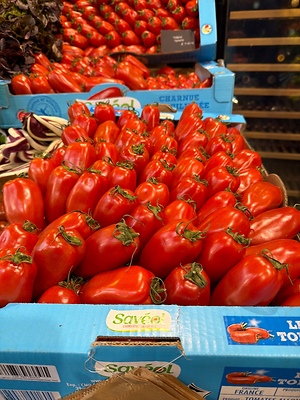
Torino tomatoes are a small to medium-sized variety, averaging 8 to 10 centimeters in length, and have an elongated, straight shape with bluntly curved ends. The variety is known for its thinner, long shape and has semi-thin skin, showcasing glossy, bright red, saturated hues. The skin is smooth, taut, and strong, topped with a small dark green cap on the stem end. Underneath the surface, the red flesh is aqueous, dense, and firm, bearing a crisp, succulent, and meaty consistency. The flesh also encases small chambers filled with tiny, round seeds suspended in a gelatinous liquid. Torino tomatoes have a lower seed content than other varieties and emit a faint aroma when ripe. The variety is edible raw and has a sweet and acidic flavor with tangy, refreshing, and savory nuances.
Seasons/Availability
Torino tomatoes are available in the summer and are typically harvested between July and September.
Current Facts
Torino tomatoes, botanically classified as Solanum lycopersicum, are a specialty culinary variety belonging to the Solanaceae or nightshade family. The elongated tomatoes are favored for their distinct appearance and firm nature, which allows them to be sliced into even portions and hold their shape well. Torino tomatoes are also valued for their balanced, sweet, and acidic taste. Chefs and home cooks utilize this balanced flavoring in a wide array of sweet or savory, raw or cooked preparations. Torino tomatoes are grown in home gardens and sold commercially throughout Europe, mainly cultivated and marketed in France. The variety is not well-known outside of Europe and is considered a fresh, seasonal delicacy.
Nutritional Value
Torino tomatoes have not been studied for their nutritional properties. Tomatoes, in general, are a source of vitamins E, C, and K to strengthen the immune system, aid in faster wound healing, and guard the cells against free radical damage. They also contain beta-carotene, which is converted into vitamin A in the body to maintain healthy organs, and fiber to support digestion. Beyond vitamins, tomatoes provide minerals like potassium and copper to build red blood cells and balance fluid levels. Tomatoes also have lycopene, a type of carotenoid that gives the fruit its red coloring. Lycopene is an antioxidant that reduces inflammation and protects overall bodily health.
Applications
Torino tomatoes have a sweet and tangy taste suited for fresh and cooked preparations. The variety is often consumed out of hand, drizzled in olive oil, balsamic, or sprinkled with salt as a fresh snack. Torino tomatoes are also easy to slice into uniform pieces, allowing them to be used in preparations where appearances are important. In Europe, the tomatoes are sliced and layered with dips as an appetizer, chopped into salads, added to sandwiches, or used as a diced condiment over grains and main dishes. The variety is also used as a bruschetta topping, blended into chilled soups, or pureed and strained into a coulis, which is a thin sauce. In addition to raw preparations, Torino tomatoes hold their shape well when heated and are popular in tarts and ratatouille. Halves can be grilled for a smoky flavor, or slices can be used as a pizza topping. Torino tomatoes are also partially hollowed and stuffed, simmered into sauces, or baked into various casseroles. Try incorporating the tomatoes into hearty stews or cooking with peppers and aromatics as a savory side. Torino tomatoes pair well with herbs like sage, parsley, basil, and mint, aromatics including garlic, onions, and shallots, and meats like beef, pork, poultry, and turkey. Whole, unwashed Torino tomatoes will keep for a few days when stored at room temperature away from direct sunlight.
Ethnic/Cultural Info
Torino tomatoes are a favored variety in savory galettes in France, a customary summer dish. The name galette is derived from the Norman word “gale,” meaning “flat cake,” and the dish has many variations with sweet or savory ingredients. Galettes are essentially pastry bases topped with fillings and cooked. These pastry bases do not require a tin for support and exude a rustic appearance when prepared, and the sides of the pastry are traditionally folded over the edges to contain the filling. Torino tomatoes are appreciated for their elongated shape and can be layered with other thinly sliced vegetables to create a savory galette. They are also used in variations of Breton galettes, which are more crepe-like and made from buckwheat rather than rich pastry. The buckwheat crepes are folded along the edges like other galettes, but they have a flatter, thinner feel and a distinct taste.
Geography/History
Torino tomatoes are believed to have been developed in France, specifically in the Breton region, also known as Brittany. Much of the variety’s history is unknown, and some sources debate its origins, as elongated tomatoes are also grown in the Turin region of Italy under the name Torino. The variety in France was created by Savéol, France’s leading tomato producer. Savéol is a Breton market gardening cooperative established in 1974, and Torino tomatoes are a modern introduction released as a home garden and commercial cultivar. Today, Torino tomatoes are primarily grown and sold throughout Europe. They are found in specialty markets, directly through growers, or retailers.

Torino Tomatoes for sale around the world shared on the Specialty Produce App


Check out our QR code Library to download QR Codes that link to our fruit encyclopedia.
Use on your signage and other promotions to share the knowledge!
Use on your signage and other promotions to share the knowledge!



