

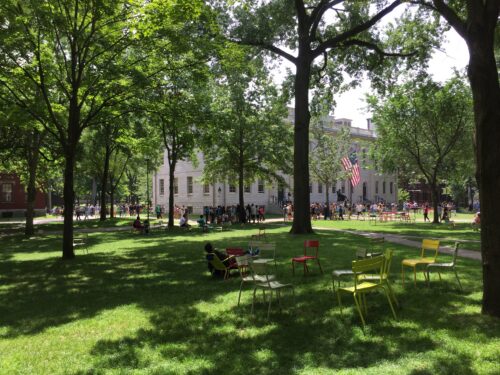
Every fall on college and university campuses, a familiar ritual begins. New students move into dorms and are gathered within days into auditoriums and common rooms for the annual lesson on sexual assault.
There’s a reason the timing feels so urgent. Researchers call the weeks from move-in to Thanksgiving the “Red Zone,” the period when more than half of campus sexual assaults occur, and first-year students are the most at risk.
I know because I deliver that programming for a living. And because when I was that student I never received it.
I don’t remember encountering a single conversation about sexual assault when I was a young queer man. Not in a dorm, not at orientation, not on a poster in a hallway. And not, tellingly, in the one place that should have been my refuge: the LGBTQ+ centers I found my way to, hungry for somewhere to belong.
Those spaces gave me a great deal. There were pamphlets on HIV, on safer sex, on the drugs that circled our world, all of them vital, all of them potentially lifesaving. But sexual assault was simply absent, nowhere on the wall or in the room. If it happened to you, you were on your own to invent the language for it, and most of us never did.
The numbers make plain how costly that silence is. RAINN, the largest anti-sexual violence organization in the U.S., finds that 5.4 percent of college men experience sexual assault and that 21 percent of trans and gender-nonconforming students do, a rate that rivals that of undergraduate women.
The Association of American Universities’ campus climate survey, the largest of its kind, has repeatedly found that trans and nonbinary students report the highest rates of nonconsensual sexual contact of any group on campus.
Bisexual and trans people, nationally, face some of the highest rates of sexual violence. And roughly one in six men will be sexually abused or assaulted in a lifetime, a figure that researchers treat as a floor rather than a ceiling, because the same silence that produces the wound also suppresses its count.
Queer students are not a footnote to the campus sexual-assault crisis. By every serious measure, they are near its center. They’re simply the part we’ve trained ourselves not to see.
I learned what that costs some years after college, when I was sexually assaulted in New York City, a place I had thought of as a sanctuary. And I discovered in the aftermath that nothing had prepared me to even name it.
The scripts I’d absorbed were about disease and drugs, both real dangers, neither of them relevant to my situation. So I did what most male and queer survivors do. I decided it couldn’t really be what it was because there was no shelf inside me to set it on. I said nothing for a very long time.
That silence left me doubly displaced: already queer in a world not built for me, and now a survivor in a queer world that had no framework for me either, in a prevention system that still pictures survivors almost entirely as straight women. So I did the only thing the absence left me to do. I went back into a closet I thought I had left for good, and I hid.
I became afraid of my own Dorian Gray. Post-traumatic stress made the mirror stop showing me the man I was becoming and instead only the man it had happened to, frozen there, unageing, unhealed, staring back every time I passed. You can’t grieve or heal from an event you haven’t been permitted to name.
I’ve sat with enough men like myself to recognize the expression that crosses their faces when they realize, sometimes at thirty or forty, that something that happened to them years ago had a name the whole time and no one ever thought to offer it.
We’re living through a moment when queer young people are being told, from statehouses and pulpits and screens, that they’re a problem to be managed. The last thing a queer eighteen-year-old needs, arriving on a campus that’s supposed to be a refuge, is another institution confirming that the danger and the care belong to someone else.
Yet that’s exactly what our silence does, not out of malice but out of habit, a template written decades ago and never revised for the students actually sitting in the room, or standing in the LGBTQ+ center, looking for a mirror that shows them whole.
So now I make noise. When I stand in front of a room, sometimes in defiance of the sanitized directives handed to me by the authorities who booked me, I name queer survivors out loud, early, and I fold in my own struggle without apology.
Every time I do, the same thing happens: Someone finds me afterward. A student, a stranger, a man who has carried this alone for a decade, telling me quietly that they thought they were the only one.
I tell them the truth I wish someone had told me: You aren’t alone. The resources exist, even if you have to hunt for them. Start at your local LGBTQ+ center, if you’re lucky enough to have one nearby, and people there can point you toward national and local groups that will help.
It can get better. I’ve been there, in that frozen mirror, and I’m still here.
That’s the whole of my argument, and it’s not complicated. None of it asks us to take a single thing from women, whose place at the center of this fight is deserved and remains essential. It asks only that we widen the frame enough to include the students we’ve been leaving at its edge.
It means prevention that names gay, bisexual, trans, and nonbinary survivors instead of leaving them to infer that they’re the exception. It means consent education that’s not exclusively heteronormative. It means a poster on the wall of the LGBTQ+ center, next to the ones about HIV and about drugs, that finally says this can happen to you too, and here’s where to turn.
It means that we, the queer community, must insist on it, because these are our young people, and no one outside our community is going to build that place for them.
Every September, institutions tell their students that they take sexual violence seriously. For the LGBTQ+ students in those rooms, that promise has always arrived with an asterisk. We can remove it.
We can build the conversation that no one was ready to have when I needed it. The words exist. I know because I finally found mine, late and on my own. Now I make it my work to create a place in the world for the next person, so that they won’t have to.
If you have been the victim of sexual violence, you can call RAINN’s National Sexual Assault Hotline at 800-656-HOPE, text “HOPE” to 64673, or visit RAINN’s website for live chat and other resources at rainn.org/help-and-healing/hotline.
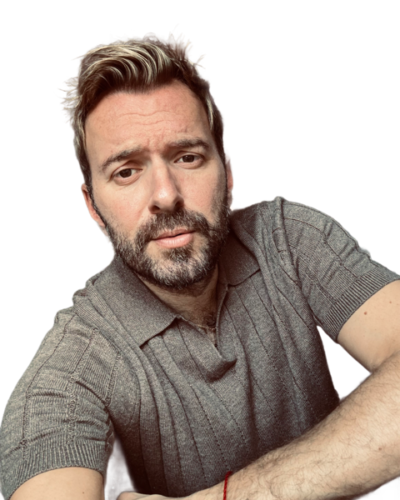
Dimitrios Aletras Jr. is a queer, first-generation Greek-American writer, a certified trauma-informed sexual violence prevention educator, and a survivor advocate. He advised Pennsylvania Governor Josh Shapiro’s office on statewide sexual-violence policy. His work has appeared in Salon, The Advocate, The Washington Blade, and WBUR’s Cognoscenti.







Discussion1 Comment
This article delivers a powerful and necessary wake-up call. The exclusion of LGBTQ+ students from campus sexual assault prevention programming and resources is a glaring oversight that urgently needs fixing. Thank you for using your voice to advocate for inclusive education and support.