Editors’ note, July 30: On July 27, the Federal Communications Commission issued an update clarifying how its national security restrictions on equipment from foreign companies would apply to robots. The FCC confirmed to CNET that it applies not to just humanoid robots but also to household devices, like robot vacuums, robot lawn mowers and pool cleaners and requires new models to obtain FCC authorization to be imported, marketed or sold in the US. However, it won’t affect models currently available in the US, including our picks below.
Our Picks
Pros & Cons
- Most efficient pool cleaner we tested
- AI Patrol sends the robot after leaves and debris, cleaning the pool faster
- Lightweight and easy to empty
- Charging dock means no messing with cords
- Lab Award winner
- Long 5-hour charging time
- Fine filter needs to be replaced occasionally
Disclaimer
Our experts have tested this product and selected it for this story. Its inclusion and description here solely reflect findings from our independent review. The company has paid for highlighted placements on this page.
Pros & Cons
- Excellent power considering its modest size and weight
- Basket is easy to empty and clean
- Cleaned better than bigger, more expensive cordless robots
- Charge time is long at 3-4 hours
- Doesn't scrub waterline

Lab Test Winner
Highest Pick Up Efficiency (Corded)
Dolphin Nautilus CC Plus WiFi
Best corded robot vacuum cleaner
Dolphin Nautilus CC Plus WiFi
Pros & Cons
- Cleaned pool floor and walls efficiently
- Anti-tangle device keeps cord from knotting up
- Great value for the performance
- No concern about recharging or battery losing steam over time
- Lab Award winner
- Debris basket is a pain to empty
- Track treads occasionally slipped off
- Doesn't clean waterline
Pros & Cons
- Powerful suction, cleaned our test pool in under 2 hours
- Tangle-free 60-foot cord
- Includes a caddy and cover
- Large 4-liter debris basket
- Vacuum is light and easy to remove
- No app control or scheduling cycles
- No waterline scrubbing
Pros & Cons
- Skims surface in addition to floor, wall and waterline cleaning
- Up to 5 hours of cleaning and 7 hours of skimming on a full charge
- Easy-to-empty basket
- Parks on surface for easy retrieval
- One of the most expensive robots on this list
- Suction not as good as the Aiper Scuba V3
- Takes 4 to 5 hours to charge fully
- On the heavy side
Pros & Cons
- Collected nearly all of the debris in our 2-hour cleaning test
- Top-access debris basket is easy to empty
- Light, so removing from the pool was easy
- Big value considering the performance
- No ability to schedule cleaning sessions
- Not advisable to swim while the robot is in the pool
Pros & Cons
- Cleaned pool floor consistently
- Light and easy to empty
- Cheaper than others with the same performance
- No option to set daily cleaning schedule
- It's a little slow
- Doesn't filter superfine particles
Pros & Cons
- Unmatched power
- Exceptional navigation and spatial awareness
- Beat every other model in pure suction performance
- Longest battery life of any cordless
- Solidly built
- Loads of in-app features to schedule cleanings and control modes
- The most expensive robot on our list
- Heavy and hard to move
- Skimmer mode is just OK
YARD AND OUTDOORS DEALS OF THE WEEK
-
: $999 (save $300)
-
: $340 (save $160)
-
: $1,199 (save $300)
-
: $170 (save $60)
-
: $289 (save $71)
-
: $660 (save $71)
Robotic pool cleaners and vacuums are still a budding category, which means every season brings significant technological advances. Summer 2026 is proving to be a banner year, with more heavily integrated AI features, longer robot runtimes and lighter models that pack all the cleaning power of their clunkier predecessors.

We put 20 robot pool cleaners to work in our 14,000-gallon test pool.
David Watsky/CNETOur 2026 list of the best robots looks quite different than last year’s. We tested more than 20 of the latest pool vacuums from Aiper, Beabot, Polaris, iGarden and Dolphin in a 14,000-gallon test pool, evaluating how thoroughly each one scrubbed the floors and walls and picked up debris such as leaves, sticks, bugs, and stones.
Robotic pool cleaners generally fall into two categories: corded and cordless. Since each style offers its own set of benefits, and pool owners’ needs vary widely, we tested several of both. In total, we dropped 21 robots in for testing, judging them on ease of use, app compatibility, durability, battery life and how well each handled leaves, stones and fine debris.
Read on for our picks for the eight best robotic pool cleaners of summer 2026.
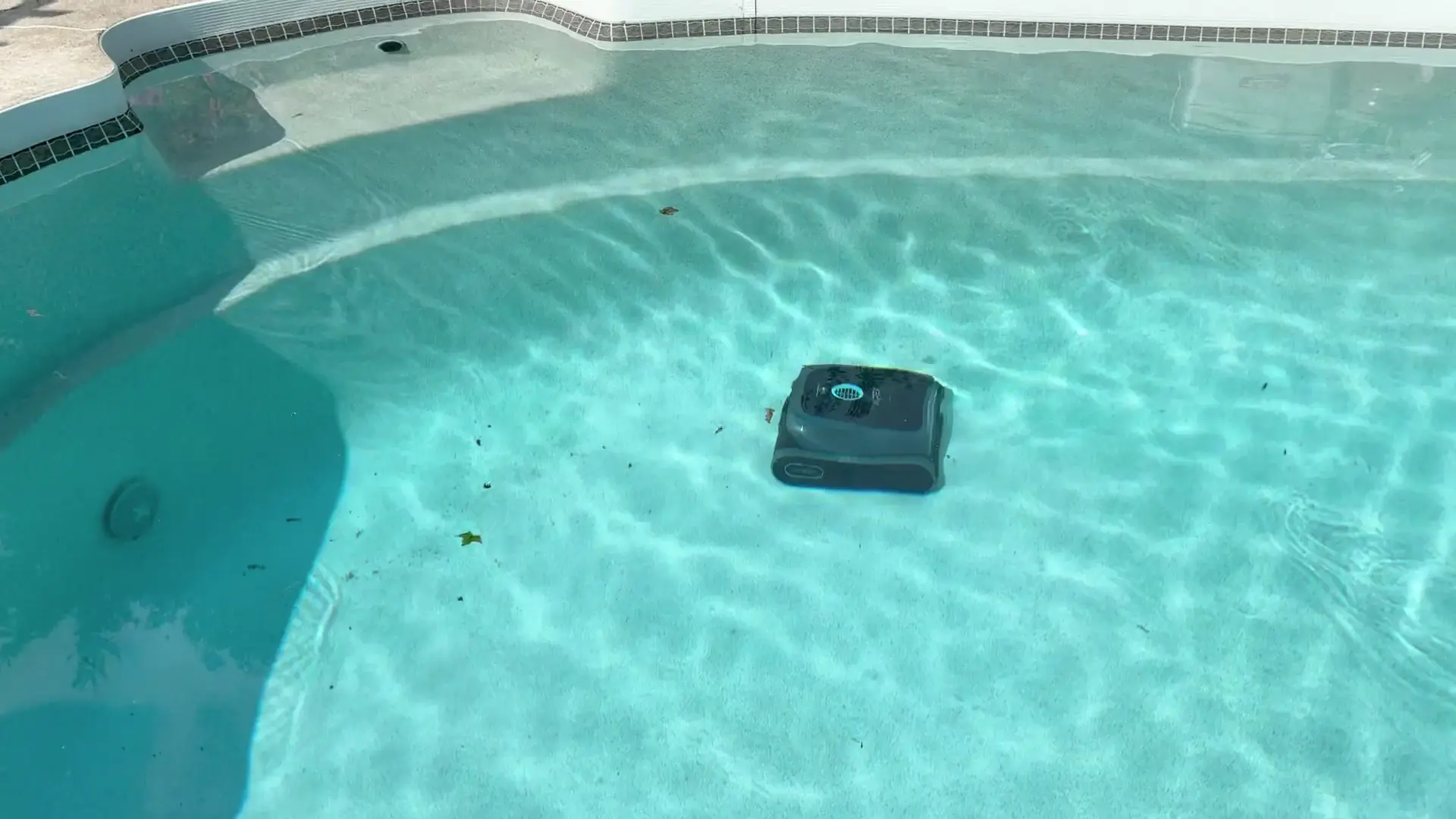
What is the best overall robot pool vacuum?

Aiper’s Scuba V3 tracks down leaves and debris using AI features. It’s the most efficient pool robot we tested in 2026.
David Watsky/CNETThe Aiper Scuba V3 takes the top spot as the best robot pool cleaner this year, displacing last year’s winner, the corded Dolphin Nautilus CC Plus WiFi. The upgrade comes down to smarts: the Scuba V3 uses AI-powered navigation to detect and collect leaves, debris and stones as it moves through the pool, making it the most efficient cordless option we’ve evaluated. It’s also lightweight, simple to empty and delivers up to three hours of runtime on a single charge.


Aiper
Lab Test Winner
Highest Pick Up Efficiency (Cordless)
Aiper Scuba V3
Best robotic pool vacuum overall
Aiper Scuba V3
What I liked
Unlike most robot pool cleaners, which roam aimlessly, this one moved with purpose, using cameras and sensors to track down debris. It’s genuinely impressive to watch it cruise along and adjust its course on the fly to grab leaves and pebbles as soon as they enter its catch zone.
A smarter path means a faster, more efficient clean — so you’re back in the water sooner. It also translates to better battery efficiency: the Scuba cleared our 14,000-gallon test pool faster than any other robot we tested. It’s rated for 3 hours of battery life in eco mode, but it polished off nearly everything we’d scattered on the bottom in well under half that time.
Overall, it picked up more debris than every model except the Aiper Scuba X1 Pro Max, which both costs and weighs twice as much. The Scuba V3 grabbed every single leaf and left behind just six small pebbles. Compare that to the next-best cordless model, which missed 18, while some competitors left as many as 50 behind.
Who is it for
Like most Aiper robots, the Scuba V3 pairs with an intuitive app — the best of any brand we tested — and it parks itself at the surface once finished, making it easy to lift out of the pool. At just 18 pounds, this powerhouse comes in a surprisingly light shell, making it easy to pull from the water, empty and set back on its charging dock.
Who should avoid it
For those with very small or above-ground pools, this robot might be more powerful than is needed. One of the only major downsides of this model is its long 5-hour charge time.
This is the best cordless pool robot cleaner for inground pools and is perfect for anyone who doesn’t want a robot cord running across the pool deck while cleaning. It’s fast, efficient and easy to handle. The fine filter helps clean the water, while the power vacuum sucks up larger debris.
Pros & Cons
- Most efficient pool cleaner we tested
- AI Patrol sends the robot after leaves and debris, cleaning the pool faster
- Lightweight and easy to empty
- Charging dock means no messing with cords
- Lab Award winner
- Long 5-hour charging time
- Fine filter needs to be replaced occasionally
Get it now
Specs & Configurations
- Type
- Cordless
- Suction power
- 4,800 gph
- Cleans
- Floor, walls, waterline
- Weight
- 18.1 lbs
- Runtime on full charge
- up to 3 hours
- Cost
- $899
- Warranty
- 2 years


Aiper
Save up to $200 on the Aiper Scuba S1 (2026)
Aiper Scuba S1
What we liked
This cheaper Aiper robot pool cleaner is mighty for its size and weight. The Scuba S1 churned through its over-3-hour cleaning cycle using its 4,200 gph of suction to pick up every leaf and all but 18 of the 100 pebbles we tossed in the bottom. The MicroMesh ultrafine filter captured even the smallest particles of dirt and debris.
It’s incredibly lightweight (just 17 pounds), making it easy to remove from the pool and return to its charger. This Aiper also has one of the easiest baskets to empty and clean, and the small build feels solid and sturdy. The Scuba connected seamlessly to the app, where you can control the cleaning cycle, check battery life and set schedules.
Who should buy it
This is a great all-around robot vacuum for most small and medium-sized inground or above-ground pools. It has awesome power for its size and presents excellent value at under $600.
Who should avoid it
This model might struggle to clean an extra-large pool, though it handled our 14,000-gallon test pool with ease.
Pros & Cons
- Excellent power considering its modest size and weight
- Basket is easy to empty and clean
- Cleaned better than bigger, more expensive cordless robots
- Charge time is long at 3-4 hours
- Doesn't scrub waterline
Get it now
Specs & Configurations
- Type
- Cordless
- Suction power
- 4,200 gph
- Cleans
- Floor, walls
- Weight
- 17 lbs
- Runtime on full charge
- 150 to 180 minutes
- Price
- $550
- Warranty
- 2 years


Maytronics
Lab Test Winner
Highest Pick Up Efficiency (Corded)
Dolphin Nautilus CC Plus WiFi
Best corded robot vacuum cleaner
Dolphin Nautilus CC Plus WiFi
Why I like it
When it comes to dependability, corded robot vacuums have advantages — no battery to degrade, no power surprises midclean. That reliability, combined with standout real-world performance, is what earns the Dolphin Nautilus CC our top corded vacuum pick. It muscled through even heavily soiled pools in less than 2 hours, making short work of what other models struggle with.
Operation is refreshingly straightforward, with a built-in scheduling feature, and the anti-tangle cord system performed exactly as advertised.
In several tests we ran with the Nautilus CC, it sucked up every single leaf and all but 14 out of 100 pieces of gravel in the 14,000-gallon test pool.
Who its for
With exceptional cleaning power, easy app control to trigger cleaning cycles and a manageable price, this robot vacuum is a good pick for in-ground pools of any size.
Although the Nautilus struggled at times to clean the stairs without toppling back down and didn’t cover every section of the wall, it did as well as most other robots, and those deficiencies weren’t enough to keep it out of the top-corded spot.
Who should avoid it
This is also not the best option for cleaning an above-ground pool without a deck. There are also cheaper corded robots that performed well in our tests.
Pros & Cons
- Cleaned pool floor and walls efficiently
- Anti-tangle device keeps cord from knotting up
- Great value for the performance
- No concern about recharging or battery losing steam over time
- Lab Award winner
- Debris basket is a pain to empty
- Track treads occasionally slipped off
- Doesn't clean waterline
Get it now
Specs & Configurations
- Type
- Corded
- Suction power
- 4,500 gph
- Cleans
- Floor, walls
- Weight
- 20 lbs
- Cost
- $799
- Automatic daily cleaning
- Yes
- Cord length
- 60 ft
- Warranty
- 2.5 years


Polaris
Best corded pool vacuum with caddy included
Polaris ERA 820
What we liked
This corded robot pool cleaner performed as well as the Dolphin Nautilus models we tested, with powerful suction that ripped debris off the floor, walls and waterline. The ERA also has an easy-to-empty top-access basket and tangle-free cord. It cleared the test pool in under 2 hours and requires only one button push to get started
One big difference between the two is that the Polaris can’t be controlled by the app, and cleaning cycles can’t be scheduled. As a bonus, it comes with a caddy and cover, which makes it much easier to move around the pool deck and store it outside without fear of weather damage.
Who should buy it
This powerful robot vacuum is perfect for in-ground pools of any size with a 60-foot tangle-free cord and an easy-empty basket. The included caddy for moving and cover for safe outdoor storage make it an excellent value at under $900.
Who should avoid it
This is more vacuum power than is needed for small or above-ground pools. Because there’s no app control or scheduling, you’ll need to manually start the cleaning cycle from the control panel each time.
Pros & Cons
- Powerful suction, cleaned our test pool in under 2 hours
- Tangle-free 60-foot cord
- Includes a caddy and cover
- Large 4-liter debris basket
- Vacuum is light and easy to remove
- No app control or scheduling cycles
- No waterline scrubbing
Get it now
Specs & Configurations
- Type
- Corded
- Suction power
- Cyclonic vacuum (no gph listed)
- Cleans
- Floor, walls
- Weight
- 18 lbs
- Cord length
- 60 feet
- Warranty
- 2 years
- Cost
- $890


Beatbot
Best robotic pool vacuum and skimmer combo
Beatbot Sora 70
What we liked
While I’d recommend a dedicated solar skimmer, the Beatbot Sora wraps powerful pool floor and wall cleaning and proficient surface skimming into one robot. This new addition to the Beatbot cordless lineup performed well in our tests, using its 6,800 gph suction to gobble up all the leaves and all but 20 of 100 pebbles.
After it finished its vacuuming, it had enough juice for about an hour of surface skimming before it needed charging again. Its long battery life — one of the best we’ve tested — can run for 5 hours of cleaning or 7 hours of surface skimming on eco-mode.
The basket was easy to empty,, and the robot worked well with Beatbot’s user-friendly app that allows you to set or change cycles, set schedules and check battery life. Like most cordless robots, it often loses its connection once it submerges, so you may have to retrieve it or wait until it’s finished before triggering the next cycle.
The good news? This Beatbot parks on the surface after a floor cleaning cycle so you won’t need to haul it out from the bottom with a hook.
Who should get it
The Sora 70 is the most complete cordless robot we tested, combining powerful floor, wall and waterline cleaning along with surface skimming.
Who should avoid it
If you have a dedicated skimmer, there’s no need to spend the extra money on this five-in-one robot. Beatbots, including this one, are expensive, and some we’ve tested in the past have glitched.
Pros & Cons
- Skims surface in addition to floor, wall and waterline cleaning
- Up to 5 hours of cleaning and 7 hours of skimming on a full charge
- Easy-to-empty basket
- Parks on surface for easy retrieval
- One of the most expensive robots on this list
- Suction not as good as the Aiper Scuba V3
- Takes 4 to 5 hours to charge fully
- On the heavy side
Get it now
Specs & Configurations
- Type
- Cordless
- Suction power
- 6,800 gph
- Cleans
- Floor, walls, waterline, surface
- Weight
- 23 lbs
- Runtime on full charge
- 5 to 7 hours
- Cost
- $1,500
- Warranty
- 3 years


Maytronics
Best budget-friendly corded pool cleaner
Dolphin Nautilus CC
Why we liked it
It was a photo finish between this model and its slightly more advanced older sibling, the Nautilus CC Plus. This model was outperformed by the CC Plus WiFi, but it clocks in at a budget-friendly $650. Considering the performance, ease of use and Dolphin/Maytronics’ reputation for longevity, it’s hard to beat this model for value among corded robots.
In its 2-hour cleaning cycle, the Nautilus CC picked up almost all the debris, save for about 14 pebbles among the 100 we threw in. It retrieved leaves every time and did a nice job with the sides, climbing them ably and scrubbing off dirt and buildup.
The cord never tangled for us — some online reviews complain that it does — in the several cycles we ran, and it was easy to retrieve from the pool once finished.
Who should get it
This corded pool cleaner will service almost any residential pool, whether inground or above ground. If you’re not interested in recharging your pool cleaner between cycles, opt for this budget-friendly model that performs as well as some robot cleaners that cost twice as much.
Who should avoid it
The one glaring downside of this model is that it has no app control or scheduling, so you’ll have to trigger the robot whenever you want to clean. The good news is that it only takes one push of a button. Because it’s corded, you’ll need an accessible outdoor power source or else you’ll be running cords through windows or doors.
Pros & Cons
- Collected nearly all of the debris in our 2-hour cleaning test
- Top-access debris basket is easy to empty
- Light, so removing from the pool was easy
- Big value considering the performance
- No ability to schedule cleaning sessions
- Not advisable to swim while the robot is in the pool
Get it now
Specs & Configurations
- Type
- Corded
- Suction power
- 4,00 gph
- Cleans
- Floor, walls
- Weight
- 15 lbs
- Cord length
- 40 ft
- Cost
- $649
- Warranty
- 2 years


Maytronics
Best robotic pool vacuum for above-ground pools
Dolphin E10
Why I like it
For just $500, this corded robotic pool vacuum performed on par with more expensive models. Although it took longer to do the job than top-of-the-line robots, it left behind very few pieces of gravel or leaves. Its cord also never tangled, and the robot stayed upright the entire time it ran.
Who should get it
The E10 is also one of the lightest robots we tested, at 14 pounds. This makes it a perfect pick for people with above-ground pools who need to hoist the robot up and out without the leverage afforded by a pool deck. At $500, it’s a great value buy.
Who should avoid it
Folks with larger in-ground pools might find that this robot vacuum takes longer to clean a messy pool than others on the list. It cleans only floors, and won’t clean walls or stairs, so don’t get this model if you need coverage in those places.
Pros & Cons
- Cleaned pool floor consistently
- Light and easy to empty
- Cheaper than others with the same performance
- No option to set daily cleaning schedule
- It's a little slow
- Doesn't filter superfine particles
Get it now
Specs & Configurations
- Type
- Corded
- Suction
- 4,000 gph
- Cleans
- Floor only
- Weight
- 14.5 lbs
- Cord length
- 40 ft
- Cost
- $568
- Warranty
- 2 years


Aiper
Best robotic pool cleaner for large pools
Aiper Scuba X1 Pro Max
What I like it
To call this a beast would be an understatement. The X1 Pro Max sucks in 8,500 gallons of water per hour, more than any other robot we tested, and it boasts double (!) the suction power of many of those ‘bots. It crushed the tests we ran, picking up every leaf and piece of gravel in under 2 hours. It also had the second-longest battery life of any cordless robot, at just under 5 hours, although it takes longer to charge than others.
It was easy to operate and control from the app. It also features a surface-skimmer mode to collect debris floating on the surface, which most cordless robots don’t have.
Who should get it
If you want cordless pool cleaning without having to recharge to get the pool spotless, go for the X1 Pro Max. It can clean even large pools in a single cycle, and its fine nanofilter captures even the smallest debris.
Who should avoid it
The most powerful pool robot we tested is also the most expensive, so this isn’t a good pick for people seeking a budget buy. It’s more powerful than you’ll need for small or even medium-size pools and above-ground pools, and it weighs 33 pounds, which is the heaviest robot on our list.
Pros & Cons
- Unmatched power
- Exceptional navigation and spatial awareness
- Beat every other model in pure suction performance
- Longest battery life of any cordless
- Solidly built
- Loads of in-app features to schedule cleanings and control modes
- The most expensive robot on our list
- Heavy and hard to move
- Skimmer mode is just OK
Get it now
Specs & Configurations
- Type
- Cordless
- Suction
- 8,500 gph
- Cleans
- Floor, wall, waterline, surface
- Runtime on full charge
- 4 hours of cleaning and 8 to 10 hours of skimming
- Weight
- 33 lbs
- Cost
- $1,899
- Warranty
- 2 years
- Automatic daily cleaning
- N/A

CNET Lab Data Shows Robotic Pool Vacuum Power Is Overrated. Here’s What Matters More
Recent updates to this list
May 2026
Aiper’s Scuba V3 was tested and added as the best overall cordless robot pool cleaner.
Aiper’s Scuba S1 was tested and added as the best budget-friendly cordless robot pool cleaner.
Beatbot’s Sora 70 was tested and added as the best robot pool cleaner and skimmer combo.
Dolphin’s Nautilus CC was tested and added as the best budget-friendly corded robot pool cleaner.

A few more of the robot pool cleaners we evaluated for this list.
David Watsky/CNETOther robot pool cleaners we tested for this list

We carefully selected 20 pool robots to test for our 2026 list.
David Watsky/CNETBuBlue BuhHybrid L6:This corded robot vac performed well but not well enough to warrant the $1,300 price.
Mova A10: This new addition to the robot vacuum category performed well, picking up all the leaves and all but 25 pebbles. The app, however, left something to be desired, and we’re still waiting to see how it holds up over time.
Dolphin EON 100: This new robot vacuum from Maytronics did well, nearly landing on the list, but Aiper still has the brand beat when it comes to cordless models.
Wybot C1: This pool cleaner did OK in tests, and it’s priced well, but other cordless robots prove to be the better value buy.

Wybot makes a robot pool cleaner with a solar charging dock, but I’m wary about how long it will last.
David Watsky/CNETPolaris Pixel: This small robot was the lightest we tested at 2 pounds, and it performed well when put to the test (though it did better on leaves than on gravel). It would be a good pick for small and above-ground pools, but the $599 price is high for such a small robot.
iGardenPool Cleaner K Pro 100: The big draw with this robot is its industry-leading 10-hour runtime. We found it struggled with suction and the massive battery to accommodate the long runtime makes this the heaviest robot in our cohort.
Polaris Freedom: This cordless robot had good suction performance, but it also had noticeable glitches. Several times it turned off during a cleaning cycle, before the battery had run out.

The tiny Polaris Pixel had difficulty staying upright when it encountered stairs and other obstacles.
PolarisDolphin Liberty Cordless: Dolphin’s corded pool cleaners are top of class, but this cordless model is well behind competitors such as Aiper, Polaris and Beatbot. This pool cleaner’s suction was just mediocre, and its cleaning was inconsistent, as it missed several pieces of debris during our tests.
Dreame Z1: Although the Dreame is big on suction power, second only to Aiper’s Scuba X1 Pro Max, the navigation was a bit wonky. This is also one of Dreame’s first robot pool cleaners, so we can’t speak to the brand’s longevity. A one-year warranty (most have two- or three-year warranties) only underscores that uncertainty.
Beatbot Sora 10: This budget-friendlier version in the Sora series did well but got stuck more times than we’d have liked.
Beatbot AquaSense 2 Ultra: This pricey cordless robot performed well in our tests and sported a long battery life, but Aiper’s models had better suction.
Beatbot AquaSense 2 Pro: At nearly $3,000, this robot pool cleaner just didn’t live up to its billing. There’s no shortage of features, and the battery life was great, but it took more than 5 hours to clean the floor and the wall. It also struggled to skim the surface for floating debris.
Niya Sonar 30: This affordable Maytronics model started out great but has since experienced issues getting stuck in various locations.
The Dolphin Nautilus CC Plus Wi-Fi is a fierce pool-cleaning robot.
David Watsky/CNETRobot pool cleaners compared
| Model | Type | Weight (lbs) | Suction rate (gallons per hour) | Run time on full charge | Cleans | Warranty | Leaves it missed (out of 30) | Pebbles it missed (out of 100) | Price |
| Aiper Scuba V3 | Cordless | 18 | 4,800 | 3 hours | Floor, walls | 2 years | 0 | 6 | $880 |
| Aiper Scuba X1 Pro Max | Cordless | 33 | 8,500 | 4 hrs, 35 mins | Floor, walls, waterline, surface | 2 years | 0 | 0 | $1,830 |
| Aiper Scuba S1 | Cordless | 17 | 4,200 | 2 hrs, 51 mins | Floor, walls | 2 years | 0 | 18 | $955 |
| Beatbot Sora 70 | Cordless | 23 | 6,800 | 4 hrs 30 mins | Floor, walls, waterline, surface | 3 years | 0 | 20 | $1,500 |
| Dolphin Nautilus CC | Corded | 15 | 4,000 | N/A | Floor, walls, waterline | 2 years | 1 | 14 | $699 |
| Dolphin Nautilus CC Plus WiFI | Corded | 20.8 | 4,500 | N/A | Floor, walls | 2.5 years | 0 | 14 | $849 |
| Dolphin E10 | Cordless | 14.5 | 4,000 | N/A | Floor only | 2 years | 3 | 16 | $568 |
| Polaris ERA 820 | Corded | 18 lbs | N/A | N/A | Floor, walls | 2 years | 0 | 13 | $890 |
How we test pool robot vacuums
We ran a slew of tests in our 14,000-gallon saltwater test pool to evaluate each pool vacuum’s ability to remove gravel, sand and leaves. We also tested app function, sturdiness, general ease of use, and, for cordless models, battery life.

Every debris basket is different but most we tested were easy to negotiate.
David Watsky/CNETWe ran different tests on cordless robot vacuums than we did on corded vacuums. For instance, with cordless vacuums, we wanted to see how much cleaning they could do in a single cycle, because after one cycle, your robot cleaner needs to be charged again, which can take between 2 and 4 hours.
Corded pool vacuums don’t need charging, so we evaluated how much debris they could clean in 2 hours. However, that speed is slightly less critical with corded models because, even after the 2-hour cycle, your robot can continue cleaning without stopping. For corded models, we also homed in on how easy they were to use, whether cords got tangled, and whether they were unable to pick up certain types of debris, such as larger rocks or fine sand.
Corded vacuums have advantages over cordless, especially if you have a large pool that may take more than one battery cycle to clean.
David Watsky/CNETLeaves and pebble test
In the most important test for each pool robot, we dispersed 30 leaves and more than 100 aquarium pebbles rocks of varying size throughout a 14,000-gallon saltwater pool.
We littered the test pool with 30 leaves and 100 pebbles to see how much each robot could pick up in a single cleaning session.
David Watsky/CNETNext, we placed a single robot in the pool on full charge and ran it on a floor cycle until the battery died. Afterward, we pulled the robot from the pool and counted how many leaves and pieces of gravel it picked up and how much was left behind. We used the same leaves and pieces of gravel for every test.

We flew a drone over the pool to capture before-and-after footage of each robot’s work.
David Watsky/CNETWe also timed how long the vacuum ran on a single charge, and we looked for any problems, including the robots getting stuck, flipping upside down or exhibiting erratic, redundant or inefficient cleaning patterns.
For corded pool robots, we ran the same test, cleaning only the floor, but we limited the cleaning time to 2 hours. After the 2 hours, we pulled the robots and counted how many leaves and gravel they removed.
We ran every corded robot for two hours to see how much rubbish it could collect.
David Watsky/CNETDuring the test, we also noted whether the robot got tangled in its cord, got stuck in certain parts of the pool or attempted to climb the walls or stairs unsuccessfully. We used a small drone to take before-and-after photos of the pool to see general cleanliness from a bird’s-eye view.

Our top-performing robots cleared the pool of leaves and gravel in less than 2 hours.
David Watsky/CNETWe pitted all the cordless robots against each other in a death-match test
In another test of suction power, we put all the fully charged cordless robots in a WrestleMania-style deathmatch, with more than 150 pieces of gravel. We noted which robots died first, and when the last robot was standing, we counted the gravel inside each basket to see which vacuum had the best haul.

We ran all the cordless vacuums at once with a pool full of pebbles.
David Watsky/CNETIn this test, the Aiper Scuba X1 Pro Max and Scuba V3 won, picking up 40 and 37 pebbles respecitvely.
Buying guide: What to consider when buying a robotic pool cleaner
Corded vs. cordless

Dolphin’s Nautilus CC Plus impressed us with its cleaning power and the anti-tangle cord worked as advertised.
David Watsky/CNETA corded robot vacuum offers some compelling benefits — chief among them is freedom from battery anxiety. You’ll never need to monitor charge levels or watch performance degrade as the lithium battery ages. For pool owners especially, corded models are often the safest choice: they’re more mechanically reliable, less susceptible to motor issues, and won’t need to be hauled out of the water for recharging after every single use — a chore that every cordless model on the market demands.
Cordless robots are just as powerful as corded. The Aiper V3’s AI Patrol mode is what landed it at the top of our list in 2026.
David Watsky/CNETIn our tests, cordless vacuums performed just as well as corded ones. We’ve been testing some of these cordless models for three seasons and haven’t noticed a decrease in battery life. Cordless robots are ideal if your pool isn’t near an electrical power source. Running a long extension cord through the yard, especially in moisture-prone areas, isn’t advisable in the long term. With its exceptional AI Patrol and lighter weight, the Aiper Scuba V3 cordless is our pick for the best overall pool robot vacuum.
Suction power and battery life
If you choose a cordless model, consider the battery life and suction power, as well as the size of your pool. A larger pool requires a longer cleaning session, so it might be worth splurging on a pricier model with a longer battery life and more power. Power is measured in gallons per hour that the vacuum takes in. Lower-end models start at about 3,000 gph, with the best pool cleaners topping out at about 7,000 or 8,000 gph.
Filter type

Most robot pool cleaners will filter out the large debris but the finer stuff requires a nanofilter.
David Watsky/CNETAll robotic pool cleaners should catch large debris such as gravel and leaves. To sift out finer debris and keep your pool water from getting cloudy, you’ll need a nanofilter. Your pool’s main pump and filter are meant to catch much of this finer stuff, but a powerful robot with a nanofilter will help.
Size and type of pool you have

Larger robotic pool vacuums may have more power, but they’re a bigger pain to lift and move around.
David Watsky/CNETPool robots come in a range of sizes — compact models built for smaller above-ground and in-ground pools, and heavy-duty units capable of tackling pools up to 40,000 gallons in a single pass. The right choice comes down to your pool’s size and how much debris it typically collects. Ideally, your robot should be able to handle the entire job in a single cycle without cutting corners. This matters for any pool robot, but it’s especially critical with cordless models, where a mid-job battery death means pulling the unit out, waiting for it to recharge, and starting the process all over again.
There are pool cleaners made specifically for above-ground pools. They’re typically smaller and less powerful because they have less ground to cover. An above-ground pool cleaner should also be lighter, because it’s more difficult to remove from the pool after use.
Sides, stairs and sun shelves

Brushing the walls and stairs of your pool manually doesn’t require a ton of effort so we didn’t weigh those cleaning modes as heavily as we did floor cleaning.
David Watsky/CNETAbout half the models we tested could clean the sides of the pool, and some even had modes to clean stairs. This is a nice feature to have, but brushing the debris on the steps or side of your pool down to the floor, where it can more easily be cleaned by the robot, typically takes no more than a few minutes. For that reason, we weighted the robot’s ability to clean sides and stairs less heavily than its ability to clean a pool floor.
If you don’t want to do even that small brushing chore before activating your robot, choose a model that has a side-cleaning mode.
Overall cost and value

Beatbot’s AquaSense line has premium features and long-running batteries but with price tags to match.
David Watsky/CNETReliable pool robots start at about $500 and go up to about $2,000. We found that robots between $700 and $1,200 were perfectly acceptable for cleaning a 14,000-gallon pool. Choose a robot above $1,200, and you’re mostly paying for special features that aren’t necessarily worth it.
For cordless robots, the battery life was superior on more expensive models but the cleaning performance was often similar to that of less expensive vacuums.
Robotic pool cleaner FAQ
Is a pool robot vacuum worth it?
Most pool owners I spoke to agree: Whether you’re dealing with leaves, fine silt or grime, the right robot cleaner can save you hours of effort while keeping your water crystal clear. I myself have described a robotic pool vacuum as a game changer, and many pool owners I’ve spoken to share the sentiment.
How long does a pool robot cleaner last?
With proper care, robot pool cleaners can last five to seven years, although this can vary depending on the brand and model, how often you use it and how well you maintain it. In general, a corded robot vacuum will last longer than a cordless vacuum because it doesn’t use lithium batteries, which tend to lose power over time.
Can you return a pool robot after use?
Yes. Most companies will accept returns within 30 days, even if the pool cleaner has been used. Some charge a restocking fee for opened items, which can be as much as 50% of the original cost. Sometimes it pays to buy from a retailer you’re familiar with, such as Lowe’s, Leslie’s Pool Supplies or Amazon. Read the fine print before you buy if you think you may need to return the item.
Do robot pool cleaners have warranties?
Most robotic pool cleaners have a two-year warranty, but a few pricey models from premium brands such as Dolphin and Beatbot carry a three-year warranty. Others offer only a one-year warranty, which is a significant risk to the buyer.
How can you extend the life of a pool robot?
- Rinse the robot and filters after every use.
- Avoid leaving it in the pool when it’s not cleaning, especially in a saltwater pool.
- Store it out of the sun and cold temperatures.
- Replace worn parts such as brushes or belts.
Can you use a robot pool cleaner in saltwater pools?
Most robot pool cleaners are designed for use in saltwater pools. Salt can corrode parts over time so it’s recommended to rinse the robot thoroughly after each use.
