Listen to this article in summarized format
×
Subscribe to

Unlock AI Briefing and Premium Content
New Year Offer 24 Hours Left
Subscribe NowAlready a member? Sign In
What's Included
- Exclusive Stories
- Daily ePaper Access
- Smart Market Tools
- Curated Investment Ideas
- Ad-lite Experience
Subscription

 Agencies
Wind projects require investment of around ₹7 crore per MW, which means annual additions of 7 GW would entail investments of roughly Rs 50 crore per annum.
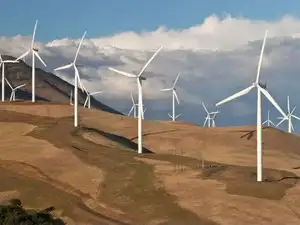
India will add 7.5-8 GW wind energy capacity addition in the current fiscal year, said Rajesh Kulhari, Joint Secretary in the Ministry of New & Renewable Energy on Tuesday.
Kulhari was addressing the EU-India Wind Energy Business Summit 2026 at WindEnergy Hamburg. He added that India has added over 6 GW of wind energy capacity in 2025-26.
He said the sector was gaining momentum with limited fiscal support from the government.
Wind projects require investment of around ₹7 crore per MW, which means annual additions of 7 GW would entail investments of roughly Rs 50 crore per annum.
India currently has about 24 GW of wind manufacturing capacity, significantly higher than the domestic annual deployment requirement. This creates scope for manufacturers to increase exports, Kulhari said.
“Last year also we achieved approximately ₹12,000 crore of exports,” he said, adding that Indian companies are mainly exporting wind components and the domestic ecosystem has the capacity to support further growth in exports.
Kulhari also highlighted opportunities for greater cooperation between Indian and European wind energy companies, particularly in offshore wind. According to him, India can leverage Europe's experience and technology in offshore wind, while Indian companies offer advantages in scaling up projects, deployment speed and availability of skilled manpower.
“Europe is having, since they are the pioneers in the technology, we can learn from them especially for offshore wind technology,” he said.
India is preparing to develop its first offshore wind projects and is looking to draw on the experience of European companies in developing the sector, Kulhari said.
India's long coastline and favourable wind conditions could also make offshore wind commercially viable, he said. The country has more than 7,000 km of coastline, while wind speeds identified offshore Tamil Nadu are above 10 metres per second.
Kulhari said such wind speeds could result in a capacity utilisation factor of around 55%, helping bring down the levelised cost of electricity to a level acceptable to consumers.
“Wind velocity is concentrated in certain pockets, may it be offshore, may it be onshore,” he said.
The government is therefore looking to accelerate deployment while expanding the domestic manufacturing and export ecosystem, as it seeks to reach 100 GW of wind capacity by 2030.
(The reporter visited Hamburg on the invitation of Suzlon Energy)
(You can now subscribe to our Economic Times WhatsApp channel)
Kulhari was addressing the EU-India Wind Energy Business Summit 2026 at WindEnergy Hamburg. He added that India has added over 6 GW of wind energy capacity in 2025-26.
He said the sector was gaining momentum with limited fiscal support from the government.
Wind projects require investment of around ₹7 crore per MW, which means annual additions of 7 GW would entail investments of roughly Rs 50 crore per annum.
India currently has about 24 GW of wind manufacturing capacity, significantly higher than the domestic annual deployment requirement. This creates scope for manufacturers to increase exports, Kulhari said.

“Last year also we achieved approximately ₹12,000 crore of exports,” he said, adding that Indian companies are mainly exporting wind components and the domestic ecosystem has the capacity to support further growth in exports.
Kulhari also highlighted opportunities for greater cooperation between Indian and European wind energy companies, particularly in offshore wind. According to him, India can leverage Europe's experience and technology in offshore wind, while Indian companies offer advantages in scaling up projects, deployment speed and availability of skilled manpower.
“Europe is having, since they are the pioneers in the technology, we can learn from them especially for offshore wind technology,” he said.
India is preparing to develop its first offshore wind projects and is looking to draw on the experience of European companies in developing the sector, Kulhari said.
India's long coastline and favourable wind conditions could also make offshore wind commercially viable, he said. The country has more than 7,000 km of coastline, while wind speeds identified offshore Tamil Nadu are above 10 metres per second.
Kulhari said such wind speeds could result in a capacity utilisation factor of around 55%, helping bring down the levelised cost of electricity to a level acceptable to consumers.
“Wind velocity is concentrated in certain pockets, may it be offshore, may it be onshore,” he said.
The government is therefore looking to accelerate deployment while expanding the domestic manufacturing and export ecosystem, as it seeks to reach 100 GW of wind capacity by 2030.
(The reporter visited Hamburg on the invitation of Suzlon Energy)
Add  as a Reliable and Trusted News Source
 Add Now!
(You can now subscribe to our Economic Times WhatsApp channel)
(Catch all the Business News, Breaking News and Latest News Updates on The Economic Times.)
Subscribe to The Economic Times Prime and read the ET ePaper online.
Read More News on
(Catch all the Business News, Breaking News and Latest News Updates on The Economic Times.)
Subscribe to The Economic Times Prime and read the ET ePaper online.






 ETPrime Membership