Listen to this article in summarized format
×
Subscribe to

Unlock AI Briefing and Premium Content
New Year Offer 24 Hours Left
Subscribe NowAlready a member? Sign In
What's Included
- Exclusive Stories
- Daily ePaper Access
- Smart Market Tools
- Curated Investment Ideas
- Ad-lite Experience
Subscription

 Agencies
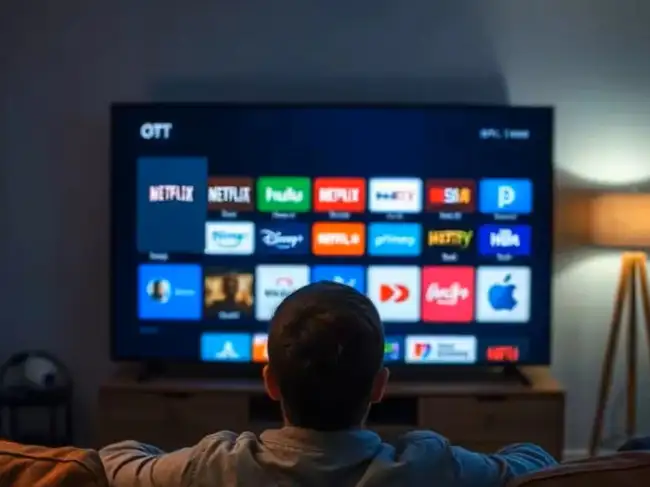
Indian viewers are increasingly using various screens for content consumption as the industry adapts. (Image is AI Generated)
Mumbai: Television, streaming, mobile and connected TV are increasingly converging rather than replacing one another as Indian viewers move between screens, FICCI Media & Entertainment Committee chairman and CEO entertainment at JioStar, Kevin Vaz said on Tuesday.
Vaz's comments come as traditional TV distributors turn to app-based delivery of linear channels to adapt to changing viewing habits. Dish TV-owned Vzy has launched an app offering more than 200 live TV channels alongside 29+ OTT platforms, while Tata Play, Sun Direct and GTPL Hathway are testing similar services.
Also Read: India's TV industry urges I&B Ministry to restore BARC ratings immediately, Kevin Vaz says
He said the opportunity was not to choose between different screens but to allow consumers to move seamlessly between them while giving media companies better ways to understand and serve audiences.
“The opportunity is not to choose between screens, but to give audiences the freedom to move seamlessly across screens, while giving the industry better ways to understand and serve those audiences,” he said.
The shift comes as traditional pay-TV faces growing pressure from streaming and connected television. Linear pay-TV lost around 11 million subscriptions in 2025, while connected TV gained approximately 10 million, according to FICCI-EY data cited by The Economic Times. Connected TV now reaches an estimated 62-65 million households and 207 million viewers, according to WPP Media, The Trade Desk and Ormax Media.
Also Read: JioStar seeks immediate restoration of BARC ratings, regulatory roadmap for linear TV
For distributors, app-based delivery can reduce dependence on set-top boxes and related customer-service infrastructure while allowing live television and OTT content to be offered through a single interface.
“Linear television remains deeply embedded in Indian households even as Connected TV and digital consumption accelerate rapidly. More importantly, the story of the large screen is far from over,” he said.
He said connected TV combines the scale and “lean-back experience” of television with digital capabilities such as search, recommendations, personalisation, addressability and measurement.
Vaz also pointed to live sports as an example of this convergence, citing TATA IPL 2026, which he said reached more than 1.2 billion viewers across television and streaming.
(You can now subscribe to our Economic Times WhatsApp channel)
Vaz's comments come as traditional TV distributors turn to app-based delivery of linear channels to adapt to changing viewing habits. Dish TV-owned Vzy has launched an app offering more than 200 live TV channels alongside 29+ OTT platforms, while Tata Play, Sun Direct and GTPL Hathway are testing similar services.
Also Read: India's TV industry urges I&B Ministry to restore BARC ratings immediately, Kevin Vaz says
Linear TV moves to connected screens
“Linear TV streaming is a good example of this evolution, bringing together the scale and familiarity of television with the flexibility of streaming,” Vaz said in his inaugural address at FICCI FRAMES 2026.He said the opportunity was not to choose between different screens but to allow consumers to move seamlessly between them while giving media companies better ways to understand and serve audiences.

“The opportunity is not to choose between screens, but to give audiences the freedom to move seamlessly across screens, while giving the industry better ways to understand and serve those audiences,” he said.
The shift comes as traditional pay-TV faces growing pressure from streaming and connected television. Linear pay-TV lost around 11 million subscriptions in 2025, while connected TV gained approximately 10 million, according to FICCI-EY data cited by The Economic Times. Connected TV now reaches an estimated 62-65 million households and 207 million viewers, according to WPP Media, The Trade Desk and Ormax Media.
Also Read: JioStar seeks immediate restoration of BARC ratings, regulatory roadmap for linear TV
For distributors, app-based delivery can reduce dependence on set-top boxes and related customer-service infrastructure while allowing live television and OTT content to be offered through a single interface.
The large screen remains relevant
Vaz said the rise of connected TV did not mean the end of linear television, arguing that the large screen continues to have an advantage as a shared viewing experience.“Linear television remains deeply embedded in Indian households even as Connected TV and digital consumption accelerate rapidly. More importantly, the story of the large screen is far from over,” he said.
He said connected TV combines the scale and “lean-back experience” of television with digital capabilities such as search, recommendations, personalisation, addressability and measurement.
Vaz also pointed to live sports as an example of this convergence, citing TATA IPL 2026, which he said reached more than 1.2 billion viewers across television and streaming.
Add  as a Reliable and Trusted News Source
 Add Now!
(You can now subscribe to our Economic Times WhatsApp channel)
(Catch all the Business News, Breaking News and Latest News Updates on The Economic Times.)
Subscribe to The Economic Times Prime and read the ET ePaper online.
Read More News on
(Catch all the Business News, Breaking News and Latest News Updates on The Economic Times.)
Subscribe to The Economic Times Prime and read the ET ePaper online.






 ETPrime Membership