
The benefits of light are many for humans, but it’s important to think about how light affects other animals. Thousands of species suffer the negative impacts of light pollution every year. Pink-footed Shearwater chicks are raised on islands in dark burrows, and when the time comes to undertake their first flight, instead of finding a sky like the one in the photo, they find artificial lights that disorient them. When seabirds fall to the ground, they can easily become prey to dogs and cats.
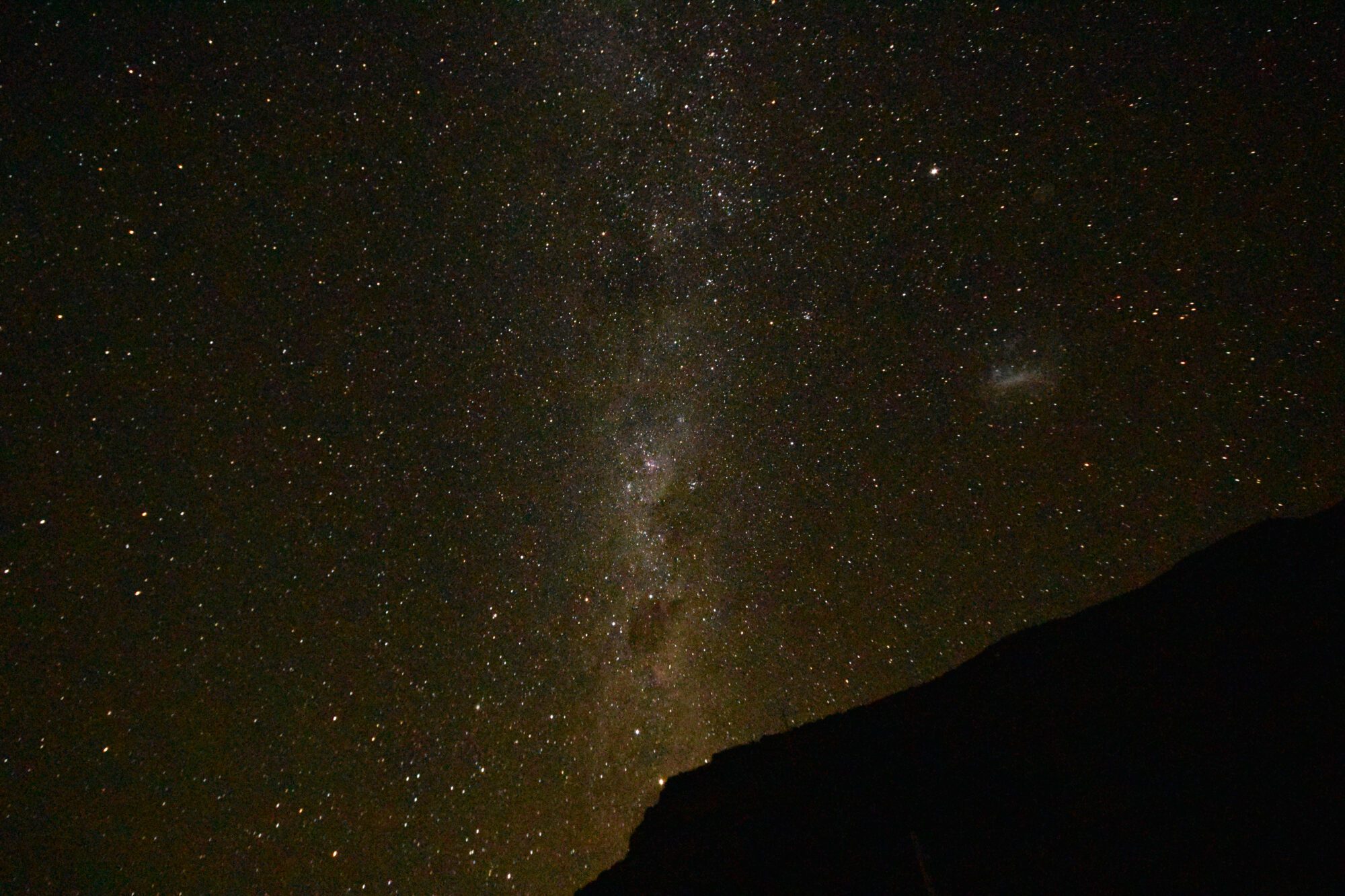
A sky without light pollution by Héctor Gutiérrez Guzmán.

Fallen Wilson’s Storm-petrel disoriented due to the artificial lights. Photo by Red de Observadores.
Conservation efforts in Robinson Crusoe Island
Robinson Crusoe Island is one of the three islands that form part of the Juan Fernández Archipelago. Located 700 miles off Central Chile, it’s the most populated of the three.
In 2020, due to the installation of bright streetlights on the waterfront at Robinson Crusoe, where seabirds and humans co-exist, a high number of shearwater chicks were found grounded and vulnerable. The Pink-footed Shearwater is not only an endangered species, but also a species that has a national action plan (RECOGE) developed by the Ministry of the Environment of Chile.
How can you help?
Regardless of where you live, be responsible with your pets! If you have cats, don’t let them wander outside, keep them inside your house. If you have dogs, keep them on their leash so they can’t hurt the chicks that have fallen to the ground. Remember that these chicks are easy prey for your pets. You can also get involved with conservation organizations in your locality and learn about the effects of light pollution on your local species.
What solutions is Oikonos implementing?
- We collaborated with the Municipality of Juan Fernández, the Office of Sky Quality Protection of Northern Chile, and Aladdin Lighting in the installation of 23 streetlight filters along the coast, with the goal of minimizing the damage caused by light pollution. These filters reduce the blue light spectrum that affects biodiversity and people.
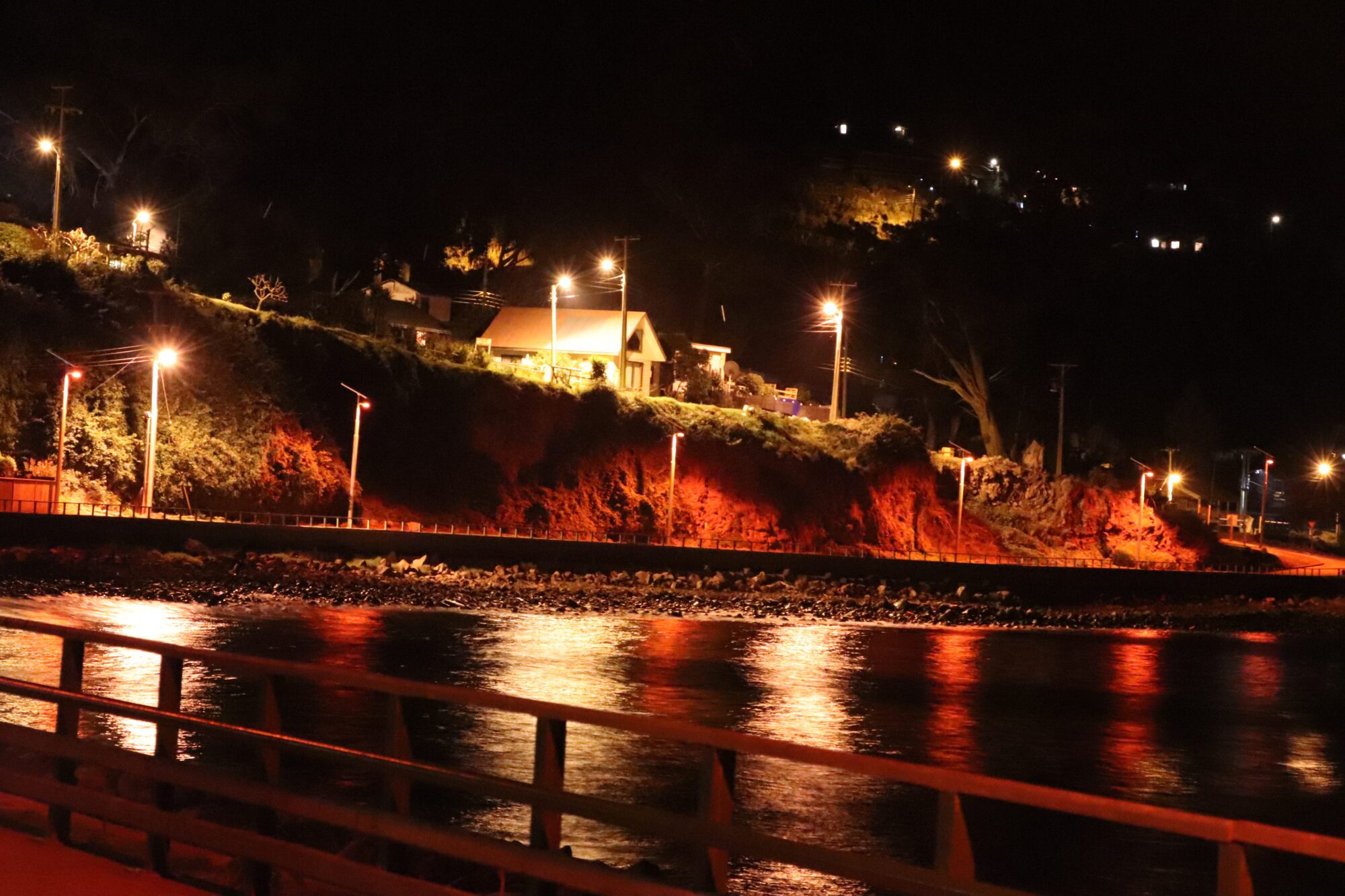
Streetlights with filters on the coast of Robinson Crusoe Island. Photo by Rolando Recabarren.
The following chart shows that the number of grounded shearwaters dropped significantly after the filters were installed in 2022.

- We also carry out activities such as night tours with the Robinson Crusoe community where they can learn about light pollution and what to do if they find fallen chicks on the ground.
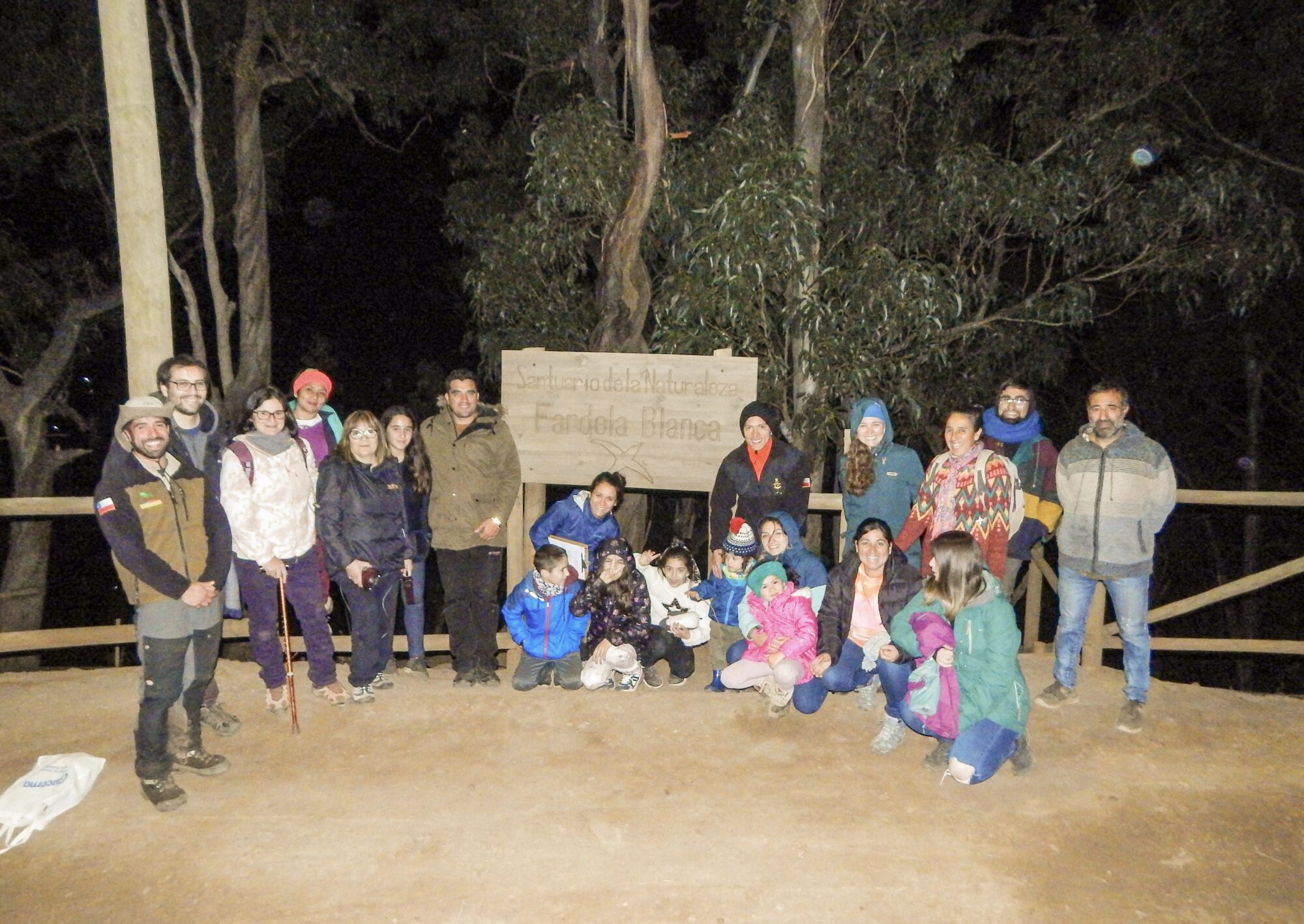
Night tour with members of the Robinson Crusoe community. Photo by Florencia Olivares.
- We joined ROC and the Office for the Protection of Sky Quality in Northern Chile to develop the “Guide for Friendly Lighting with Seabirds in Chile”, which provides guidance for outdoor lighting projects that may affect seabirds.
In addition, it provides practical recommendations for designing suitable lighting projects and examples of real case studies, hoping that project developers, evaluators and territorial planners will use it to mitigate light pollution in the development of their projects.

We thank the Ministry of the Environment of Chile, American Bird Conservancy and the National Fish and Wildlife Foundation for supporting this guide, and Daniel Martínez for the illustrations.
August 8, 2022
Written by: Gabriela Lamanna
Edited by: Michelle Hester
Related Blogs
Phalarope Tagging at Mono Lake: An Update from Science Director Ryan Carle
In 2025, Oikonos launched the project “Promoting the Conservation of the Humboldt Penguin in Chile and Peru”, an initiative aimed at strengthening scientific research, environmental education, and conservation efforts for one of the most iconic species of the Humboldt Current.

The collaboration of those who work at sea every day can make a big difference in conservation: An interview with Simón Zepeda
In 2025, Oikonos launched the project “Promoting the Conservation of the Humboldt Penguin in Chile and Peru”, an initiative aimed at strengthening scientific research, environmental education, and conservation efforts for one of the most iconic species of the Humboldt Current.

Individual Actions Matter: The Humboldt Penguin Is Now a Natural Monument
Individual actions have a greater impact on the collective than we often realize. Thanks to more than 9,000 people who took part in the public consultation, the Humboldt Penguin has now been declared a Natural Monument.