Government of IndiaGOVERNMENT OF INDIA
Skip to main content
English language
Accessibility
Accessibility Tools
Color Adjustment
Text Size
Navigation Adjustment
Screen Reader iconScreen Reader
MyGov Twitter
MyGov Facebook
MyGov Youtube
MyGov Instagram
MyGov Linkedin
MyGov Whatsapp
Meri Sarkar Logo

Recent Searches

      Close

      Get Involved

      • Groups
      • Do/Tasks
      • Discuss
      • Poll/Survey
      • Blog
      • Talk
      • Quiz
      • MG Prime
      • Campaigns
      • Pledge
      • Podcast
      • Media
      • Periodicals

      MyGov States

      • Andaman & Nicobar Islands
      • Arunachal Pradesh
      • Assam
      • Chandigarh
      • Chhattisgarh
      • Dadra and Nagar Haveli and Daman and Diu
      • Goa
      • Gujarat
      • Haryana
      • Himachal Pradesh
      • Jammu And Kashmir
      • Jharkhand
      • Karnataka
      • Ladakh
      • Madhya Pradesh
      • Maharashtra
      • Manipur
      • Mizoram
      • Nagaland
      • Rajasthan
      • Tamil Nadu
      • Tripura
      • Uttar Pradesh
      • Uttarakhand
      • Lakshadweep
      • Odisha
      • Puducherry
      • Sikkim

      Microsites

      • Blog
      • Campus
      • Innovate India
      • Pledge
      • Quiz
      • Saathi
      • Self4Society
      • Transforming India
      • PM Events

      Get to Know

      • MyGov: An Overview
      • Associate with MyGov
      • Work at MyGov
      • Circulars
      • Pulse Newsletter
      • Tenders
      • Weekly Newsletter
      • Meity Dashboard
      • Sectors
      • Skills
      • Area of Interest
      • Age Group
      • National Events
      • Archive Sites

      Help/Feedback

      • Contact Us
      • FAQ
      • Feedback
      • Help
      • Link To Us
      • Public Grievance
      • Site Map
      • Terms & Conditions
      • Usage of Aadhaar
      • Web Information Manager
      • ICC
      • MyGov Social
      • Points and Badges
      • Website Policies
      user-profile
      Together, Let's Engage In Good Governance 
      Login/Register
      1. Home
      2. Discuss
      3. Inviting Ideas for Next Phase of Rural Sanitation
      Facebook X
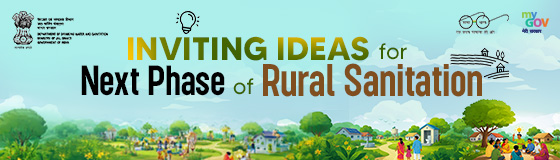
      Inviting Ideas for Next Phase of Rural Sanitation
      Start Date 01/08/2026 - 11:49
      End Date 02/10/2026 - 23:45
      Time zone: IST (GMT +5.30 Hrs)
      Login to Participate
      Sector:
      Water & Sanitation
      Created : 1/08/2026
      652
      Total Comments
      474
      Users Participated

      In the last 12 years, SBM(G) has evolved from a sanitation programme into a nationwide movement that has improved public health, enhanced dignity of women, empowered communities and promoted sustainable rural development. Building on the achievement of Open Defecation Free (ODF) status, SBM(G) 2.0 has expanded its focus to sustaining sanitation outcomes through interventions such as Individual Household Latrines (IHHLs), Community Sanitary Complexes (CSCs), Solid and Liquid Waste Management, Plastic Waste Management, Faecal Sludge Management, GOBARdhan, Information, Education and Communication (IEC) and Capacity Building. The current phase of the Mission is scheduled to conclude in March 2027.

      As the Department prepares the roadmap for the next phase of rural sanitation, it seeks ideas from citizens to sustain and strengthen the gains achieved under SBM(G) while addressing emerging challenges related to waste management, resource recovery, environmental sustainability, Operation & Maintenance (O&M) and long-term community ownership of assets and outcomes. Innovative, practical and scalable solutions are required to enhance sanitation service delivery, strengthen waste management systems, promote behavioural change and accelerate the transition towards a circular waste-to-wealth economy. Given that the diversities of rural areas from urban cities, suggestions and ideas, specific to rural scenarios will be highly appreciated. Along with these, with peri-urban areas / villages also growing fast and having characteristics of urban centers, solutions specific for such areas are also being sought.

      The success of SBM(G) has been driven by the spirit of Jan Bhagidari (People's Participation). Citizens, Gram Panchayats, SHGs, youth, Swachhagrahis and other stakeholders have been at the forefront of transforming rural sanitation and their continued participation will remain critical for sustaining these achievements. 

      Accordingly, the Department of Drinking Water and Sanitation (DDWS), Ministry of Jal Shakti in collaboration with MyGov, invites citizens, youth, Gram Panchayats, SHGs, academic and research institutions, development partners and other stakeholders to share their suggestions and ideas for the next phase of rural sanitation programme on the following:

      1. Areas to be taken up (including existing areas where gaps may be remaining)
      2. New technological interventions for SWM, GWM, FSM.
      3. Rural Sanitation 
      4. Solutions for treating pollution in small nallahs/rivulets discharging into rivers in rural areas.
      5. Adoption of solutions based on traditional knowledge and ancient wisdom in new settings for rural India. 
      6. Any other area related to the programme.

      The suggestions received will help and guide the next phase of SBM(G) and contribute to building cleaner, healthier and environmentally sustainable villages that will be strong contributors for achieving the goal of Viksit Bharat@2047.

      Participation Guidelines 

      1. All Citizens, youth (including students), Gram Panchayats & SHGs, academic and research institutions, development partners, NGOs and other stakeholders are invited to contribute ideas for shaping the next phase of rural sanitation and solid-liquid waste management under Swachh Bharat Mission (Grameen).
      2. For detailed information about SBM(G) Phase II, applicants may visit the SBM(G) Phase II operational guidelines available on website of the Department (https://swachhbharatmission.ddws.gov.in). The guidelines can also be assessed through: https://swachhbharatmission.ddws.gov.in/sites/default/files/Guidelines/SBMG%20Phase-II%20Operational%20Guidelines.pdf 
      3. Suggestions may be submitted on any of the major components of SBM(G), including Individual Household Latrines (IHHLs), Community Sanitary Complexes (CSCs), Solid Waste Management, Liquid Waste Management, Plastic Waste Management, GOBARdhan, Faecal Sludge Management, Information, Education and Communication (IEC) and Capacity Building. Global best practices forming the bases of solution, may also duly mentioned and referred.
      4. Participants are encouraged to propose innovative, technology-driven, scientific, managerial, practical, feasible and scalable solutions to address rural sanitation challenges and strengthen long-term sustainability.
      5. Suggestions should focus on supporting the Department of Drinking Water and Sanitation (DDWS), Ministry of Jal Shakti, in developing the roadmap for the next phase of rural sanitation for India.
      6. Participants are required to register on the MyGov platform and submit their suggestions through the prescribed online form.
      ManjunathGS_2
      ManjunathGS
      5 days 17 hours ago

      Village Adoption Programme by Medical & Nursing Colleges Aim: To improve rural health, sanitation, and quality of life through community-based healthcare and sustainable village development. Key Activities Health Services: Organize health camps, screenings, and referral services. Health Education: Promote hygiene, nutrition, immunization, and disease prevention. Rural Sanitation: Improve cleanliness in villages, government schools, and healthcare facilities. School Health: Conduct health check-ups and hygiene awareness programmes. Community Participation: Collaborate with Gram Panchayats, ASHA workers, and Anganwadi workers. Sustainable Development: Monitor health indicators and implement village-specific improvement plans. Expected Outcome: Healthy people, clean villages, improved healthcare access, and sustainable rural development. Slogan: “Adopt a Village, Transform Lives, Build a Healthier Community.”

      comments image 204344
      Like 1
      Dislike 0
      • Reply
      Facebook X
      ManjunathGS_2
      ManjunathGS
      5 days 17 hours ago

      Suggestions for Improving Rural Sanitation Toilet Facilities: Ensure every household has access to functional and hygienic toilets. Waste Management: Promote waste segregation, composting, and regular garbage collection. Drainage: Improve drainage systems and prevent stagnant water. Safe Drinking Water: Ensure clean drinking water and regular water quality testing. Hygiene Awareness: Promote handwashing, personal hygiene, and menstrual hygiene. Community Participation: Involve Gram Panchayats, SHGs, and local communities in sanitation activities. Clean Surroundings: Organize regular village cleanliness drives and prevent open dumping. Monitoring: Conduct regular sanitation inspections and maintain public toilets. Goal: Clean villages, healthy families, and sustainable rural sanitation.

      Like 1
      Dislike 0
      • Reply
      Facebook X
      BijoyMallick_2
      BijoyMallick_2
      6 days 7 hours ago

      मैं उन महान नेताओं को आदरपूर्वक नमन करता हूँ जिन्होंने संविधान लिखा है, जिनसे भारत का हर पहलू अच्छी तरह से मैनेज हो रहा है, जिन महान नेताओं ने संविधान लिखा है, जिन महान नेताओं ने भारत का भला किया है। लेकिन, संविधान को और शुद्ध और पवित्र करने के लिए, संसदों की संख्या पूरी करने के लक्ष्य को पक्का करने के लिए मुझे सिर्फ़ पाँच साल का मौका दीजिए, माननीय प्रधानमंत्री श्री नरेंद्र मोदी जी। बिना किसी लड़ाई, झगड़े, जलन या दुश्मनी के, मैं स्वर्गीय डॉ. श्यामा प्रसाद मुखर्जी जी, स्वर्गीय आदरणीय अटल बिहारी वाजपेयी जी और आपकी इच्छाओं को पूरा करने के लिए दिन-रात काम करूँगा।

      Like 1
      Dislike 0
      • Reply
      Facebook X
      MeethaLalBunkar
      MeethaLalBunkar
      6 days 15 hours ago

      1.Suggestions may be submitted on any of the major components of SBM(G), including Individual Household Latrines (IHHLs), 2.Community Sanitary Complexes (CSCs), 3. Solid Waste Management 4.Liquid Waste Management 5.Plastic Waste Management 6.Faecal Sludge Management 7.Information, Education and Communication (IEC) 8.staff salary incarge 9.The honorarium of personnel working under the Sub-M-G scheme should be increased.

      comments image 203229
      Like 1
      Dislike 0
      • Reply
      Facebook X
      Govind Choudhary 68
      Govind Choudhary 68
      6 days 18 hours ago

      **विषय: शहरों की सड़क, फुटपाथ और पार्किंग व्यवस्था में सुधार** माननीय सरकार, मैं देश के शहरी विकास से जुड़ा एक सुझाव देना चाहता हूँ। भारत के कई शहरों में सड़कें टूटी हुई हैं, जगह-जगह गड्ढे हैं और कई स्थानों पर घरों या दुकानों का निर्माण सड़क की जगह को प्रभावित करता है। इसके कारण यातायात और पैदल चलने वाले लोगों को परेशानी होती है। मेरा सुझाव है कि प्रत्येक शहर में सड़कों का नियमित सर्वेक्षण करके उनकी मरम्मत और रखरखाव सुनिश्चित किया जाए। जहाँ नियमों के विरुद्ध सड़क की जगह बाधित हो रही हो, वहाँ नियमानुसार कार्रवाई की जाए। साथ ही, अच्छी गुणवत्ता वाले फुटपाथ, साइकिल के लिए सुरक्षित स्थान और निर्धारित पार्किंग क्षेत्र विकसित किए जाएँ। पार्किंग की उचित व्यवस्था होने से वाहनों को सड़क पर खड़ा करने की समस्या कम हो सकती है और सड़क का अधिक हिस्सा यातायात के लिए उपलब्ध रहेगा। यदि भारत के शहरों में सड़क, फुटपाथ, पार्किंग और निर्माण व्यवस्था को योजनाबद्ध तरीके से विकसित किया जाए, तो इससे यातायात व्यवस्था, नागरिकों की सुविधा और शहरों के विकास में सुधार हो सकता है।

      Like 2
      Dislike 0
      • Reply
      Facebook X
      Raju_12047
      Raju_12047
      6 days 19 hours ago

      “Smart Clean Points” Create small Smart Clean Points in every village and city where people can drop waste into separate bins for wet waste, dry waste, and plastic. Each point can have a simple QR code where citizens can report overflowing bins or unclean areas. Local cleaning teams can respond quickly, while schools and communities can organize monthly “Clean Street Challenges” to encourage public participation. This can make sanitation more organized, accountable, and community-driven.

      Like 1
      Dislike 0
      • Reply
      Facebook X
      LalitKumar_6371
      LalitKumar_6371
      6 days 22 hours ago

      Mai class 11th PCB ki student hu. Jal swakshata ke agale charan ko safal banane ke liye mera sujhav hai ki hame gaanvo me soch alay banane se aage badhkar jal aur swakshata par dhyan dena chahiye aur hame logo ko eske prati jagruk karna chahiye

      Like 2
      Dislike 0
      • Reply
      Facebook X
      Reply (1)
      Muthuselvam Gugan
      Muthuselvam D
      6 days 22 hours ago

      Machines like the tractor-operated Bull Mini Agri Backhoe Loader are needed in every village. Due to a shortage of personnel, it takes a long time to repair faults in drinking water connections. Every panchayat must be equipped with horizontal auger drilling machines and robotic systems for cleaning greywater drains or underground sewage lines. The deplorable practice of sending human workers into underground sewers for cleaning must be completely eliminated. It must be made mandatory to have a mobile, heavy-duty water pump powered by a diesel engine to clear stagnant rainwater; such a pump would also facilitate drinking water distribution should the motor of a ring well fail during the rainy season. Under SBM-G 2.0, we need to procure small trench-digging machines and lateral drilling machines this time to help ensure the smooth distribution of drinking water in village panchayats. My other views in pdf

      (0.19 MB)
      Like 1
      Dislike 0
      • Reply
      Facebook X
      Sanjiv Shrikant Mantri
      Sanjiv Shrikant Mantri
      1 week ago

      Rural sanitation can’t be treated with separate identity. Concept should be adhering to the social values common across. The infrastructure and sanitation modules should remain same. However, it has different challenges due to cattle waste, agro-waste and awareness within communities. Farming do offer solutions in the form of creating biogas, manure, gas fuel for vehicles, hot water, electricity from gas and so on. Providing right information, business opportunities, and machinery will create self sustaining economies and the problems will be addressed with minimal government intervention. Sanitation or cleanliness represents class of society, which is again coming out of values inculcated in the minds of people. Education, awareness sessions, opportunities for growth through innovative businesses, competition will create right ground. Scientific approach or scientific mindset can be created through the same, cultural or religious beliefs can be used to bridge science and society.

      Like 1
      Dislike 0
      • Reply
      Facebook X
      Raksha_1358
      Raksha_1358
      1 week ago

      Namaste Sir I am Raksha from Mumbai in attached PDF I am Sharing my personal idea on National Farming Employment. Hate Krishna & Thank you Raksha Urmaliya

      (0.08 MB)
      Like 1
      Dislike 0
      • Reply
      Facebook X
      • First page « First
      • Previous page ‹ Previous
      • Page 1
      • Page 2
      • Page 3
      • Current page 4
      • Page 5
      • Page 6
      • Page 7
      • Page 8
      • Page 9
      • …
      • Next page Next ›
      • Last page Last »
      Please Log In to submit a comment.
      Get Involved
      • Groups
      • Do/Tasks
      • Discuss
      • Blog
      • Poll/Survey
      • Talk
      • Quiz
      • MG Prime
      • Campaigns
      • Pledge
      • Podcast
      • Media
      • Periodicals
      Get to Know
      • MyGov: An Overview
      • Associate with MyGov
      • Work at MyGov
      • Circulars
      • Pulse Newsletter
      • Tenders
      • Weekly Newsletter
      • MeitY Dashboard
      • Sectors
      • Skills
      • Area of Interest
      • Age Group
      • National Events
      • Archive Sites
      Help & Support
      • Contact Us
      • FAQ
      • Feedback
      • Help
      • Link To Us
      • Public Grievance
      • Site Map
      • Terms & Conditions
      • Usage of Aadhaar
      • Web Information Manager
      • ICC
      • MyGov Social
      • Points and Badges
      • Website Policies
      Useful Links
      • MyGov Quiz MyGov Quiz
      • Transforming India Transforming India
      • MyGov Innovation MyGov Innovation
      • MyGov Pledge MyGov Pledge
      • MyGov Blog MyGov Blog
      • Self4Society Self4Society
      • Campus Program Campus Program
      • MyGov Saathi Saathi
      Follow us
      Twitter Twitter 33.11 + Lakh Followers Facebook Facebook 15.14 + Lakh Followers Instagram Instagram 30.73 + Lakh Followers YouTube YouTube 7.43 + Lakh Subscribers LinkedIn LinkedIn 1.63 + Lakh Followers Messenger Messenger 1.60 + Lakh Followers WhatsApp WhatsApp 910.05 + Lakh Followers DailyHunt DailyHunt 7.2 + K Followers Public Public 85.5 + K Followers ShareChat ShareChat 82.22K Followers Snapchat Snapchat View All
      QR Code

      Download the MyGov Mobile App Join us in building a New India on the move.

      App Store Play Store
      NIC logo

      © Content owned, updated and maintained by the MyGov Cell. This website belongs to MyGov, Ministry of Electronics & Information Technology, Government of India.
      Platform is designed, developed and hosted by National Informatics Centre.

      CQW - MyGov certificateCertified Quality Website
      • Meity
      • Digital India
      • National Portal of India
      • Data Portal

      Copyright © MyGov 2014

      mygov-1 - Last Updated: October 2, 2026
      Top
      This website uses cookies to provide a better user experience.
      By clicking accept, you agree to the policies outlined in the Cookie Settings.