John Deere harvests data insights with new AI technology
The agricultural machinery company is helping farmers uncover new efficiencies in farming. Its latest addition of a generative AI assistant is already working on harvest schedules.

AMES, Iowa — Summer might be winding down, but it's peak harvest season for many farmers in Iowa. With access to more operational analytics than ever, farmers are discovering that the timing window for achieving success in planting, fertilizing, weed spraying and harvesting is tighter than they previously thought.
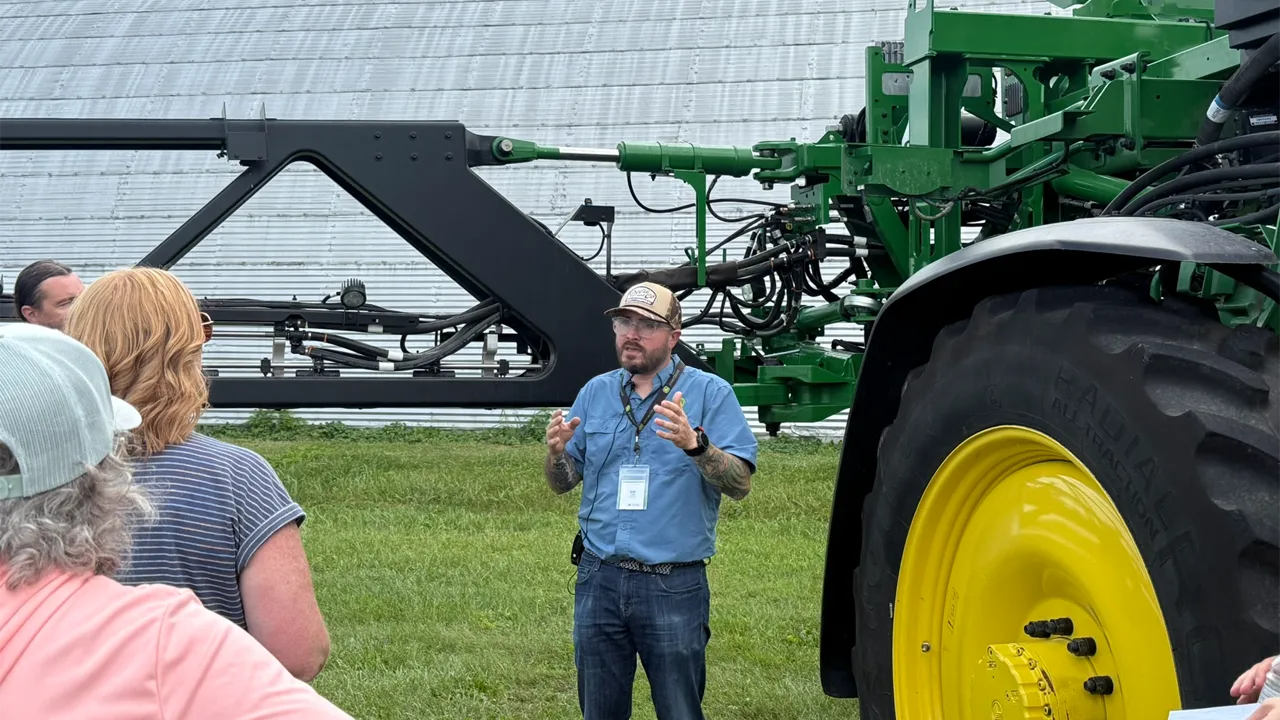
InformationWeek recently met with John Deere executives, local farmers and Iowa State University academics at the Alliant Energy Agriculture Innovation Lab in Ames, Iowa, to examine how the company is embedding AI, machine learning, computer vision and other emerging technologies into agricultural equipment to improve farming efficiency. Onboard equipment cameras and sensors link to data dashboards in its cloud-based Operations Center platform, which provide insights that are guiding farmers' planting and harvesting decisions.
Kelly Garrett, a sixth-generation farmer in Iowa who manages a 9,000-acre farm growing corn, soybeans and wheat, in addition to livestock, said that by using John Deere's Operations Center, he made a striking discovery.
"Our planting window should have been narrower, but we just didn't know," he said. "And so, to somebody that's not using the data, not using the technology — you don't know what you don't know. The ROI comes from using that technology."
AI for more efficient farming operations
The Operations Center dashboard provides an analytics layer between farmers and the enormous streams of data generated by the AI and automation technologies embedded in its equipment. Earlier this month, John Deere introduced JD to the platform. A generative AI assistant, JD enables farmers to interact with their data through a natural language interface.
Garrett explained how his son used JD to build a harvest schedule, pinpoint which fields to harvest first, and identify the best path to traverse those fields.
"We didn't understand why we were experiencing some of the yield losses, but the AI will help you analyze that and pick a way to be more efficient," Garrett said. "It's just data management and data understanding, and adopting the AI is the next round of technology that can make us more efficient."
Currently in limited access, JD analyzes harvest data, including optimal harvest times, equipment fuel usage and sprayer operator performance, via the web or mobile Operations Center dashboard. In the future, the AI tool will integrate with the G5 touchscreen display on John Deere equipment, allowing equipment operators to access JD directly from inside the cab of agricultural equipment such as combines and sprayers.
"The opportunity with AI is to make operational data more useful and actionable," said Jahmy Hindman, senior vice president and CTO for John Deere Farmers. "Farmers don't need more data for the sake of having more data; they need practical, timely information that helps them understand what's happening across their operation and decide what to do next."
Hindman said John Deere chose to release an AI assistant versus an AI agent in part because agriculture is a "highly variable, physical environment," and farmers need to maintain control over their operations.
"One of the biggest lessons is that the hard part isn't just the AI model. The value of AI depends on the quality of the data and the context around it," Hindman said.
As AI evolves, there may be opportunities to add agentic capabilities to JD, he added.
While John Deere declined to identify which large language model underpins JD, OpenAI featured an interview from 2025 about John Deere's AI initiatives with Justin Rose, the company's president of lifecycle solutions, supply management and customer success.
A look at automation in the field
Kody Kokemiller, a multigenerational farmer, is also an Operations Center customer. He relies on it to analyze See and Spray data, which pinpoints where to apply week killer versus blanket spraying, during his "analytical period" to examine variations in performance of his sprayed versus unsprayed acres. "A lot of times, you don't know what your results are until after harvest, and winter time is when you can really crunch that data," he said.
Kokemiller added that analyzing data in his data dashboard also helps him plan for planting season. "We can look in Operations Center, and you can look at planting dates and those yields, and you can see the curve or the line or the descent, and you can say I need to be planting earlier," he said.
By having access to the data about his planting and harvesting seasons, Kokemiller said he has realized his planting window is tighter than what he learned from his father, who didn't have access to the same data when he was a farmer.
Centralizing data management
Having a dashboard that combines analytics from disparate types of equipment enables farmers such as Kokemiller and organic farmer Jack Fehr to conduct agricultural operations more efficiently. Fehr said having access to his data in one place allows him to oversee all his machines, "instead of being stuck in one trying to run all of them."
"You don't have to be in the same field with a combine to know that it's operating as expected because you've got the technology setting the machine, but you've also got technology to monitor it and stay in touch," he said.
With the addition of the JD AI assistant, John Deere aims to further tap into the data generated by farmers using its equipment. In the future, John Deere plans to develop JD so it can take action on behalf of farmers, such as developing a work plan and sending it to equipment operators, explained Jackson Baca, group product marketing manager at John Deere.
"You have all this information, and now you have access to it by asking a question," Baca said. "Our goal is to help farmers turn their data into practical value. That could mean making more informed decisions or improving machine performance."
John Deere plans to continue expanding its technology offerings to help farmers discover even more about an increasingly technical industry. The company is currently developing lasers and cameras to assess the condition of seed trenches formed during plowing or to dynamically adjust the pressure applied to different soil types.
About the Author


Want more InformationWeek stories in your Google search results?
Add Us Now

.png?width=800&auto=webp&quality=80&disable=upscale "Azbee Award Winning IT Insights")


Want more InformationWeek stories in your Google search results?