• About Us
  • Contact Us
  • Advertise
  • Newsletter sign-up
  • Login/Register
Electronics Weekly
  • News
  • Business
  • Markets
  • Design
  • Products
    Linear / Mixed Signal ICs
    Analogue

    Asics

    Connectors
    Digital ICs
    Discretes
    Displays

    DSPs

    Emech & Enclosures
    FPGAS
    LED Technologies
    Memory
    MPUS/MCUS
    Passives
    Power

    Raspberry Pi

    RF & Microwave

    Sensors
    Software/EDA

    Test & Measurement

  • Blogs
  • Media
    • EW Podcast – CHIIPS
    • EW TV
    • EW Issue Archive
  • Events
    • Calendar
    • Electronica
    • Electronics Weekly Elektra Awards
    • Electronics Weekly BrightSparks Awards
    • Electronics Weekly Women Leaders in Electronics Awards
    • Embedded World
    • Energy Efficiency for the AI Age
  • Resources
    • EW Compare – Comparison Search Engine
    • Component search engine
    • Whitepapers and competitions
No Result
View All Result
  • News
  • Business
  • Markets
  • Design
  • Products
    Linear / Mixed Signal ICs
    Analogue

    Asics

    Connectors
    Digital ICs
    Discretes
    Displays

    DSPs

    Emech & Enclosures
    FPGAS
    LED Technologies
    Memory
    MPUS/MCUS
    Passives
    Power

    Raspberry Pi

    RF & Microwave

    Sensors
    Software/EDA

    Test & Measurement

  • Blogs
  • Media
    • EW Podcast – CHIIPS
    • EW TV
    • EW Issue Archive
  • Events
    • Calendar
    • Electronica
    • Electronics Weekly Elektra Awards
    • Electronics Weekly BrightSparks Awards
    • Electronics Weekly Women Leaders in Electronics Awards
    • Embedded World
    • Energy Efficiency for the AI Age
  • Resources
    • EW Compare – Comparison Search Engine
    • Component search engine
    • Whitepapers and competitions
No Result
View All Result
Electronics Weekly
No Result
View All Result
Home News Business

Intel Unleashed

David Manners by David Manners
24th March 2021
in Business
2

Intel is back, said CEO Pat Gelsinger (pictured) in an enthusiastic presentation entitled ‘Intel Unleashed’ yesterday.

“We’re bringing back the execution discipline of Intel – the Grovian culture,” said Gelsinger who spent the first 30 years of his career at Intel under its first three CEOs: Bob Noyce, Gordon Moore and Andy Grove.

Gelsinger has lost none of the ebullience which earned him the soubriquet Kickin’ Pat and he appears to be relishing the chance to return Intel to its glory days.

He’s mandating a yearly cadence for process technology development and promises “leadership products in every category in which we participate”.

“We feel good that we righted the ship at 7nm and that we are on a good course,” he said.

His big announcement was a return to the foundry business with two new fabs in Arizona costing $20 billion and a separate foundry unit with its own P&L called ‘Intel Foundry Services’.

Asked if the government was providing support for these fabs he replied: “It’s an Intel strategy full stop. It’s not dependent on any outside source. We’re making these commitments without commitments from the government.”

He sees the foundry TAM for Intel as worth $100 billion by 2025 with the growth mostly coming from HPC.

Another big announcement was a process and packaging R&D hook up with  Intel’s old ally, IBM.

As well as the Arizona fab expansion he’s planning  fab investments of $17 billion in Ireland and Israel.

For the current year Gelsinger sees revenues of $72 billion at a gross margin of 56.5%.

A final announcement was a resurrection of IDF under the new guise of ‘Intel ON’.

“In a few short weeks we’ve accelerated the pace,” concluded Gelsinger, “the old Intel is the new Intel.”

Tags: Homepage Featured ArticlesIntel
Add us as preferred source
ShareTweetSharePin
Previous Post

Sponsored Content: Confidence in every component

Next Post

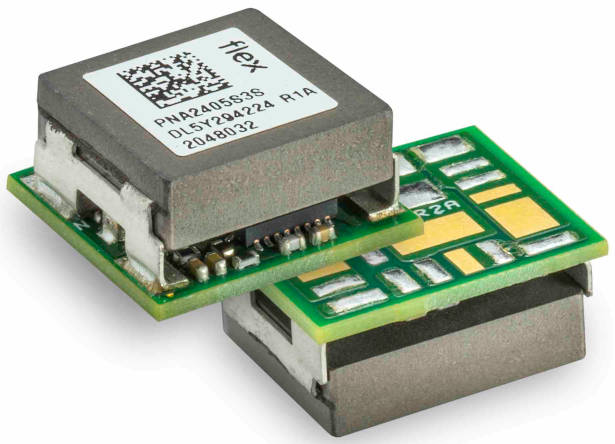
Small 6A PoL will run from 9 to 36V

David Manners

David Manners has more than forty-years experience writing about the electronics industry, its major trends and leading players. As well as writing business, components and research news, he is the author of the site's most popular blog, Mannerisms. This features series of posts such as Fables, Markets, Shenanigans, and Memory Lanes, across a wide range of topics.

Next Post
Flex-power-Modules-PNA

Small 6A PoL will run from 9 to 36V

Comments 2

  1. KGB says:
    6 years ago

    Intel aspires to foundry work. Intel cannot be trusted with proprietary intellectual property. They can make thermostats, toasters, auto parts, and Tickle Me Elmo dolls.

    Reply
  2. KGB says:
    6 years ago

    Pat Gelsinger reached into his hat for the magic rabbit. No rabbit.

    Intel’s problem is monolithic design of multi CPU processor chips. The more CPU’s on a chip the larger the chip. The larger the chip the more likely a manufacturing error that ruins the whole chip.

    AMD solved this problem with modular construction. Each AMD CPU chip is identical and they assemble into an eight chip unit with a central memory storage, artificial intelligence, communications hub. The eight CPU AMD unit size is 110 square millimeters. The size of an assembled 64 CPU server module is >1000 square millimeters.

    Each AMD chip is built with redundancy for every function. The chips are tested and faulty functions can be fused off. The chips not perfect can be sold as low to medium performance consumer chips. The perfects are sold for workstations, servers, and super computers. Thus AMD is able to sell every chip made. That is 650 revenue chips from a 30 cm wafer.

    AMD developed the technology over a ten year period. A data communications fabric called Infinity Connect makes every CPU aware of the memory status being accessed by every other CPU. This is called Unified Memory Architecture. All CPU’s share the same memory without interfering or overlapping use of memory. AMD has all the patents. The feat is difficult to achieve.

    Intel hired chip architect Jim Keller, who formerly worked at Apple, and AMD, to develop modular construction. Jim quit after two years. Either intel would not fund a ten year project that could not be guaranteed, or Jim Keller refused to violate AMD patents. My guess is both.

    Intel cannot manufacture 1000 square millimeter chips. The largest practical size is around 300 square millimeters and yields are low because most have defects.

    Intel made a separate error in manufacturing. Intel did not purchase extreme UV lithography equipment from ASML because of the high cost of each stepper. As I under stand extreme UV light is produce by burning copper particles with lasers and the copper emits a single frequency of pure light that is perfect for fine line lithography. Instead intel depended upon interference patterns of longer wavelength light to produce light that is not good enough for Star Kist. Too many defects result. Double double toil and trouble. Pot burn and cauldron bubble.

    Late 2020 intel went hat in hand to ASML and asked to purchase extreme UV equipment. ASML said, sorry, TSMC purchased our entire production for the next two years. Get in line and wait.

    Intel asked TSMC to fabricate as foundry for Intel. TSMC and Intel are direct competitors in the foundry business. If TSMC devoted half their manufacturing for Intel then Intel could at any time pull the order and manufacture themselves. Of course TSMC said not no, but Heck no! TSMC manufacturing for AMD can easily manufacture for the entire x86 market without Intel.

    Reply

Leave a Reply Cancel reply

Your email address will not be published. Required fields are marked *

Social Media

Most Popular

  • Qualcomm vs Arm (day 3)

    Qualcomm vs Arm (day 3)

    0 shares
    Share 0 Tweet 0
  • Arm vs Qualcomm, episode 2

    0 shares
    Share 0 Tweet 0
  • SK Hynix chairman to sell shares worth $700m

    0 shares
    Share 0 Tweet 0
  • Qualcomm vs Arm (cont’d)

    0 shares
    Share 0 Tweet 0
  • Robotaxis acquire a business case

    0 shares
    Share 0 Tweet 0

Don’t miss out on EW Newsletters

Get our news, blogs and comments straight to your inbox! Sign up for the Electronics Weekly newsletters: Mannerisms, Gadget Master and the Daily and Weekly roundups.


Find out more »

Tune into EW’s CHIIPS Podcast

The excellent Electronics Weekly podcast, CHIIPS, is brought to you by our editor Caroline Hayes. Hear interesting insights from a range of industry figures.


Catch all the episodes »

  • Latest
  • Comments
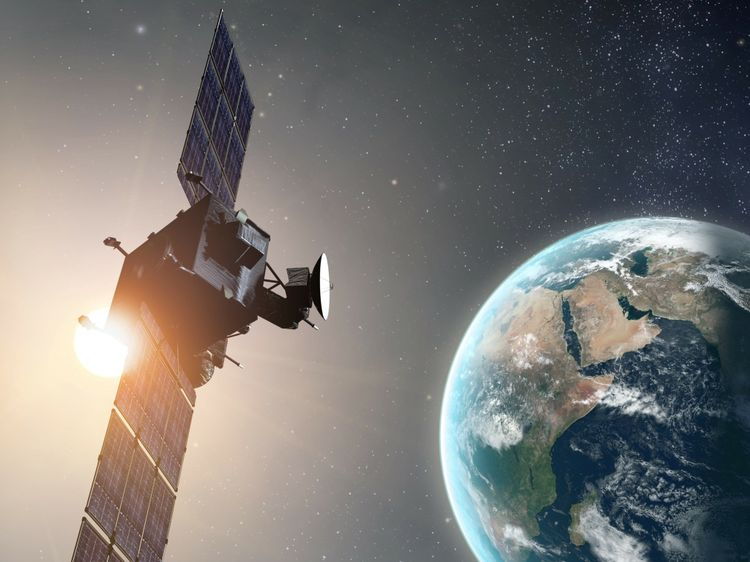
Defence satcom service revenues to surpass $23 by 2035

Defence satcom revenues to surpass $23bn by 2035

9th October 2026
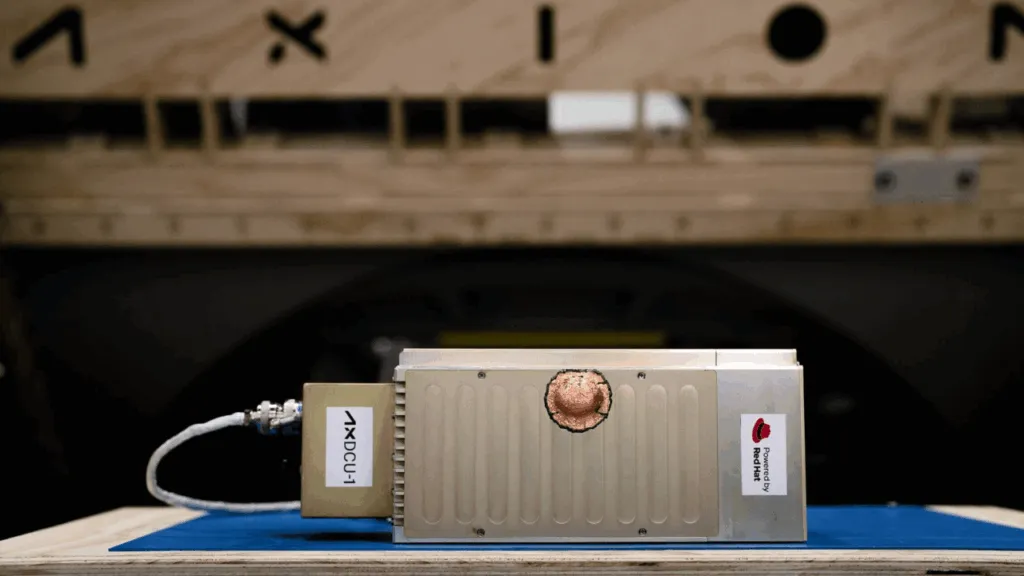
Axiom Space highlights space computing progress

Axiom Space highlights space computing progress

9th October 2026

The Single-Chip PC

9th October 2026
TSV misalignment revealed with plasma focused ion beam milling

Failure analysis in the era of 3D integration

9th October 2026

Fable: The Prof Who Became A Billionaire

6

Fable: The Company Which Surprised People

4

Declining polls for President Trump

3

An Orderly De-Frothing?

2

Electronics Weekly @ 65!

Read our special features celebrating 65 years of Electronics Weekly and looking ahead to the future of the industry.
Read the Electronics Weekly @ 65 features »

Read the first ever Electronics Weekly online: 7th September 1960. We’ve scanned the very first edition so you can enjoy it.
Read the very first edition »

Work Break

Work Break


Sudoku

About Us


Established in 1960, Electronics Weekly is the market-leading, longest-established electronics brand, read by key decision makers throughout the industry. Electronics Weekly reaches an international audience of 200,000 people each month across online, email, social media and events, and readers rate its editorial as informative, interesting and relevant. Our prestigious events portfolio includes Electronics Weekly’s Elektra Awards, Electronics Weekly’s BrightSparks, and the recently added Electronics Weekly’s Women Leaders in Electronics Awards.

News

  • AI
  • Automotive
  • Embedded Systems
  • Industrial
  • Internet of Things
  • Medical
  • Mil/Hi-Rel/Aerospace
  • Power

Blogs

  • Electro Ramblings
  • Gadget Master
  • Mannerisms
  • Viewpoints

Portfolio

  • Electronica
  • Electronics Weekly Elektra Awards
  • EW BrightSparks Brightsparks Awards
  • Electronics Weekly Women Leaders In Electronics Awards
  • Embedded World
  • Event – Energy Efficiency for the AI Age
  • Site Map

Copyright ©2026 Electronics Weekly |News|Products|Blogs - Owned by Emap, Southern House, CR0 1XG (020 39532600) Terms and Conditions Privacy policy

Ok

Retrieve your password

Please enter your username or email address to reset your password.

Log In
No Result
View All Result
  • News
  • Business
    • Manufacturing
    • Distribution
    • Finance
    • Market Research
    • Information Technology
  • Markets
    • AI
    • Automotive
    • Embedded Systems
    • Industrial
    • Internet of Things
    • Medical
    • Mil/Hi-Rel/Aerospace
    • Power
  • Design
    • Communications
    • EDA and IP
    • Legislation & Skills
    • Research
    • STEM Education
    • Testing
    • University Electronics
  • Products
    • Analogue
    • Asics
    • Connectors
    • Digital ICs
    • Discretes
    • Displays
    • DSPs
    • Emech & Enclosures
    • FPGAS
    • LED Technology
    • Linear / Mixed Signal ICs
    • Memory
    • MPUS/MCUS
    • Passives
    • Power
    • Raspberry Pi
    • RF & Microwave
    • Sensors
    • Software/EDA
    • Test & Measurement
  • Blogs
    • Electro Ramblings
    • Gadget Master
    • Mannerisms
    • Viewpoints
  • Media
    • EW Podcast – CHIIPS
    • EW TV
    • EW Issue Archive
  • Events
    • Calendar
    • Electronica
    • Electronics Weekly Elektra Awards
    • Electronics Weekly BrightSparks Awards
    • Electronics Weekly Women Leaders in Electronics Awards
    • Embedded World
    • Energy Efficiency for the AI Age
  • Resources
    • EW Compare – Comparison Search Engine
    • Component search engine
    • Whitepapers and competitions

Copyright ©2026 Electronics Weekly |News|Products|Blogs - Owned by Emap, Southern House, CR0 1XG (020 39532600) Terms and Conditions Privacy policy