


Centre launches livestock insurance portal to address gaps: What changes
The Centre has launched a new portal for livestock insurance to streamline enrolment, claims and monitoring. Here's what changes
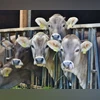
The Centre has launched a livestock insurance portal under NLM (Representative image from file)
Listen to This Article
In a bid to address issues in the implementation of livestock insurance, the Centre earlier this week launched a dedicated portal that aims to bring policy issuance, premium management, claim processing, beneficiary verification and monitoring onto a single digital platform.
The portal, launched under the Livestock Insurance activity of the National Livestock Mission (NLM), aims to simplify the insurance process and improve transparency in claim settlement and monitoring, the government said.
The development comes as the government seeks to expand livestock insurance coverage while addressing gaps that have affected the implementation of the scheme. For 2025-26 up to December, states had submitted proposals worth ₹765.55 crore, while ₹43.60 crore was released because of limited fund availability, according to data presented before Parliament.
The Department of Animal Husbandry and Dairying (DAHD) has said there is no fixed outlay for livestock insurance, as it is an activity under the Research and Innovation sub-mission of NLM. Funds are allocated based on state demand and availability. The Parliamentary Standing Committee has recorded difficulties faced by livestock owners in getting insurance and linked the need to simplify the process with efforts to improve uptake.
What are the issues with the existing livestock insurance system?
Livestock insurance is not a new programme. NLM was launched in 2014-15 and revised and realigned in 2021-22. The Livestock Insurance activity is intended to protect farmers and cattle owners against losses caused by the death of insured animals.
Also Read


The number of animals insured has varied across years. Government data submitted to Parliament showed that 4,63,046 animals were insured in 2021-22, 11,85,740 in 2022-23, 9,67,632 in 2023-24 and 26,69,711 in 2024-25.
Coverage, however, has remained limited. A research paper by K Omkar Reddy and CM Sanathana Sarathi, published last year, said livestock insurance coverage stood at 0.98 per cent and identified high premiums, slow and labour-intensive claims processes, low awareness and a lack of region-specific products among the barriers to adoption.
The Parliamentary Standing Committee on Agriculture, Animal Husbandry and Food Processing also examined the implementation of the insurance component. Its report recorded shortage of funds and low participation by insurance companies as reasons for the shortfall against targets.
“The non-achievement of targets under livestock insurance was primarily due to the following factors: shortage of funds and low insurance company participation,” the department said in its response to the committee.
The department also said insurance companies are appointed by states through tenders, and that state-specific requirements may not always align with insurers' requirements. It also said that insurers were reluctant to operate in high-risk North-Eastern and Himalayan regions.
How does the premium work?
Under the current NLM guidelines, the farmer's share of the premium is 15 per cent. The remaining 85 per cent is shared between the Centre and states.
For states other than the north-eastern and Himalayan states, the Centre and state share the amount in a 60:40 ratio. For north-eastern and Himalayan states, the ratio is 90:10. For Union Territories, the Centre bears the entire government share.
The maximum premium rates prescribed under the current guidelines vary by policy period and region:
A beneficiary can insure animals beyond the subsidised limit by paying the full premium for those additional animals, subject to the scheme's conditions.
Which animals are covered?
The insurance component covers indigenous and crossbred milch animals, as well as pack animals such as horses, donkeys, mules, camels and ponies, and male cattle and buffaloes.
It also covers goats, sheep, pigs, rabbits, yaks and mithuns.
Subsidised coverage is limited to 10 cattle units per household. One cattle unit is equivalent to 10 small animals such as sheep, goats, pigs or rabbits. For pigs and rabbits, the subsidised limit is five cattle units.
How does the livestock insurance process work?
Under the NLM guidelines, an animal had to be identified, examined by a veterinary practitioner, valued and tagged before insurance cover took effect. Its market value was assessed jointly by the beneficiary and the insurance company in the presence of a veterinary officer.
Two photographs were also required: one showing the animal with its owner and another showing the animal with its ear tag.
For claims, the guidelines specifically prescribed four documents: claim intimation to the insurance company, the insurance policy, the claim form and the post-mortem report. Claims were to be settled within 15 days of submission of the required documents. If an insurer failed to settle a claim within that period, it was liable to pay 12 per cent compound interest per annum to the beneficiary. A delayed or rejected claim also had to be justified to the claimant.
Before the new portal was launched, the insurance process was handled separately by the stakeholders involved. The portal now puts the workflow on a common digital platform.
What changes with the new portal?
The new portal therefore changes how the existing insurance programme is administered and monitored, not the core structure itself. The farmer's premium contribution, eligible animals, subsidised limits and Centre-state funding pattern remain governed by the NLM guidelines.
“The platform brings together farmers, State Governments, Insurance Companies and implementing agencies on a single transparent and technology-enabled interface,” the government said.
The government expects the portal to:
- simplify and speed up livestock insurance enrolment;
- improve transparency in claim settlement;
- enable real-time tracking of policies;
- make the system more accessible to farmers and insurance providers; and
- improve data for monitoring and implementation.
The portal is also available in 11 regional languages, apart from Hindi and English, according to the government's announcement ahead of the launch.
More From This Section


Don't miss the most important news and views of the day. Get them on our Telegram channel
First Published: Sep 30 2026 | 3:38 PM IST