

Buy New
$38.00$38.00
FREE delivery Sunday, October 11
Ships from: Amazon.com Sold by: Amazon.com
Used - Very Good
$24.88$24.88
$3.98 delivery Friday, October 16
Ships from: World of Books (previously glenthebookseller) Sold by: World of Books (previously glenthebookseller)
Download the free Kindle app and start reading Kindle books instantly on your smartphone, tablet, or computer - no Kindle device required.
Read instantly on your browser with Kindle for Web.
Using your mobile phone camera - scan the code below and download the Kindle app.

Follow the author
OK
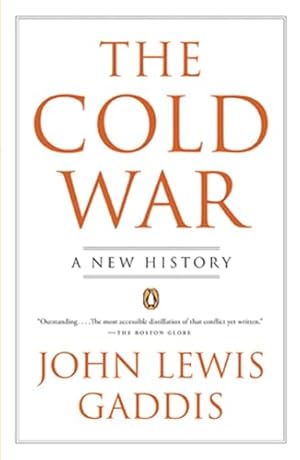
Pyrrhic Victory: French Strategy and Operations in the Great War
Purchase options and add-ons
As the driving force behind the Allied effort in World War I, France willingly shouldered the heaviest burden. In this masterful book, Robert Doughty explains how and why France assumed this role and offers new insights into French strategy and operational methods.
French leaders, favoring a multi-front strategy, believed the Allies could maintain pressure on several fronts around the periphery of the German, Austrian, and Ottoman empires and eventually break the enemy's defenses. But France did not have sufficient resources to push the Germans back from the Western Front and attack elsewhere. The offensives they launched proved costly, and their tactical and operational methods ranged from remarkably effective to disastrously ineffective.
Using extensive archival research, Doughty explains why France pursued a multi-front strategy and why it launched numerous operations as part of that strategy. He also casts new light on France's efforts to develop successful weapons and methods and the attempts to use them in operations.
An unparalleled work in French or English literature on the war, Pyrrhic Victory is destined to become the standard account of the French army in the Great War.
- Print length592 pages
- LanguageEnglish
- PublisherBelknap Press
- Publication dateMarch 31, 2008
- Dimensions6.14 x 1.48 x 9.21 inches
- ISBN-109780674027268
- ISBN-13978-0674027268
Book recommendations, author interviews, editors' picks, and more. Read it now.
Frequently bought together
Customers who viewed this item also viewed
- The Fall of the Ottomans: The Great War in the Middle EastEugene RoganPaperbackFREE Shipping on orders over $35 shipped by AmazonGet it as soon as Sunday, Oct 11
- The First World WarPaperbackFREE Shipping on orders over $35 shipped by AmazonGet it as soon as Sunday, Oct 11
- The Sleepwalkers: How Europe Went to War in 1914PaperbackFREE Shipping on orders over $35 shipped by AmazonGet it as soon as Sunday, Oct 11
- The SommePaperbackFREE Shipping on orders over $35 shipped by AmazonGet it as soon as Monday, Oct 12
- The Marne, 1914: The Opening of World War I and the Battle That Changed the WorldPaperbackFREE Shipping on orders over $35 shipped by AmazonGet it as soon as Sunday, Oct 11
- Catastrophe 1914: Europe Goes to WarHardcoverFREE Shipping on orders over $35 shipped by AmazonGet it as soon as Sunday, Oct 11Only 1 left in stock - order soon.
Customers also bought or read
- The Killing Season: The Autumn of 1914, Ypres, and the Afternoon That Cost Germany a War
Hardcover$19.54$19.54Delivery Sun, Oct 11 - Imperial Germany and the Great War, 1914–1918 (New Approaches to European History, Series Number 27)
Paperback$40.10$40.10FREE delivery Sun, Oct 11 - The Marne, 1914: The Opening of World War I and the Battle That Changed the World
Paperback$16.95$16.95Delivery Sun, Oct 11 - The Western Front: A History of the Great War, 1914-1918 (The Great War Trilogy, 1)
Paperback$16.50$16.50Delivery Sun, Oct 11 - The French Army and the First World War (Armies of the Great War)
Paperback$42.00$42.00FREE delivery Sun, Oct 11 - Absolute Destruction: Military Culture and the Practices of War in Imperial Germany
Paperback$17.48$17.48Delivery Mon, Oct 12 - The Strategy of Denial: American Defense in an Age of Great Power Conflict
Paperback$16.95$16.95Delivery Oct 23 - 27 - The Myth of the Great War: A New Military History of World War I
Paperback$10.47$10.47Delivery Sun, Oct 11 - The Fourth Turning: An American Prophecy - What the Cycles of History Tell Us About America's Next Rendezvous with Destiny
Paperback$12.39$12.39Delivery Sun, Oct 11
Editorial Reviews
Review
“Doughty fills a glaring gap in the literature on World War I with a magisterial book. He is very good on the French army's commanders, balanced but incisive in his judgments, and particularly revealing on the tensions between Petain and Foch.”―Hew Strachan, author of The First World War
“Robert Doughty has at last brought the French Army to its proper place in the historiography of the First World War: at the heart of the military operations on the Western Front. This represents one of the most important contributions to the history of the war in the last fifty years.”―Williamson Murray, co-author of A War to Be Won
“This well-written, exhaustively researched history of France's role in WWI adds a French perspective not often found in English-language literature on these seminal military events...Add [Doughty's] insight into military strategy to his portraits of lesser-known figures, such as Fifth Army commander Gen. Franchet d'Esperey, and the sum--pro-French but not uncritically so--is a valuable addition to WWI literature.”―Publishers Weekly
“This is a book for which historians of the First World War have been waiting...Although there are some excellent studies of individual aspects of the subject, until now we have lacked a comprehensive account of French strategy and campaigns. In Robert A. Doughty's superb Pyrrhic Victory, the French army at last has the scholarly study it deserves...Pyrrhic Victory is solidly founded on primary sources, culled both from archives and the volumes of the French official history. Doughty provides an essay on sources rather than a conventional bibliography.”―Gary Sheffield, RUSI Journal
“Pyrric Victory is a most useful contribution to our understanding of La République dans la Grande Guerre.”―Nathan M. Greenfield, Times Literary Supplement
“Robert Doughty, the longtime chair of the History Department at West Point, has...done the field a great service with this intelligent and well-crafted study of French operations from 1914 to 1918. Readers will find much to interest them here and much to make them change their preconceptions of how and why the French fought as they did...Scholars interested in the military aspects of the war, especially at the level of high command, should read this book. It will help to dispel many of the old chestnuts that continue to cloud our understanding of the important role played by the French Army from 1914 to 1918.”―Michael Neiberg, Journal of Military History
“Every scholar of the Great War, and anyone interested in a basic grounding in the subject, should read the book under review here. Robert Doughty has delivered a tour de force, a major contribution to military history and the history of the Great War...The French military effort in the Great War has always deserved a history written in three dimensions, neither as hagiography nor as caricature. Now we have it.”―Leonard V. Smith, Journal of Military History
“Robert A. Doughty has filled a longstanding gap in the military history of World War I...This is an admirably researched text, well versed in the relevant historiography, and the publishers deserve congratulation for providing sufficient space for Doughty to pursue his topic in depth...His book is organized as a series of extended narrative chapters, which incorporate judicious commentaries on the controversies that surround French strategy and its authors.”―David Stevenson, American Historical Review
“Doughty recognizes the high-, short- and long-term costs of what he legitimately calls a Pyrrhic victory. But in this seminal book he demonstrates the crucial role of the army and its generals in structuring a triumph of national determination. He demonstrates as well that for all its errors of preparation and execution, the army's prestige was by no means undeserved. This dual intellectual achievement merits the highest recognition by soldiers and scholars alike.”―Dennis E. Showalter, Parameters
“This is General Doughty's valedictory work capping decades of research, analysis and writing on the French Army in two world wars. In it he presents a thorough yet concise analysis of French strategy and operations...Also analysed are the political forces and personalities at work in France and internationally, the push and pull between easterners and westerners, as well as the evolution of inter-Entente relations as the conflict progressed. Indeed, Doughty's character sketches of French military and political figures are among the best this reviewer has seen. He emphasises the nation's grim determination to hang on, to prevail despite having suffered proportionately the highest casualties of any Western Front combatant.”―Len Shurtleff, Stand To!
“Robert A. Doughty has rendered another service to history, and to France...This is now the best English-language book about French strategy in the First World War.”―Robert Young, International History Review
About the Author
Product details
- ASIN : 0674027264
- Publisher : Belknap Press
- Publication date : March 31, 2008
- Language : English
- Print length : 592 pages
- ISBN-10 : 9780674027268
- ISBN-13 : 978-0674027268
- Item Weight : 1.8 pounds
- Dimensions : 6.14 x 1.48 x 9.21 inches
- Best Sellers Rank: #1,088,236 in Books (See Top 100 in Books)
- #1,195 in World War I History (Books)
- #1,808 in French History (Books)
- #2,418 in Military Strategy History (Books)
- Customer Reviews:
About the author

Discover more of the author’s books, see similar authors, read book recommendations and more.
Related products with free delivery on eligible orders
Customer reviews
- 5 star4 star3 star2 star1 star2 star67%21%12%0%0%0%
- 5 star4 star3 star2 star1 star1 star67%21%12%0%0%0%
Customer Reviews, including Product Star Ratings help customers to learn more about the product and decide whether it is the right product for them.
To calculate the overall star rating and percentage breakdown by star, we don’t use a simple average. Instead, our system considers things like how recent a review is and if the reviewer bought the item on Amazon. It also analyzed reviews to verify trustworthiness.
Learn more how customers reviews work on AmazonTop reviews from the United States
- 5 out of 5 stars
The Agony of French Victory....
Reviewed in the United States on December 26, 2007Robert Doughty's 2005 "Pyrrhic Victory" may be the most extensive English-language account available of Franch strategy and operations during the First World War. Doughty has combed a variety of archives to document that, contrary to popular myth, France sought throughout 1914-1918 to execute a coherent strategy of fighting a multi-front war in order to maintain pressure on Germany. Moreover, France executed this strategy despite increasing shortages of manpower, a ferocious battlefield learning curve for its general officers, and several crises of confidence.
France understood itself in 1914 to be at a distinct disadvantage in population and industrial base with respect to Germany. This disadvantage drove France to seek out allies throughout the war. France would rely on the huge but unsophisticated Russian Army to force Germany to fight a two-front war and on a reluctant Great Britain to help defend France itself.
In 1914, France and Britain narrowly avoided defeat in a war of movement that culminated in the miracle victory at the Battle of the Marne. As the Western Front stabilized into hundreds of kilometers of opposing trenches, France and its allies would spend the next four years trying to break the stalemate in France while applying pressure on German and its allies through operations in Turkey, the Balkans, Italy and Eastern Europe.
Doughty recounts the tense struggles between French civilian and military leaders over the best way to identify and carry out a winning strategy. The inability to impose a decisive battle on the Western Front in 1914 led to experimentation with siege tactics, renewed offensives in 1915, and a reluctant acceptance of a strategy of attrition by 1916. A premature return to a strategy of decisive battle in early 1917 nearly broke the French Army. France leaned heavily on the British Army to carry the load during much of 1917 while suppressing mutinies and scraping the bottom of its manpower barrel. Key changes in leadership, especially the elevation of Generals Petain and Foch, enabled France to ride out the supreme crisis of renewed German offensives in early 1918. The arrival in numbers of trained U.S. troops on the front lines by summer 1918 enabled the Allies to go over to the offensive and finally defeat an exhausted German Army.
Doughty's narrative makes clear what a close-run thing the Allied victory was. Despite a total nation effort to field and equip an enormous Army, France had been bled white by 1917 and was completely exhausted in the military sense by 1918. The maturation of a mass British Army on the continent, and the creation of a mass American Army in France, both events fostered by French leadership, enabled France to persevere to a pyrrhic victory that may have gutted its national resources and will for a generation.
"Pyrrhic Victory" is a scholarly work written perhaps as much for other scholars as for the general reader, who may find it a long dry effort at over 500 pages. Doughty has included some good maps; this reviewer wishes he had included a few more. Doughty's discussion of French strategy and operations might have included more commentary on corresponding German actions, making the external context of French actions a little clearer.
These minor criticisms aside, this is an exceptional work of military history, very highly recommended to students of the First World War, especially those seeking insight to evolving French strategy.
10 people found this helpfulSending feedback...Sending feedback...HelpfulThank you for your feedback.Sorry, we failed to record your vote. Please try againThanks, we'll investigate in the next few days.Sorry, We failed to report this review. Please try againWe'll check if this review meets our community guidelinesOpens in a new tab. If it doesn't, we'll remove it.
CancelReport - 5 out of 5 stars
Outstanding
Reviewed in the United States on May 4, 2011Tis book was an outstanding contribution to my understanding of WWI. Most popular histories if the war are tainted by an overly British viewpoint on the French performance. This book adds a bit of balance. For example, I've read British criticism of French trench systems elsewhere. Nowhere was it explained that the French were defending in depths with strongpoints as opposed to the British concept of continuous front line trenches, a concept that was to cost them in the 1918 offensive. French strategic alternatives are well-discussed here, along with events at GQG, and the book sheds light on the French view of Allied grand strategy. Given my earlier reading on WWI, I had a caricature view of the French army of the day. This book outlines French doctrine and strategic alternatives very well. Certainly, many things should have been done differently, but this book clarifies why things were done as they were on the French side.
I recommend this book for anyone interested in serious study of WWI. I think the only way to get better insight would be to delve into the archives for oneself.
4 people found this helpfulSending feedback...Sending feedback...HelpfulThank you for your feedback.Sorry, we failed to record your vote. Please try againThanks, we'll investigate in the next few days.Sorry, We failed to report this review. Please try againWe'll check if this review meets our community guidelinesOpens in a new tab. If it doesn't, we'll remove it.
CancelReport - 4 out of 5 stars
An excellent but narrowly focused treatise on the French Army in WWI
Reviewed in the United States on July 12, 2017In "Pyrrhic Victory", General Robert A. Doughty, formerly an instructor of military history at West Point for 20 years, writes an excellent, detailed history of the French Army’s strategies and operations during The Great War from 1914 to 1918. He meticulously covers every single major engagement on the Western Front through these years and provides what some have called the definitive, analytical study on the subject.
That being said, this is not a book for the casual reader of military history. In that it deals specifically with the analysis of combat operations during World War I, the focus of the book is narrowly focused on this area of study alone.
For such a study, Doughty does provide some very illuminating areas in his research but only a few times does his prose generate a sense of excitement over the subject matter. As a former West Point history instructor, one gets the feeling that his book was designed as a text for The Point as much as it was for commercial distribution. As a result, his writing at times becomes pedantic and dry at points. However, this should not lessen anyone’s interest in reading this text if combat operations is what you are interested in studying. No doubt, despite the failings of the prose at times, this book will definitely provide the reader with an in-depth look at how the French Army performed in these years.
The problem with the way the book is written is its inherent lack of color. Doughty appears to have written such a text as clinically as possible with little background information about the major actors on the battlefield in this tragic event. His intent is to only cover strategy and operations.
However, The French Army did not fight in a vacuum. Many complex factors provided the reasons why the French were on the battlefield in the first place; most importantly their loss in the Franco-Prussian War in 1870, a conflict the French initiated, though some historians are of the opinion that Otto von Bismark, then chancellor of Prussia, provoked. France’s loss in the conflict forced them to concede Alsace and Lorraine to the Prussian Army, which incensed French politicians and the public at large right through 1918. And though Germany would later attempt to formulate its own security through several alliances with surrounding nations, France sought to literally surround Germany with an alliance with Russia, making Germany far more concerned about her security than she would have been had such an alliance not been developed.
Doughty does describe the various politicians in power during the war years but again fails to provide enough color about them to give the reader an indication as to why they thought the way they did.
From the point of view towards the military leaders it is natural that the author would provide the most information about the first French commanding General, Joseph Joffre, who was in charge of French forces from 1914 through the early part of 1917. For whatever reason, Doughty seemingly implies from his writing style that he exonerates Joffre’s gross incompetence as a tactician by the way his descriptions of the man are so terribly impartial.
First and foremost, Joseph Joffre was a very capable military engineer since that is what he was originally trained as, as well as served as in the French Army. As a military administrator he had many talents that should have been used to greater advantage than the position he was in allowed him to do. Even as a strategic thinker, Joffre demonstrated some capability. However, his tactical thinking was entirely enmeshed with the prevalent French belief in elan, the philosophy that French forces should always be on the offensive and not bother with critical maneuver or defensive planning.
Robert Doughty makes this clear in his writing but provides no indication of his own thoughts on the man’s generalship considering that the massive losses the French Army experienced up through the end of his term, were entirely his fault in similar style to the waste of lives that southern General Robert E. Lee engaged in with his frontal assaults. The result is a confused feeling one contends with when reading about this general’s tactical incompetence while wondering if the author feels the same way or he is just simply providing the facts.
On the other hand, for Ferdinand Jean Marie Foch who appears to be a disciple of Joffre’s and who would become the commander of all French forces in mid to late 1917, the author provides early, glowing credit for this man’s bringing the war to a victorious close in November 1918. However, Foch hardly deserves this credit.
Instead, the true hero of the French Army was Henri Philippe Benoni Omer Joseph Pétain. Of all the senior commanders of the French Forces, Joseph Petain was not only the most cautious towards protecting the lives of his men but the most innovative and successful on the development of French operation tactics on the battlefield. As a result, Petain had a masterful understanding of the tactical situations he was faced with and planned all of his operations accordingly.
Unlike Foch, Petain was also given command of the French Army just as it entered into a series of severe mutinies, whose underlying factors began in 1916 and came to a head in early 1917 after the Nivelle Offensive, which was one of the biggest disasters for the French Army during the entire war.
As other historians have noted, the French Army by the end of 1915 was done. It had been summarily defeated by German Forces at this time and would defeat the French Army summarily again after continued French attempts to force German forces out of France by the winter of 1917\1918. In 1916, Joffre, with some help from Foch would throw exhausted French forces up against the more adept and modern German Army to the point that by the time of the Nivelle Offensive, French troops were ready for peace at any cost and wanted it no matter how they got it.
It was Petain who quelled the mutinies and then reinvigorated the French Army as well as reformed it with quite a number of innovations during 1917 when for all intents and purposes there was little left of the French troops to give. He did such a masterful job of it that by early 1918 the French were able to provide one last push to bring the war to a close by halting an early German offensive in the spring and then taking the initiative and finally defeating the German Army in October\November 1918.
Oddly enough, the tenor of Doughty’s writing on this great French general never seems to provide him with the credit due him.
The only thing one can hold against Petain is his allowance that several of the French mutineers were executed to serve as an example to the rest of the troops. This was grossly inexcusable considering that all of the mutineers had very legitimate grievances in that they were provided with terrible conditions to fight under with no consideration for leave, rest, requisite food and rations, decent medical care, and the like. On top of that, by early 1917 they had spent two years in the trenches watching their friends and colleagues get blown to smithereens with no apparent reason in sight.
Imprisonment yes. But execution, why? Unless a French soldier had committed murder of another soldier or officer, execution was taking things too far given the circumstances. However, Doughty provides no background as to why such executions took place.
Though the quality of Robert Doughty’s writing is consistent throughout the book, the section that describes the Nivelle Offensive seems as if it was given short-shrift for such an important battle. Robert Nivelle, the man who became the commander of French forces for a very short time after Joffre was relieved was even more incompetent than Joffre tactically and created a disaster for the French in his offensive in early 1917. Yet, Doughty does not seem to spend much time on this important battle, though it provided the spark that generated the severe mutinies that were to come.
Other historians have seen Nivelle as a somewhat complex character, with major flaws to be sure. However, Doughty seemingly brushes this general aside to simply move onto the next phases of his book.
Doughty’s treatise also provides good overviews of both the British and American forces that fought. alongside the French. However, only with America’s general John Pershing does he indicate any true dislike for the methods of his generalship, which are richly deserved. In fact, Pershing appears to be such an incompetent at times that one is left to wonder who the French had more serious problems with, the Germans or the American command structure. Douglas Haig, the commander of British forces during the conflict whose tactical capabilities are spotty at best but not as seriously impaired as Pershing’s, does get some respect from Doughty but only to the limited extent that he deserves.
In the end, the reader will have to take note of the fact that "Pyrrhic Victory", provides a very limited but excellent view of the French experience in World War I. His only mistake that I could find was his interpretation of Premier Georges Benjamin Clemenceau’s failure to foster a completely vindictive peace on the German nation. This is not true and one wonders why Robert Doughty would make such a historical error. Clemenceau was in fact spearheaded the drastic allied peace with Germany due to his incessant hatred of the German people and was for his time a definitive war monger. Though others at the Paris Peace Conference certainly played their destructive parts, Clemenceau should be given special credit for his meanness, which credited him with the dismantling of the entire German nation.
To be sure, Robert Doughty provides an in-depth, detailed study of how the French Army performed in World War I. There is no doubt that such a book should be in every serious military historian’s library who studies World War I as a primary area of interest. However, Doughty does not provide enough background information for the major French personalities or even the issues confronting German forces that provided the French with their victory far more so than French talent on the battlefield.
In the end, France and her allies did not win the conflict, Germany lost it. And militarily speaking there is a huge difference...
11 people found this helpfulSending feedback...Sending feedback...HelpfulThank you for your feedback.Sorry, we failed to record your vote. Please try againThanks, we'll investigate in the next few days.Sorry, We failed to report this review. Please try againWe'll check if this review meets our community guidelinesOpens in a new tab. If it doesn't, we'll remove it.
CancelReport - 5 out of 5 stars
Helped me understand the whole war much better.
Reviewed in the United States on February 10, 2015It's just a pleasure to finally have a flawlessly researched account of the French army's saga in it's most destructive war. I think what makes this book so likable, is the simple fact that it tells a story that most of us aren't that familiar with. This has tons of operational detail, but the author did a good job of making it readable in spite of that. Nearly all the notes are from primary sources, and since I finished this I have been able to understand and comprehend the Great War better on the grand scheme of things, that is, above the prevailing Western Front trench warfare picture. I learned many new things, including the global strategic mindset of the French command pertaining to the Balkans, Russia, Bulgaria etc. Also, I was impressed by the fact that the French were actually trying to do better after 1914-15. Something about the French military intrigues me, I'm really not sure exactly why, but this book only enhanced my interest and amazement. Vive la France!
5 people found this helpfulSending feedback...Sending feedback...HelpfulThank you for your feedback.Sorry, we failed to record your vote. Please try againThanks, we'll investigate in the next few days.Sorry, We failed to report this review. Please try againWe'll check if this review meets our community guidelinesOpens in a new tab. If it doesn't, we'll remove it.
CancelReport - 3 out of 5 stars
A History of French Strategy
Reviewed in the United States on September 28, 2016If you are looking for a battle history of the French Army in the First World War - this isn't that book. It IS an interesting account of the way the French Army worked - how it devised it's plans, who implemented them, the relationship between the military and the government, and how the strategy changed over the course of the war as new leaders took command. It focuses on the entire war - not just the Western Front - and on the overall picture, which includes production and supply of her armies. One revelation - to me - was just how much of the fighting the French shouldered during the war, what they thought about their British allies and how they came to resent what they felt was a lesser effort by the British during the war. All is all a good, not great book, but I have no regrets reading it. It certainly broadened my horizons.
3 people found this helpfulSending feedback...Sending feedback...HelpfulThank you for your feedback.Sorry, we failed to record your vote. Please try againThanks, we'll investigate in the next few days.Sorry, We failed to report this review. Please try againWe'll check if this review meets our community guidelinesOpens in a new tab. If it doesn't, we'll remove it.
CancelReport - 5 out of 5 stars
Must read to really grasp the French prosecution of the war
Reviewed in the United States on May 28, 2021Very interesting look at the French perspective, which in turn had a significant impact on the other allied states.
Sending feedback...Sending feedback...HelpfulThank you for your feedback.Sorry, we failed to record your vote. Please try againThanks, we'll investigate in the next few days.Sorry, We failed to report this review. Please try againWe'll check if this review meets our community guidelinesOpens in a new tab. If it doesn't, we'll remove it.
CancelReport - 5 out of 5 stars
This is my favorite history of all time
Reviewed in the United States on February 21, 2016This is my favorite history of all time. Doughty manages to achieve a perfect balance between the presentation of fact-based information and narrative. Said another way, after reading this book, I thought a little less of almost other histories I have read to date.
Sending feedback...Sending feedback...HelpfulThank you for your feedback.Sorry, we failed to record your vote. Please try againThanks, we'll investigate in the next few days.Sorry, We failed to report this review. Please try againWe'll check if this review meets our community guidelinesOpens in a new tab. If it doesn't, we'll remove it.
CancelReport - 4 out of 5 stars
Essential insight into how the French conducted the war.
Reviewed in the United States on August 4, 2018In short, this is a book about how the French conducted their campaign and over all war strategy. It provides insight, from a French perspective, on how the French generals interacted with their allied counterparts and with their own politicians. It is a Seriously important book that counter-balances all the British and American perspectives on the conduct of the war. Since it was the French, fighting on their own soil who doggedly persevered, losing the most men and producing the most war materiel than any other nation, one cannot say they truly understand the war without the French perspective. This book corrects that in an important way. If you are looking for colorful, detailed battle accounts this is not your book, but if you are interested in grand strategy and how the generals dealt with politicians then it is. The greatest contribution to my mind was how clearly Foch was the grand strategist, while Petain was the great technician, together they made a winning team, despite their own tensions and the impatience of Clemenceau. Their perspectives on the British and Americans are also useful. There is a serious lack of detailed maps, so reading this with a good WW1 atlas would be helpful. Highly recommended.
One person found this helpfulSending feedback...Sending feedback...HelpfulThank you for your feedback.Sorry, we failed to record your vote. Please try againThanks, we'll investigate in the next few days.Sorry, We failed to report this review. Please try againWe'll check if this review meets our community guidelinesOpens in a new tab. If it doesn't, we'll remove it.
CancelReport
Top reviews from other countries
Scott Usborne5 out of 5 starsFive Stars
Reviewed in Canada on March 28, 2018Very good... no problems with the mail service.
Sending feedback...Thanks, we'll investigate in the next few days.Sorry, We failed to report this review. Please try againWe'll check if this review meets our community guidelinesOpens in a new tab. If it doesn't, we'll remove it.
CancelReport
Gerard COTTINY5 out of 5 starsOuvrage indispensable pour mieux comprendre la première guerre mondiale.
Reviewed in France on March 31, 2021Les options stratégiques des leaders politiques et militaires Français et alliés, ainsi que les opérations de leurs armées, sont expliquées avec une clarté et une précision inégalées. A tel point que même la complexité de la situation dans les balkans devient aisément compréhensible.
L'armée française constitue le coeur du sujet, mais tous les acteurs, alliés ou ennemis, sont étudiés avec le même brio.
Sending feedback...Thanks, we'll investigate in the next few days.Sorry, We failed to report this review. Please try againWe'll check if this review meets our community guidelinesOpens in a new tab. If it doesn't, we'll remove it.
CancelReport
Amazon Customer5 out of 5 starsA Brave forgotten Army.
Reviewed in the United Kingdom on October 19, 2014I have to admit a bias for the French Army of the Great War, an army which has been forgotten and never given its due, out of the 100 or so miles of the Western front it held most of that, the British army held no more than 90 or so miles . From the start the French Armies losses were greatest and the burden highest until the British could start to contribute later on.
In one day in August 1914 , the French lost 27,000 men, in the whole of August 1914 the British losses were 7,000. thus it continued unabated.
The book now tells of the strategies of the French and how they planned for years and feared an attack on their own land how they defended it , evolved and triumphed but with greater losses than the British .
Sending feedback...Thanks, we'll investigate in the next few days.Sorry, We failed to report this review. Please try againWe'll check if this review meets our community guidelinesOpens in a new tab. If it doesn't, we'll remove it.
CancelReport
Eric Goujon4 out of 5 starsBel hommage à la France
Reviewed in France on May 24, 2025Très bon travail objectif, dans un style clair sur le combat mené par la France.
Toutefois plus de cartes précises sur les différentes manœuvres auraient été utiles.
Un lecteur ignorant de la géographie française aurait sûrement beaucoup de mal à s'y retrouver.
Sending feedback...Thanks, we'll investigate in the next few days.Sorry, We failed to report this review. Please try againWe'll check if this review meets our community guidelinesOpens in a new tab. If it doesn't, we'll remove it.
CancelReport
Charles Vasey5 out of 5 starsHamlet With The Prince
Reviewed in the United Kingdom on May 12, 2009National histories of a World War always carry the risk of not providing the necessary overview and of engaging in special pleading. Yet the lack of a detailed history in english of the French army in the Great War has both weakened the overview and the narrower national studies, for the French truly were the Prince in Hamlet; they underpinned and held together the Western Front while the British and Americans could learn their trade. Robert Doughty's book does an admirable job of providing an overview of policy and strategy (he is excellent on the latter)of the nation and its army, and of providing enough operational detail to please those interested in the execution of those policies and strategies.
Thoroughly recommended.
Sending feedback...Thanks, we'll investigate in the next few days.Sorry, We failed to report this review. Please try againWe'll check if this review meets our community guidelinesOpens in a new tab. If it doesn't, we'll remove it.
CancelReport