Skip to content
#

Large Language Model

llm logo

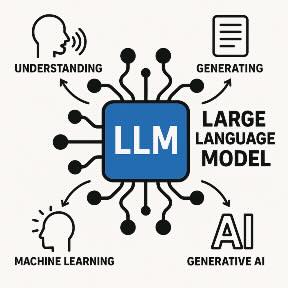
A large language model (LLM) is a type of machine learning model designed for understanding, generating, and interacting with human language. These models are trained on extensive datasets containing text from books, articles, websites, and other sources to learn patterns, context, and semantics in language. LLMs are widely used in applications like chatbots, code generation, translation, summarization, and more. They are often built using transformer architectures and are central to the field of generative AI.

Here are 75,484 public repositories matching this topic...

Paper-first Solana memecoin trading bot for pump.fun: rug screening, graduation plays, an AI persona desk scored on every call, trained models and a research lab that tests every idea on recorded data, an edge check that says real or luck, and a live trading-room dashboard. Plus a DexScreener momentum bot via Jupiter.

  • Updated Oct 6, 2026
  • Python

Your work, already underway. A personal AI assistant for your job: mail, chats and tickets become tasks, the agents you already use (Claude Code, Codex, Gemini) do the work, and nothing goes out until you approve. Open source, runs on your machine.

  • Updated Oct 6, 2026
  • Python

A cognition kernel that wraps a frozen LLM in a persistent identity + trust + governance loop — testing whether capability comes from structure, not weights. Research-stage; honest about what's real vs mocked.

  • Updated Oct 6, 2026
  • Python

An assistant built to be trusted by proof, not by sounding right: a small language model trained from random weights on one machine, running with nothing behind it, whose programs carry specifications checked by seven provers (Dafny, Verus, SPARK, Frama-C, Lean 4, Rocq, F*), each also refuting a sabotaged twin. It learns only from what was proved.

  • Updated Oct 6, 2026
  • Python