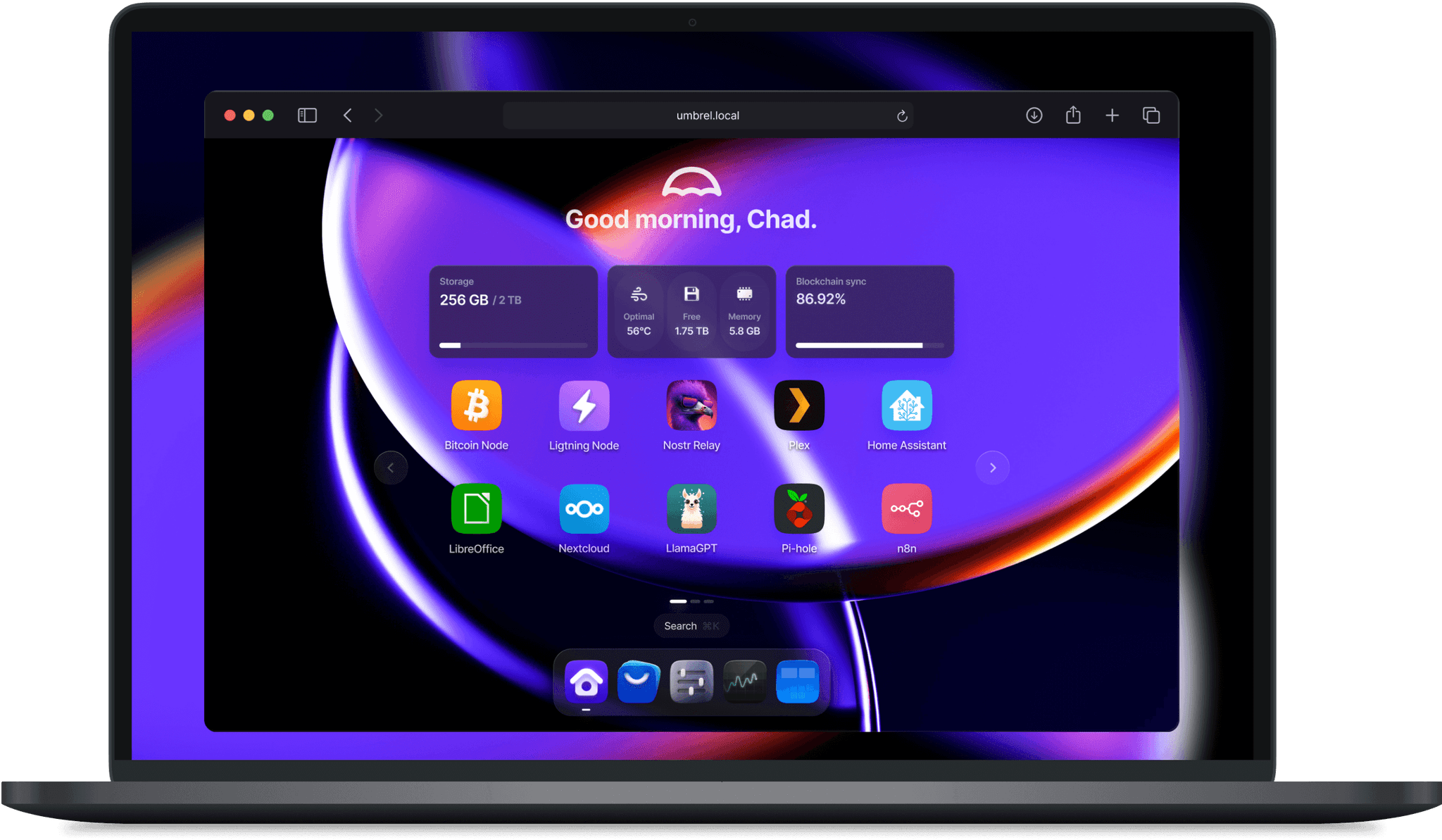



Docker container of Umbrel, an OS for self-hosting.
- Runs UmbrelOS inside a Docker container
- Does not need dedicated hardware or a virtual machine
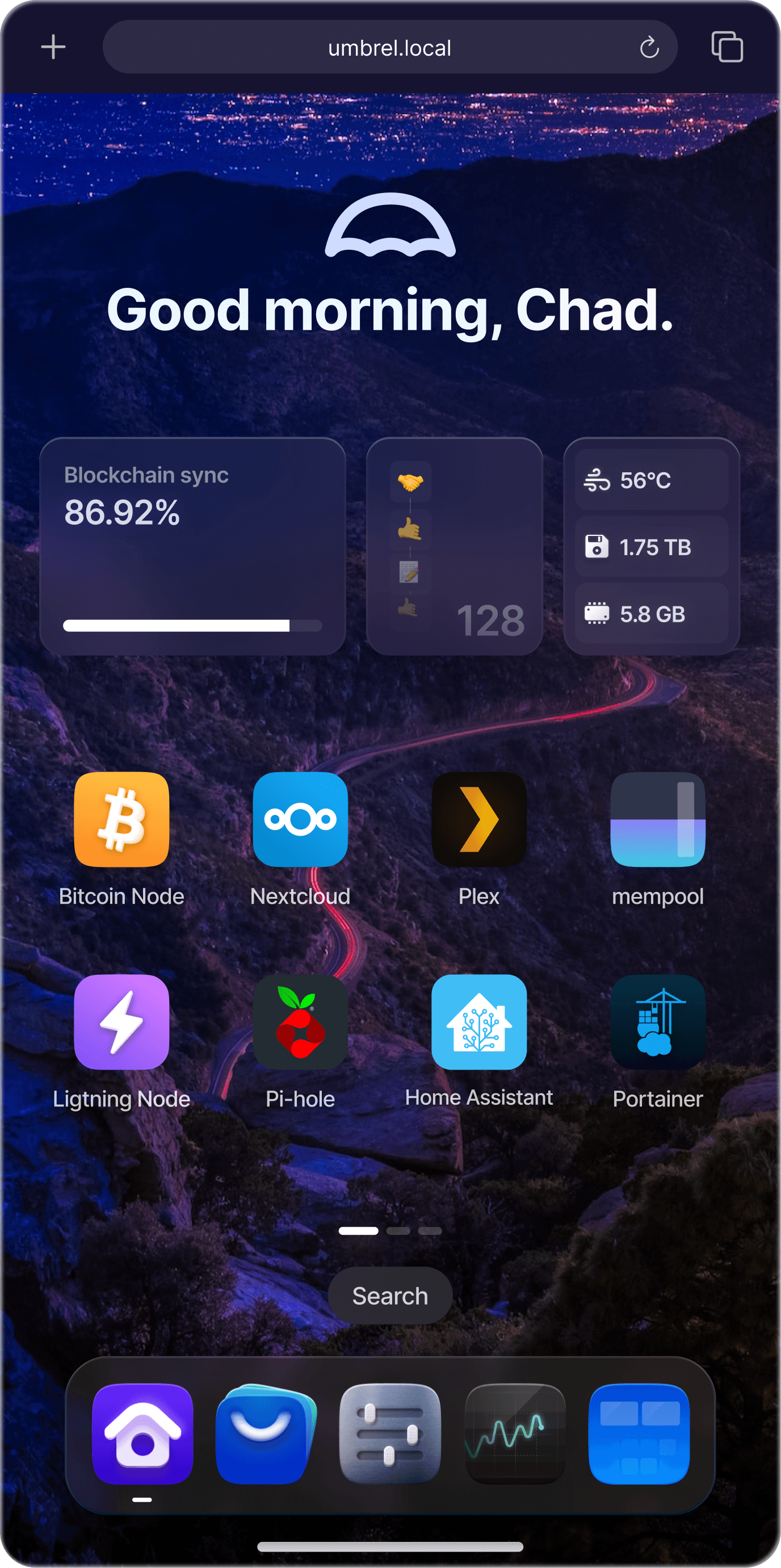
- Provides access to the Umbrel web interface
- Supports installing and running Umbrel apps
- Uses the host Docker daemon for app containers
- Runs virtual machines (Umbrel Machines) with libvirt and QEMU
services:
  umbrel:
    image: dockurr/umbrel
    container_name: umbrel
    pid: host
    privileged: true
    ports:
      - 80:80
      - 443:443
      - 2000:2000
    volumes:
      - ./umbrel:/data
      - /var/run/docker.sock:/var/run/docker.sock
    restart: always
stop_grace_period: 1mdocker run -it --rm --name umbrel --pid=host --privileged -p 80:80 -p 443:443 -p 2000:2000 -v "${PWD:-.}/umbrel:/data" -v "/var/run/docker.sock:/var/run/docker.sock" --stop-timeout 60 docker.io/dockurr/umbrel
To change the storage location, include the following bind mount in your compose file:
volumes:
  - ./umbrel:/data
Replace the example path ./umbrel with the desired storage folder or named volume.
If a folder inside it is a symbolic link to another disk (for example home pointing to a storage pool), also bind mount the target of the link at the same path:
volumes:
  - ./umbrel:/data
- /mnt/storage:/mnt/storageOnly for Machines (virtual machines): libvirt needs it to create the virtual network and QEMU uses /dev/kvm. Without it, umbrelOS runs normally and hides Machines. For hardware acceleration, enable virtualization (Intel VT-x or AMD-V) in the BIOS of the host.
Stop the container, back up the data folder, then pull the new image and start it again with the same /data folder. umbrelOS 2.0 updates the app configurations on its first start, so going back to 1.x requires the backup.
See dockur/casa for a CasaOS container.
See dockur/zima for a ZimaOS container.