

A friend of mine, Katy Hui-wen Hung (洪惠文), who comes from an old, prominent family and has an abiding and deeply knowledgeable interest in Taiwan history, observed that one of the words for tomato in Hoklo (more commonly known as Taiwanese) is kamadi which appears to be taken from Tagalog, kamatis. She speculated that it moved up along the trade routes from Manila, an old trading town.
Small things like imported words signal an old, deep relationship between what is now the Philippines and this place we call Taiwan. Beginning in 1968, archaeological work at Baxian cave in Taitung County’s Changbin Township (長濱) has brought to light a culture labeled Changbin Culture (長濱文化),including a grave site and 40,000 tools and tool fragments made of stone, shell and bone. Often said to be 30,000 or even 50,000 years old, recent redating has made early dates of great antiquity less plausible, and the site appears to be around 10,000 years old.
“It is possible that Changbinhians came to Taiwan from the Southeast China, but also probably from the Phillipines,” observes a 2018 paper.
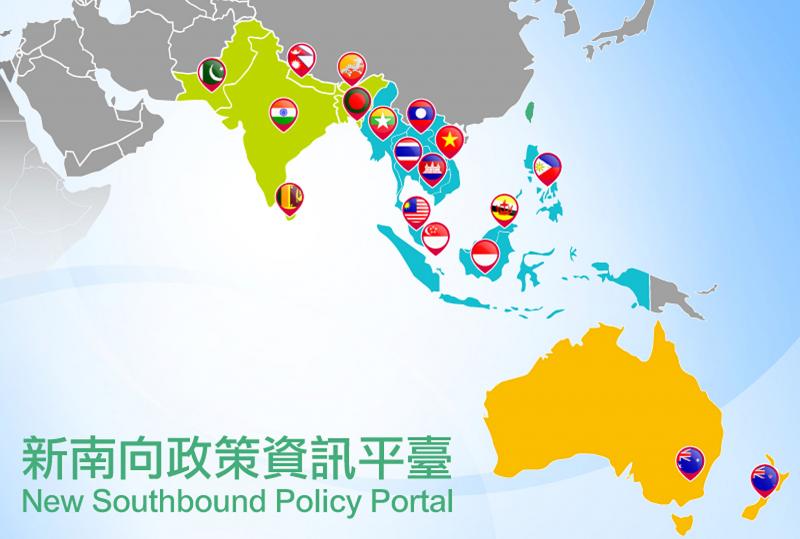
Photo courtesy of MOFA
AUSTRONESIAN CULTURE
That was prior to the Austronesian settlement of Taiwan. If the Changbin people came up from the Philippines, they were likely Negrito peoples (a category that itself lumps together differing groups). Most readers will be familiar with the Pasta’ay, a famous Saisiyat festival that honors the small, black people who the Saisiyat people say they killed off, but in fact, legends of such people are known among other Aboriginal groups in Taiwan. Some tantalizing genetic evidence suggests DNA signals of these ancient peoples in modern Aboriginal populations in Taiwan, but it is not conclusive.
The Austronesians eventually moved out of Taiwan down to the Philippines, and were mixed with the Negrito populations already present. Some of them back-migrated to Taiwan, further complicating our understanding of the genetic relationships and the flow of peoples.
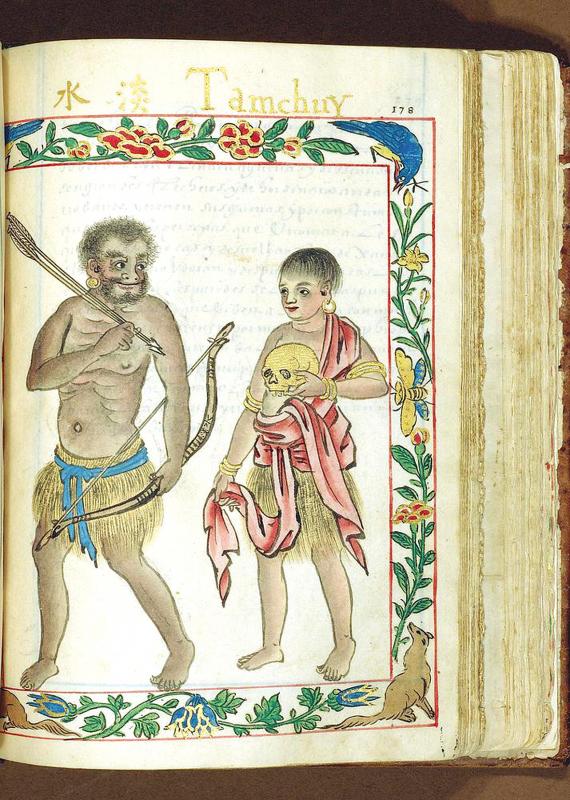
Photo courtesy of Wikimedia Commons
In ancient times Taiwan Aborigines shipped unprocessed nephrite jade down to the Philippines (and to what is now Vietnam), where the locals shaped it into lingling-o ornaments, which were exported along the trade routes from Borneo to Vietnam, Cambodia and Peninsular Thailand, routes one scholar has called “one of the most extensive sea-based trade networks of a single geological material in the prehistoric world.”
Export of nephrite from Taiwan to Philippines continued from the settlement of Luzon by Austronesians around 4,000 years ago until the Iron Age began roughly 500 years into the Common Era, around 2,500 years. That stretch of time is hard to grasp — imagine if ancient Greek philosopher Socrates had manufactured a kind of ornament that was still being robustly made and traded today. That’s how long these networks operated.
After the 10th century, what is present-day Quanzhou on China’s coast rose as a major port, establishing trade routes that ran through the Penghu islands and along the south side of Taiwan to the Philippines. In the 12th century raiders showed up on the China coast. They are known in Chinese sources as Pisheye (毗舍耶), generally seen as “Visaya,” now a people of southern and central Philippines, but where they sailed from remains debated — the Chinese they raided perceived them as coming from across the Strait. It is easy to imagine them resting in the shallow bays of western Taiwan en route to China, just as later Chinese, Japanese and Dutch traders and pirates did as they moved through those waters. Though they are out of written history, people on Taiwan were still involved in exchanges with their counterparts in the Philippines.
In the sixteenth century Manila was taken by the Spanish, who sailed their galleons up the east side of Taiwan on their way to points north, and set up a little colony in northern Taiwan, which was eventually extinguished by the Dutch. When Ming Dynasty loyalist Koxinga (Cheng Cheng-kung (鄭成功) kicked the Dutch out of Taiwan, his next thought was to occupy the rich trading post of Manila. The connections were obvious to him.
It is interesting to speculate on what might have happened, had the Spanish empire expanded across Taiwan and fought off Koxinga. We are used to thinking of the Philippines and Taiwan as separate entities, but our current separation is an artifact of modern colonialism, Han settlement and historical contingency, a little gap in a long history of links. It could well have gone the other way, and our island would be full of Catholicized Han with Spanish surnames, perhaps struggling for independence from Manila.
Just a few score kilometers separate Taiwan from the Philippines, yet today the distance between them seems somehow vast. The Taiwan Public Opinion Foundation polled Taiwanese in 2019 and found that the Philippines was the second most disliked country, behind North Korea but ahead of China. Despite this, in 2019 the Philippines was the third most popular destination for Taiwanese tourists, behind Thailand and Vietnam.
NEW SOUTHBOUND POLICY
It seems intuitively obvious that Taiwanese investments in our nearest neighbor and longtime trading partner would have risen under the President Tsai Ing-wen’s (蔡英文) New Southbound Policy, yet Taiwanese investment in the Philippines peaked at around US$644 million in 2015 and is less than a fifth of that at present. Today roughly 150,000 workers from the Philippines are caring for our grandparents and working in our factories.
Just this year an agricultural internship program was established as part of Taiwan’s agricultural exchange program with the Philippines. Fifty farmers will learn Mandarin and then come to Taiwan to study Taiwanese agricultural techniques.
So much more could be done.
The Philippines should be the jewel in the crown of the New Southbound Policy. Not only do the islands have links to Taiwan going back millennia, today Manila, like Taipei, is a target of Chinese expansionism. The Bashi Channel between Luzon and the Hengchun Peninsula is periodically the site of displays of Chinese military power, of interest to Beijing because the infamous Nine-Dash Line cuts across it, yet also because it hosts key undersea cables that connect Asian countries.
Taiwan should be pursuing policies to draw the Philippines closer to Taiwan and counteract Chinese influence there. The government should consider expanding money for Mandarin instruction in the Philippines (the first Ministry of Education Mandarin program was only initiated in 2019), and funding a network of Mandarin instructors from Taiwan in exchange for Filipino English and Tagalog instructors.
Neither COVID nor Philippine President Rodrigo Duterte’s arbitrary and contradictory China policies will last forever, even if his daughter, currently favored in some polls to win the presidency, succeeds him. In anticipation of this, Taiwan needs to expand its military exchanges with the Philippines.
The government should also more strongly encourage Taiwanese firms to invest in Philippines. This may seem counterintuitive, but Taiwanese firms specialize in intermediate goods, often shipped to factories elsewhere in Asia for final shipment to Japan, Europe and North America or domestically. The Philippines should be more integrated into Taiwanese supply chains, especially as an alternative to China-based manufacturing. As part of its aid programs, Taiwan should be investing in upgrading the local electricity and Internet networks in the Philippines, to support increased investment and trade between the two nations.
The ghosts of our ancestors, who once traded across the local seas, would be proud.
Notes from Central Taiwan is a column written by long-term resident Michael Turton, who provides incisive commentary informed by three decades of living in and writing about his adoptive country.
This column does not necessarily reflect the opinion of the Taipei Times.
In 2020, Taiwan Semiconductor Manufacturing Co (TSMC, 台積電) announced plans to establish a semiconductor foundry (aka “chip fab”) in Phoenix, Arizona. This has expanded into a whole cluster of fabs and TSMC has plans to expand further, with an eye on Texas. Technically, this is not TSMC’s first foray into the US. In 1996, TSMC Washington was established in Camas, Washington. When the Arizona expansion was announced, then-retired TSMC founder Morris Chang (張忠謀) panned the plans as “futile,” citing high costs and labor problems encountered in that first investment. He has been proven wrong, as the Arizona investments today produce high
A February 2023 paper by Andrew Chubb for the Asia Society Policy Institute explores the possibilities and consequences of an attempt by the armed forces of the People’s Republic of China (PRC) to seize an island currently held by the Republic of China (ROC). After discussing the Fujian coastal islands and the ROC-held islands in the South China Sea, Chubb moves to Penghu. “The most consequential target for a PRC island seizure would be the Penghu archipelago,” Chubb writes. The Penghu archipelago, with its major port in Makung City (馬公), has long been a stepping stone to Taiwan. The pirate Lin
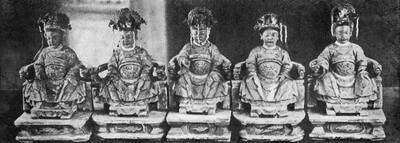
Nov. 2 to Nov. 8 After 41 years in exile and the enemy closing in, the Ming Dynasty’s Prince of Ningjing (寧靖王) decided to meet his end in Taiwan. So did the five women who accompanied him. The Qing had captured Penghu in July 1683, and the Tainan-based Kingdom of Tungning appeared doomed. According to the Taiwan Prefecture Annals (台灣府志), compiled in 1696, the prince announced his intention to his five concubines, telling them they were free to remarry or become nuns. Lady Yuan (袁氏), Lady Wang (王氏), Xiugu (秀姑), Sister Mei (梅姐) and Sister He (荷姐)
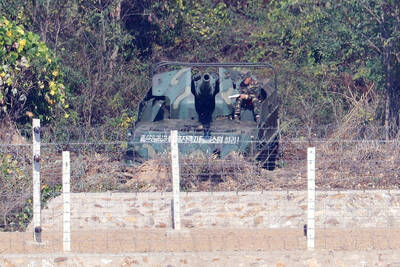
Last week North Korea hit the headlines with a vow to fire up its loudspeaker systems to blare propaganda into the South, but the latest dispute comes against a backdrop of militarization of the border by Kim Jong-un that has been years in the making. Since April 2024, North Korea has been working on building a permanent fortified border through the demilitarized zone (DMZ) that divides the two sides, work that has led to a mine explosion that injured three South Korean soldiers and plunged ties to new lows. Here’s a brief guide to what is being built, what Pyongyang says it’s


 RSS