- NEWS AND VIEWS
A widespread agricultural practice is an unexpected CO2 sink
Access options
Access Nature and 54 other Nature Portfolio journals
Get Nature+, our best-value online-access subscription
$32.99 / 30 days
cancel any time
Subscribe to this journal
Receive 52 print issues and online access
$199.00 per year
only $3.83 per issue
Rent or buy this article
Prices vary by article type
from$1.95
to$39.95
Prices may be subject to local taxes which are calculated during checkout
Nature 658, 39-41 (2026)
doi: https://doi.org/10.1038/d41586-026-02646-7
References
Intergovernmental Panel on Climate Change. 2006 IPCC Guidelines for National Greenhouse Gas Inventories (United Nations, 2006).
Suhrhoff, T. J. et al. Nature 658, 113–11 (2026).
Hamilton, S. K., Kurzman, A. L., Arango, C., Jin, L. & Robertson, G. P. Global Biogeochem. Cycles 21, GB2021 (2007).
US Environmental Protection Agency. Inventory of U.S. Greenhouse Gas Emissions and Sinks: 1990–2020 (EPA, 2022).
Robertson, G. P. In Encyclopedia of Agriculture and Food Systems 3rd edn, Vol. 1 (ed. Alexander, P.) 38–53 (Academic Press, 2025).
Power, I. M., Spence, J., Guo, M., Wilson, S. & Watmough, S. Proc. Natl Acad. Sci. USA 123, e2602421123 (2026).
Raymond, P., Planavsky, N. & Reinhard, C. T. Nature Water 3, 844–847 (2025).
Competing Interests
The authors declare no competing interests.
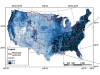 Read the paper: Agricultural liming is a carbon sink in the Mississippi River Basin
 Forest soils are running short of nutrients as CO2 emissions rise
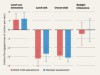 Revised estimates of CO2 sources and sinks improve global carbon accounting