
MONEYVAL: Financial crime challenges persist

5107 views
2 mins read

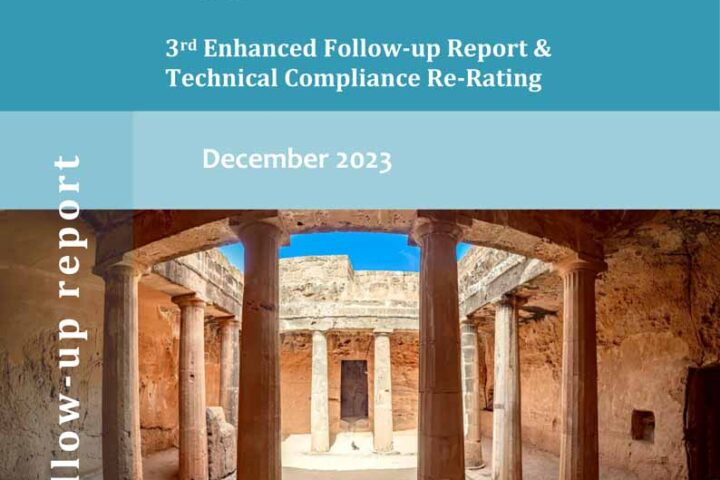
Cyprus has shown improvements in combating money laundering and terrorism financing but could do more, according to the evaluation by the Council of Europe’s monitoring body MONEYVAL.

The anti-money laundering and counter-terrorist financing assessment focused on legislative, regulatory and institutional measures, with particular attention paid to compliance with Financial Action Task Force (FATF) standards.

While progress has been made, moderate shortcomings still exist, according to the report published on Tuesday.

“Cyprus has made some progress in improving its level of compliance with FATF standards, particularly concerning non-profit organisations, virtual asset services providers (VASPs), and the powers of investigative and law enforcement authorities.

“However, further efforts are needed to fully implement these measures,” the report said.

It said terrorism financing (TF) risk exposure within the non-profit sector; Cypriot authorities have initiated measures to evaluate and strengthen oversight activities.

“Nonetheless, these measures have not yet been fully implemented.”

The implementation of the VASP regime in Cyprus has seen substantive progress.

However, the assessment identified a lack of a national action plan to address the risks identified within the VASP sector.

“Moreover, technical deficiencies persist in implementing preventive measures, including the ‘travel rule’, which requires VASPs to share customer information during transactions.”

Additionally, the evaluation highlighted moderate shortcomings in the investigative capabilities of Cypriot authorities.

These include the absence of powers to intercept communication content related to money laundering investigations, terrorism financing, and various associated predicate offences such as sexual exploitation, participation in organised criminal groups, fraud, theft, arms trafficking, corruption offences, and tax crimes.

Step up efforts

In its annual report for 2022,  MONEYVAL warns that the recovery of proceeds from crime across states remains insufficient and calls on governments to step up their efforts to strengthen their national frameworks for asset management and recovery.

In its monitoring work, MONEYVAL found that successful confiscations of criminal assets are relatively rare compared with the estimates of the proceeds of crime.

It, therefore, underlines the need not only to freeze but also to seize and confiscate criminal funds.

To achieve this, enhancing the powers and resources of criminal asset recovery and management offices is crucial.

“States should not only improve their results in identifying and freezing criminal funds.

“There is also an urgent need for them to greatly improve their results in confiscating and managing criminal assets, adopt stricter sanctions and increase the number of convictions for serious money laundering offences,” said Elżbieta Frankow-Jaśkiewicz, Chair of MONEVYAL.

MONEYVAL assesses compliance with international standards and developments in the legal and institutional frameworks to counter money laundering and the financing of terrorism in the 33 states and territories subject to its monitoring.

By the end of 2022, 21 of the 26 states and territories evaluated by MONEYVAL in the 5th round of mutual evaluations were subject to its enhanced follow-up procedure for their limited level of compliance with AML/CFT standards.

These were Albania, Andorra, Bulgaria, Croatia, Cyprus, Czechia, Georgia, Gibraltar, Hungary, Estonia, Latvia, Lithuania, Monaco, Malta, Poland, Moldova, Serbia, Slovakia, Slovenia, the UK Crown Dependency of the Isle of Man and Ukraine.

Armenia, the Holy See, Liechtenstein, San Marino, and Israel are subject to MONEYVAL’s regular follow-up procedure.
 

Financial Mirror
Privacy Overview

What Are Cookies

As is common practice with almost all professional websites, our site uses cookies, which are tiny files that are downloaded to your device, to improve your experience.

This document describes what information they gather, how we use it and why we sometimes need to store these cookies. We will also share how you can prevent these cookies from being stored however this may downgrade or ‘break’ certain elements of the sites functionality.

How We Use Cookies

We use cookies for a variety of reasons detailed below. Unfortunately, in most cases there are no industry standard options for disabling cookies without completely disabling the functionality and features they add to the site. It is recommended that you leave on all cookies if you are not sure whether you need them or not, in case they are used to provide a service that you use.

The types of cookies used on this website can be classified into one of three categories:

  1. Strictly Necessary Cookies. These are essential in order to enable you to use certain features of the website, such as submitting forms on the website.
  2. Functionality Cookies.These are used to allow the website to remember choices you make (such as your language) and provide enhanced features to improve your web experience.
  3. Analytical / Navigation Cookies. These cookies enable the site to function correctly and are used to gather information about how visitors use the site. This information is used to compile reports and help us to improve the site. Cookies gather information in anonymous form, including the number of visitors to the site, where visitors came from and the pages they viewed.

Disabling Cookies

You can prevent the setting of cookies by adjusting the settings on your browser (see your browser’s “Help” option on how to do this). Be aware that disabling cookies may affect the functionality of this and many other websites that you visit. Therefore, it is recommended that you do not disable cookies.


Third Party Cookies

In some special cases we also use cookies provided by trusted third parties. Our site uses [Google Analytics] which is one of the most widespread and trusted analytics solutions on the web for helping us to understand how you use the site and ways that we can improve your experience. These cookies may track things such as how long you spend on the site and the pages that you visit so that we can continue to produce engaging content. For more information on Google Analytics cookies, see the official Google Analytics page.

Google Analytics

Google Analytics is Google’s analytics tool that helps our website to understand how visitors engage with their properties. It may use a set of cookies to collect information and report website usage statistics without personally identifying individual visitors to Google. The main cookie used by Google Analytics is the ‘__ga’ cookie.

In addition to reporting website usage statistics, Google Analytics can also be used, together with some of the advertising cookies, to help show more relevant ads on Google properties (like Google Search) and across the web and to measure interactions with the ads Google shows.

Learn more about Analytics cookies and privacy information.

Use of IP Addresses. An IP address is a numeric code that identifies your device on the Internet. We might use your IP address and browser type to help analyze usage patterns and diagnose problems on this website and to improve the service we offer to you. But without additional information your IP address does not identify you as an individual.

Your Choice. When you accessed this website, our cookies were sent to your web browser and stored on your device. By using our website, you agree to the use of cookies and similar technologies.

More Information

Hopefully the above information has clarified things for you. As it was previously mentioned, if you are not sure whether you want to allow the cookies or not, it is usually safer to leave cookies enabled in case it interacts with one of the features you use on our site. However, if you are still looking for more information, then feel free to contact us via email at [email protected]