

Lee stops short of blaming North Korea for DMZ blast
Lee stops short of blaming North Korea for DMZ blast
Posted October. 02, 2026 09:03,
Updated October. 02, 2026 09:03
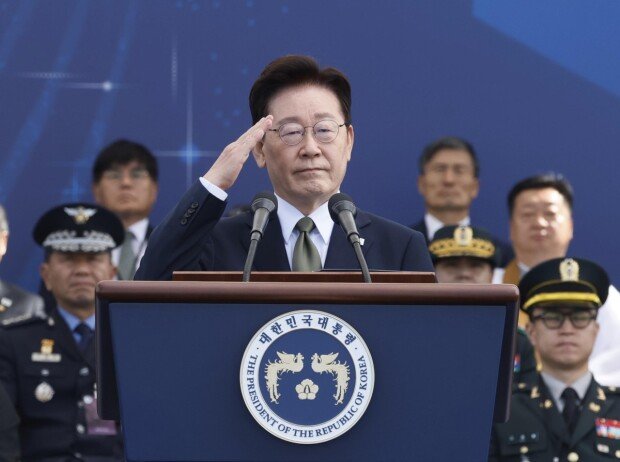
South Korean President Lee Jae-myung described a land mine explosion in the western sector of the Demilitarized Zone (DMZ) as an “unforeseen accident” in his Armed Forces Day speech on Oct. 1, stopping short of accusing North Korea of deliberately planting the mines. The South Korean military and the U.N. Command have both said the North's placement of mines south of the Military Demarcation Line violated the armistice agreement. The opposition People Power Party, however, condemned Lee's remarks, calling the blast “clearly a deliberate provocation by North Korea, not an unforeseen accident.” Senior foreign and security officials also reportedly met that day for a National Security Council standing committee session to discuss the government's response.
● Lee calls for renewed dialogue with North Korea
Lee expressed sympathy for the South Korean troops injured in the Sept. 21 explosion, saying, “My heart still aches when I think of our wounded service members.” Since the incident, he has refrained from directly blaming North Korea or demanding an apology.
Instead, Lee used his speech to reiterate his policy of peaceful coexistence on the Korean Peninsula. “True security means building peace so that there is no need to fight,” he said. “South and North Korea must find a way to achieve peace together and build trust.” He pledged to “consistently pursue practical measures to ease military tensions between the two Koreas” and urged Pyongyang to help rebuild trust and revive dialogue.
Lee's appeal came as U.S. President Donald Trump continued to highlight his close relationship with North Korean leader Kim Jong Un and signal his willingness to resume talks with Pyongyang. Lee's call for renewed dialogue was seen as an effort to keep that diplomatic possibility alive.
The Unification Ministry described the explosion as “an unfortunate incident” and said it would work with other government agencies to prevent a recurrence while staying the course on its policy of peaceful coexistence. Unification Minister Chung Dong-young, who was returning early from a trip to Europe, wrote on Facebook on Sept. 30 local time that the government should take appropriate action once the investigation is complete. But he warned that the incident must not become an excuse to “belittle or distort our efforts toward peace on the Korean Peninsula.” He also pledged to end the peninsula's prolonged state of war and establish a lasting peace regime.
Lee's choice of words drew sharp rebukes from the opposition. People Power Party leader Jang Dong-hyeok wrote on Facebook that Lee could not bring himself to say a single word to North Korea and had not even mentioned the word “land mine.” He accused the president of brushing aside the incident with the phrase “unforeseen accident,” language he said was more appropriate for a detached observer. Party floor leader Chung Jeom-sik challenged the wording at a party meeting, asking, “Would you describe someone killed by a criminal's knife as having died in an unforeseen accident?”
● Lee renews push to unify military academies
Lee also condemned the Dec. 3, 2024, martial law declaration and reiterated his push to bring South Korea's military academies under a single institution, tentatively called the Armed Forces Academy.
“The government, founded on popular sovereignty, has worked to dismantle the legacy of the illegal martial law declaration,” Lee said. He vowed to establish a military culture and institutional safeguards that would allow the armed forces to focus on their core duties and prevent any future military-led insurrection. He urged the military to listen to a range of views, close ranks and move swiftly and decisively to establish the proposed academy.
“Self-reliant defense is sovereignty,” Lee said, pledging to complete South Korea's decadeslong effort to strengthen its military independence by reclaiming wartime operational control from the United States. He described the transfer as the culmination of a goal pursued for half a century.
At a commemorative luncheon later that day, Lee renewed his call for the transfer. “There is no country in the world that entrusts its military command authority to another person or another country,” he said. He vowed to complete the process as soon as possible, saying it would restore South Korea's standing as a fully sovereign and independent nation and a functioning democratic republic.
Supreme Court Chief Justice Cho Hee-dae, who is locked in a dispute with the Presidential Office over the renomination of a Supreme Court justice candidate, attended last year's Armed Forces Day ceremony but skipped this year's event.
Hoon-Sang Park tigermask@donga.com

![“與, 한동훈 잡을 3개 팀 가동? 韓 존재감 되레 키울 것”[법정모독 업앤다운]](https://dimg.donga.com/c/138/175/90/1/wps/NEWS/IMAGE/2026/10/08/134810532.1.jpg)



 About Dong-A Ilbo