 1/10
A decade of UPI: India’s Unified Payments Interface (UPI) completed 10 years on August 25, 2026. Launched in 2016 by the National Payments Corporation of India (NPCI) under the regulatory oversight of the Reserve Bank of India (RBI), UPI has become a key part of India’s digital payments system. It enables real-time person-to-person (P2P) and person-to-merchant (P2M) payments through an interoperable platform.
 2/10
PM hails milestone: Prime Minister Narendra Modi marked the occasion by calling UPI a major turning point in India's digital payments journey, saying its scale and reach are something every Indian can take pride in. In a post on X, he wrote that UPI's rollout a decade ago had reshaped how the country transacts, and he invited citizens to share their own experiences of how the platform has changed their lives.
 3/10
Transaction volumes soar: UPI’s annual transaction volume increased from 1.78 crore in FY2016-17 to more than 24,162 crore in FY2025-26, an almost 13,000-fold rise. Transaction volume grew 30% year-on-year in FY2025-26, according to data cited from the Finance Ministry, RBI, CMIE and NPCI. UPI is now India’s most widely used retail payment system by transaction volume, accounting for nearly 84% of retail payment transactions in June 2026.
 4/10
Payment value climbs: The value of UPI transactions rose from ₹0.07 lakh crore in FY2016-17 to around ₹314 lakh crore in FY2025-26, an increase of more than 4,000 times. In June 2026, UPI accounted for nearly 58% of retail payment value in India. Its transaction value was also equivalent to around 70% of the country’s currency in circulation, showing the scale reached by digital payments alongside cash.
 5/10
Monthly record set: UPI crossed 2,300 crore monthly transactions for the first time in May 2026, processing 2,320 crore transactions during the month. The volume increased further to 2,366 crore in July 2026, the highest monthly figure recorded in UPI’s first decade. The rise indicates how UPI has become part of routine payments, including purchases from merchants and transfers between individuals.
 6/10
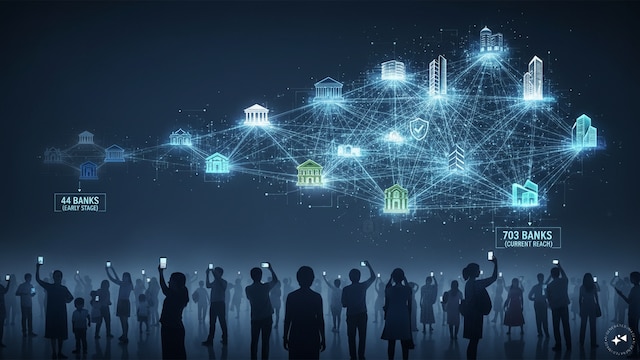
Banks join UPI: The number of banks live on UPI rose from 44 in FY2016-17 to 703 in FY2025-26. The participating institutions include public sector banks, private banks, small finance banks, payment banks and cooperative banks. Banks can act as remitter or beneficiary payment service providers, while NPCI monitors participant performance. The wider bank network has helped extend UPI’s reach and support greater access to digital financial services.
 7/10
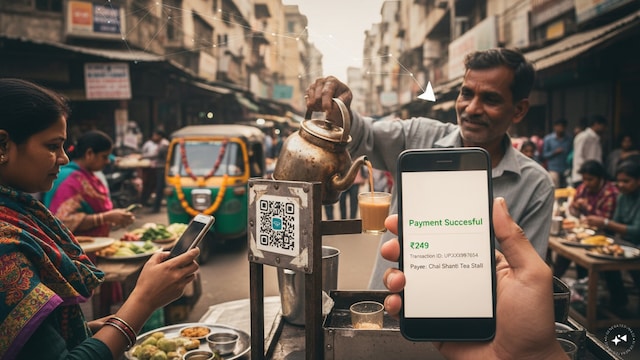
Smaller payments rise: The average UPI transaction value has fallen as the platform has increasingly been used for smaller payments. It declined from around ₹1,836 during the pandemic period to nearly ₹1,300 by July 2026. In FY2025-26, 86% of P2M transactions were below ₹500, while 59% of P2P transactions were below ₹500. At the same time, 41% of P2P transactions were above ₹500.
 8/10
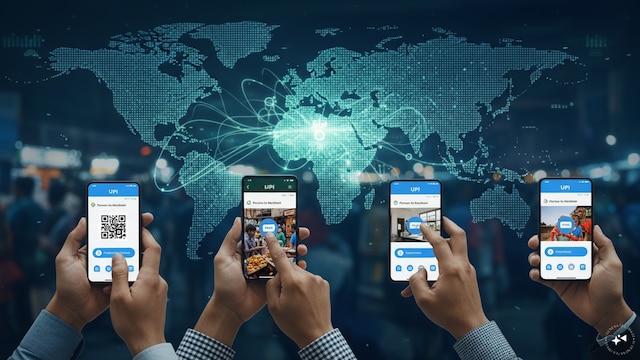
UPI goes global: UPI has also expanded beyond India. In 2025, it accounted for nearly 49% of global real-time payment transaction volume, according to the International Monetary Fund (IMF), which has recognised UPI as the world’s largest real-time payment system by transaction volume. UPI processes more than 66 crore transactions a day. P2M payments make up 63% of UPI’s transaction volume, while P2P payments account for 71% of transaction value.
 9/10
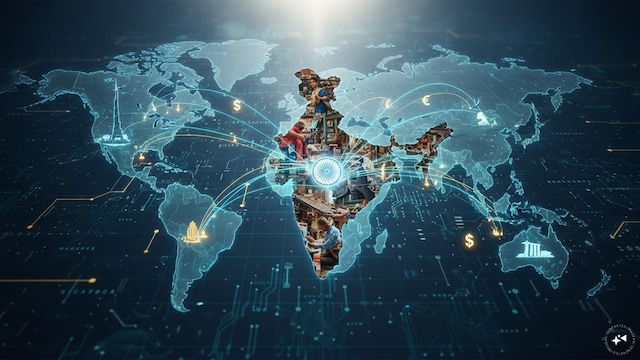
11-country footprint: UPI-enabled payment services are currently operational in 11 countries: the UAE, France, Bhutan, Sri Lanka, Nepal, Singapore, Mauritius, Qatar, Cambodia, Greece and the Maldives. Its international footprint has made UPI a platform for cross-border digital payments. At the same time, its domestic scale has strengthened India’s digital public infrastructure by supporting real-time payments, financial inclusion and participation in the formal digital economy.
 10/10
What comes next: The data shows UPI’s two roles in India’s payments system: P2M transactions drive payment volumes through frequent, lower-value purchases, while P2P transactions account for most transaction value. The government has said the next phase will focus on bringing more users and merchants into the UPI ecosystem through policy support, technology and wider access to digital financial services.