
Sign up for the Today newsletter
Get everything you need to know to start your day, delivered right to your inbox every morning.
Add Boston.com as your preferred source on Google to see more of our stories.
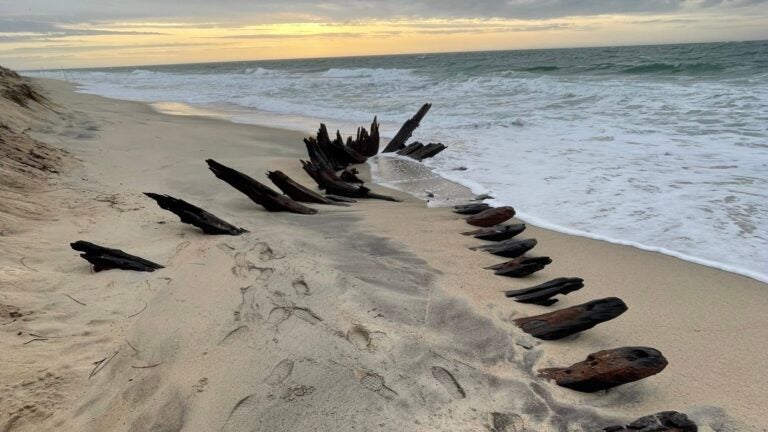
On Monday, parts of a possible 19th-century shipwreck washed up on a Nantucket beach following last weekend’s nor’easter.
In July, a vessel and human remains believed to be from a 2019 wreck were found off the coast of Rhode Island. Green Oceans, a grassroots organization dedicated to protecting ocean life, urged the Coast Guard to reopen its investigation into the Mistress’s disappearance in a Sept. 22 press release.
Following the buzz about these shipwrecks, you might wonder: how likely is it that a shipwreck washes ashore in Massachusetts or New England?
Parts of approximately six shipwrecks wash up in Massachusetts every year, said David Robinson, director and chief archaeologist at the Massachusetts Board of Underwater Archaeological Resources.
There are 3,5000 reported shipwrecks in the waters off of Massachusetts, Robinson said. However, the true number of wrecks could be double that due to unreported sunken ships and abandoned ones.
There are approximately 700 shipwrecks off Nantucket alone, giving the area the name “graveyard of the Atlantic,” according to the Nantucket Shipwreck and Life-Saving Museum.
The amount of shipwrecks that wash up every year and are off the shore of the entire New England region is unknown.
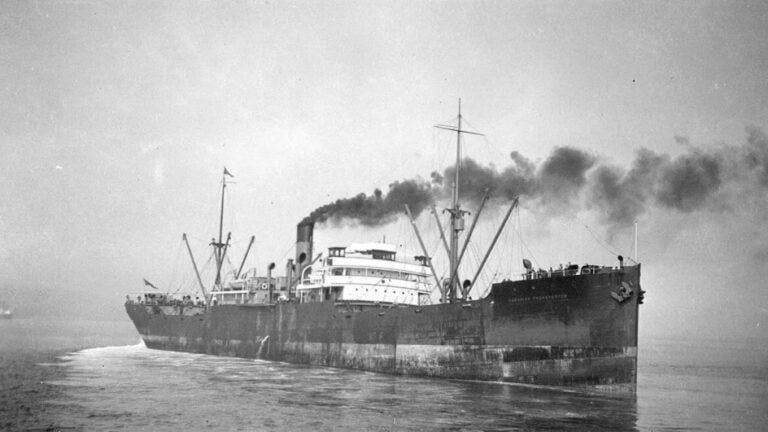
The golden age of shipwrecks was between 1780 and 1920 before the steam engine was invented, said Ray Bates, a Marblehead-based diver and the author of two volumes of “Shipwrecks North of Boston.” As time went on, some ships were made with less durable materials, which made shipwrecks more common.
Throughout that period, “there [was] a lot of traffic along the Massachusetts coast,” specifically, Robinson said.
After a ship sinks, the wreck moves deeper under sand and water before collapsing and fragmenting, Robinson said.
A shipwreck washing ashore is entirely dependent on the intensity of the storm and certain storms can uncover 200- to 300-year-old wrecks, Bates said.
Shipwrecks are often described as time capsules because the vessels “contain things that are related to life in a past time” and “they’re representative of life on board that connects the sea with the land that they were traveling to and from,” Robinson said.
Without the wreck fragments, there would be no physical record of shipbuilding and people’s understanding of physics, wind energy, and the seas during certain points in history as ship builders often didn’t use a blueprint, Robinson added.
Ships underwater are preserved better than archaeological sites on land that can be destroyed or degraded by construction, Bates said.
Get everything you need to know to start your day, delivered right to your inbox every morning.



To comment, please create a screen name in your profile
To comment, please verify your email address
Conversation
This discussion has ended. Please join elsewhere on Boston.com