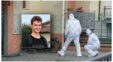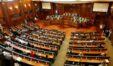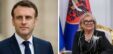



The entry of the Albanian mayors into the municipal facilities in Zveçan, Leposaviq and Zubin Potok, did not see the parallel Serbian institutions there, but only encouraged their transfer to other facilities.
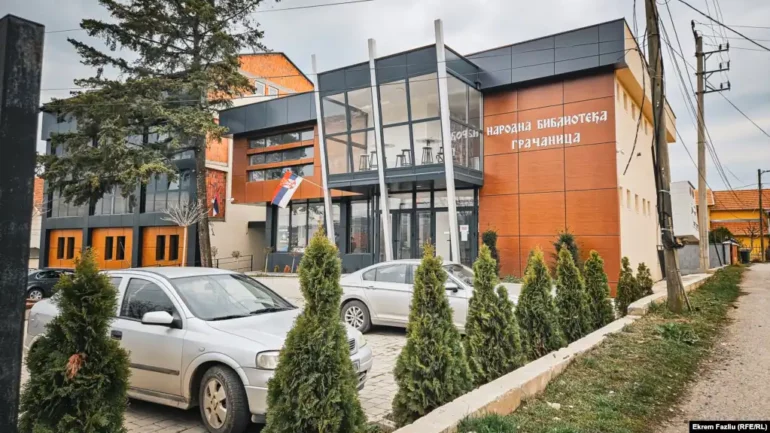
In these three municipalities with a Serbian majority in the north of Kosovo, the institutions of Kosovo and the parallel structures of Serbia functioned in the same facility.
Even, in some cases, as in that of Leposavic, the same person served as the head of two institutions. Now that Lulzim Hetemi is the mayor of the Municipality of Leposavic, Zoran Todić performs the job of the president of the parallel Serbian institution from another facility.
However, this formula does not apply to all municipalities.
In the Kosovo system, North Mitrovica and South Mitrovica are two separate municipalities, while according to the Serbian parallel system, there is only the so-called municipality of Mitrovica of Kosovo. All three today operate in different facilities. In some regions, mostly rural, parallel structures operate in rented houses.
What are parallel structures?
They are institutions that have been operating in Kosovo since the war, with financial support and directives from the Government of Serbia, which does not recognize Kosovo's citizenship. For Serbia, they are "temporary bodies". For Kosovo, they are illegal structures, contrary to the Constitution - that's why it has closed seven such structures in the last few days.
Since 1999, nearly 30 parallel municipalities have been operating in Kosovo. Their head is the Office for Kosovo in the Government of Serbia.
As the elections for these parallel municipalities have not been held since 2012, their presidents are appointed by the executive in Serbia.
Within the municipalities, mainly in the north of Kosovo, there are dozens of public enterprises, kindergartens, primary and secondary schools, public universities, sports clubs, libraries, cultural centers and others.
What services do they offer?
Some of the parallel structures have their own websites or accounts in social networks. Some pages are active - of Leposaviq, Zubin Potok and Mitrovica - some are not. On the ground, the Serbian-majority municipalities in the north are much more extensive. They also decide on the construction of housing facilities for displaced persons, for newly married couples and for persons with poor economic conditions, as well as the reconstruction of roads and the renovation or construction of educational and health institutions.
These parallel municipalities have departments for inspection, for economy and finance, and for protection from natural disasters. They provide citizens in Kosovo with birth and death certificates, authorizations and similar documents.
What are their main tasks?
To provide services to citizens in Kosovo. According to the Serbian president, Aleksandar Vučić, Serbia has 31.831 employed people, 29.115 pensioners and 31.586 social assistance beneficiaries in Kosovo, whom they pay in Serbian dinars. Salaries in the field of education and health go through the Office for Kosovo in the Government of Serbia. According to a draft statute drawn up by the West for the formation of the Association of Serb-majority municipalities in Kosovo, Serbian health and education institutions - which are parallel and not illegal - are expected to be registered as private institutions.
Wages and commitment
In the parallel institutions of education and health, employees receive significantly higher salaries, because the Serbian state allocates an additional amount for them, in addition to the salary. For example, nurses can receive a salary of up to 1.200 euros, and doctors up to 3.000 euros, while education workers from 900 euros to 1.300 euros. According to the Kosovo system, the general doctor's salary is 777 euros, while the teacher in the secondary school is 609 euros.
Unlike the parallel structures in the north, in the areas that have few Serbs, south of Ibri - for example in Kaçanik and Suharekë - most of the workers do not even know what they do. The Law on Local Government Finances in Kosovo allows the sending of financial aid from Serbia. The Serbian state has allocated 139 million euros to Serbs in Kosovo for 2024 - about 11 million more than in 2023. Some experts have doubts about these amounts, saying that Serbia's investments in Kosovo have been non-transparent over the years. /rel/