Log inSign up
Log inSign up
National Radio Astronomy Observatory | NSF NRAO
8,073 posts
National Radio Astronomy Observatory | NSF NRAO profile banner
@TheNRAO

National Radio Astronomy Observatory | NSF NRAO

@TheNRAO
The NSF National Radio Astronomy Observatory is a facility of the U.S. National Science Foundation. #RadioAstronomy 📡 VLA, ALMA, VLBA, GBT, ngVLA
NM, VA, and WV
public.nrao.edu
Joined October 2008
636 Following
46.5K Followers
RepliesRepliesRepostsRepostsMediaMedia

Log in or sign up for X

See what’s happening and join the conversation

Continue with phone
or
Log in with username or email
Terms·Privacy·Cookies·Accessibility·US TIDA·Ads Info·© 2026 X Corp.
  • Pinned
    @TheNRAO
    National Radio Astronomy Observatory | NSF NRAO
    @TheNRAO
    Oct 2
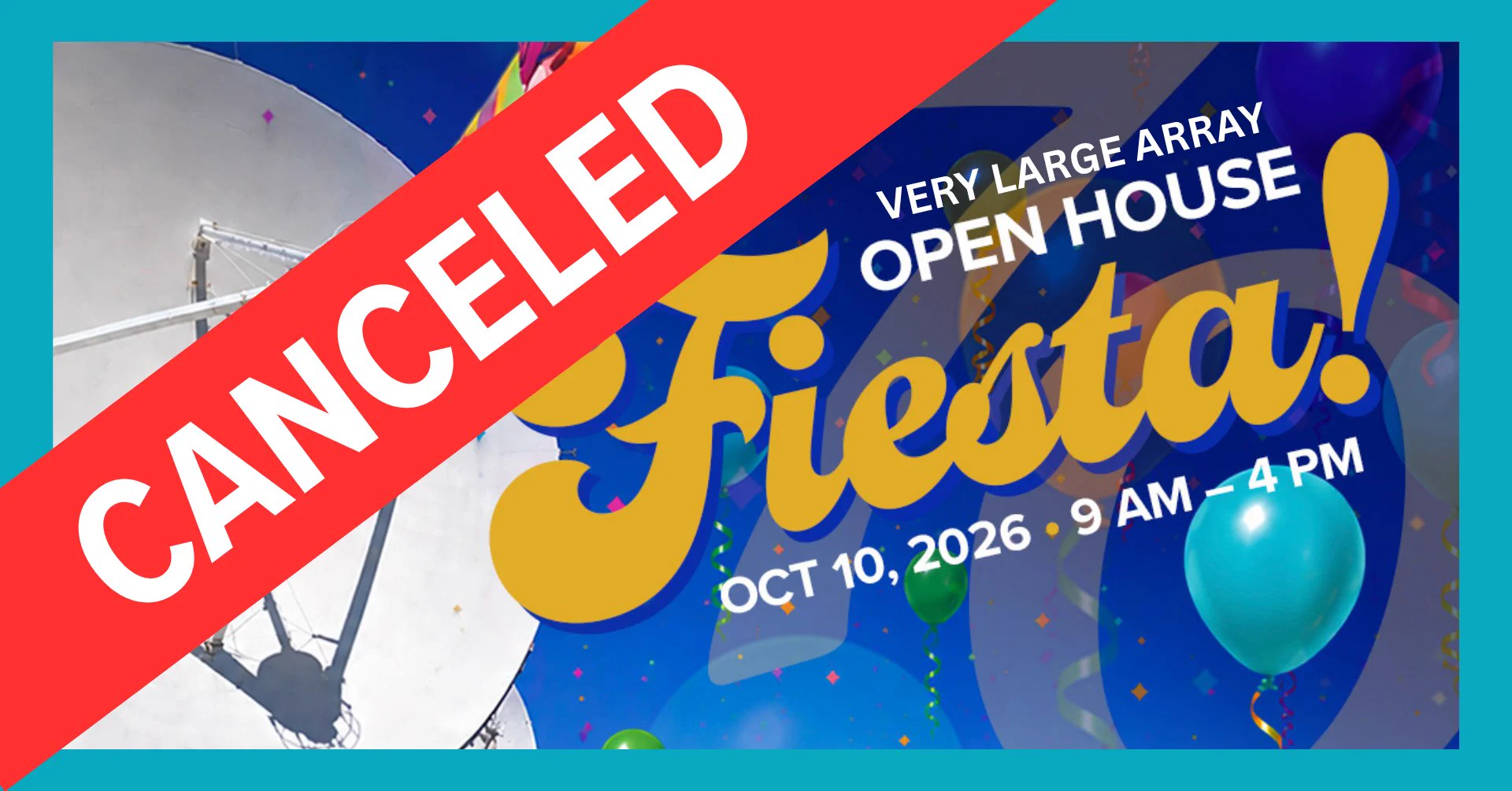
    UPDATE: The NSF Very Large Array Open House planned for Saturday, October 10, 2026, is canceled due to road damage from recent flooding and the subsequent closure of St. Rt. 60. Read more: public.nrao.edu/news/fall-open…
    1
  • @TheNRAO
    National Radio Astronomy Observatory | NSF NRAO
    @TheNRAO
    15h
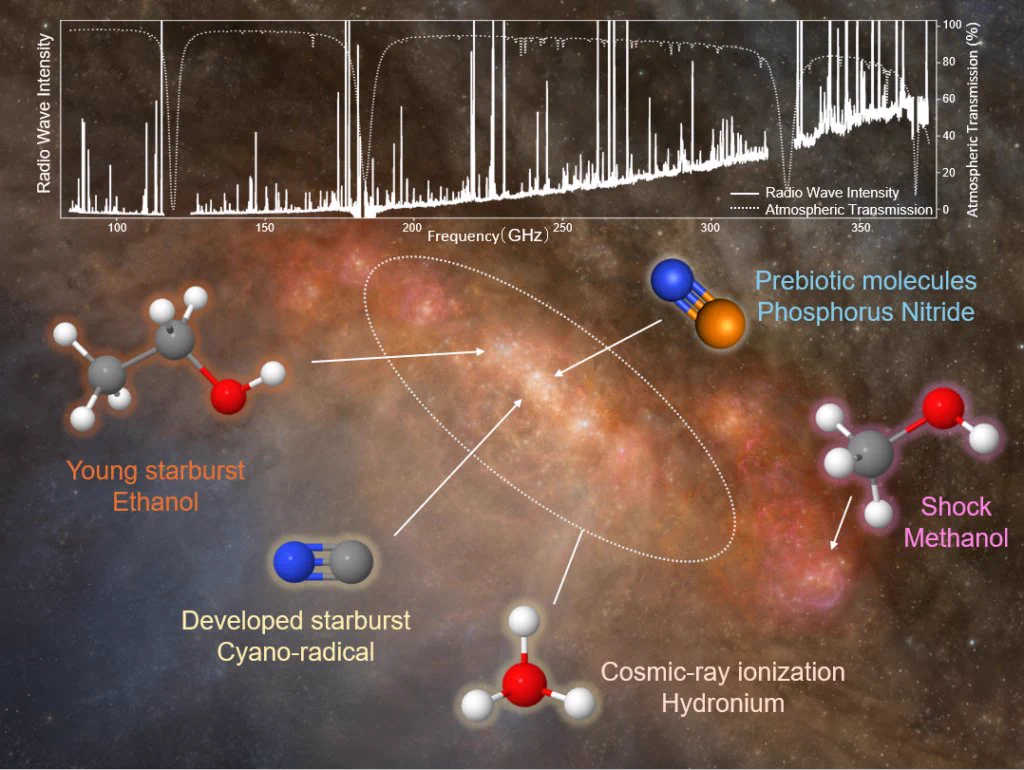
    Radio #ImageoftheWeek Meet NGC 253, aka the Sculptor Galaxy! 🌌 At ~11.5 million light-years from Earth, it is one of the closest starburst galaxies to the Milky Way. Starburst galaxies transmute gas into new stars up to 1,000 times faster than typical spiral galaxies! More ⤵️
    Science image of starburst galaxy NGC 253, as observed by ALMA. A red region represents the lower density carbon monoxide (CO) gas surrounding higher density star-forming regions (stellar nurseries) in yellow.
    A grid of 9 images of  starburst galaxy NGC 253 with different colors representing different molecular species. In order: molecular gas (blue), shocked regions (red), relatively high-density regions (orange), young starbursts (yellow), developed starbursts (magenta), and molecular gas affected by cosmic-ray ionization (cyan).
    Schematic image of the center of starburst galaxy NGC 253. At the top, a graph of radio wave intensity. Various locations are labeled with the corresponding tracer molecular species.
    2
  • @TheNRAO
    National Radio Astronomy Observatory | NSF NRAO
    @TheNRAO
    Oct 8
    #ThrowbackThursday Did you know that the Very Large Array helped with NASA’s Voyager 2 mission? 🛰️ The VLA was used with Jet Propulsion Laboratory’s Deep Space Network in Goldstone CA to track NASA’s Voyager 2 encounter with Neptune in 1989.
    Black and white drawing of two men with testing equipment. Text says: Tracking "Voyager" NRAO/VLA and JPL Venture, November 1985.
    1
  • @TheNRAO
    National Radio Astronomy Observatory | NSF NRAO
    @TheNRAO
    Oct 7
    NEW ➡️ Cosmic Cocktail: Exotic Methanol Discovered in Planet-Building Zones New results from COMPASS! A major survey of young stars by @almaobs has spotted a rare form of heavy methanol - the first time this molecule has been detected in space.
    public.nrao.edu
    Cosmic Cocktail: Exotic Methanol Discovered in Planet-Building Zones
    The latest news from the NSF's National Radio Astronomy Observatory.
  • @TheNRAO
    National Radio Astronomy Observatory | NSF NRAO
    @TheNRAO
    Oct 6
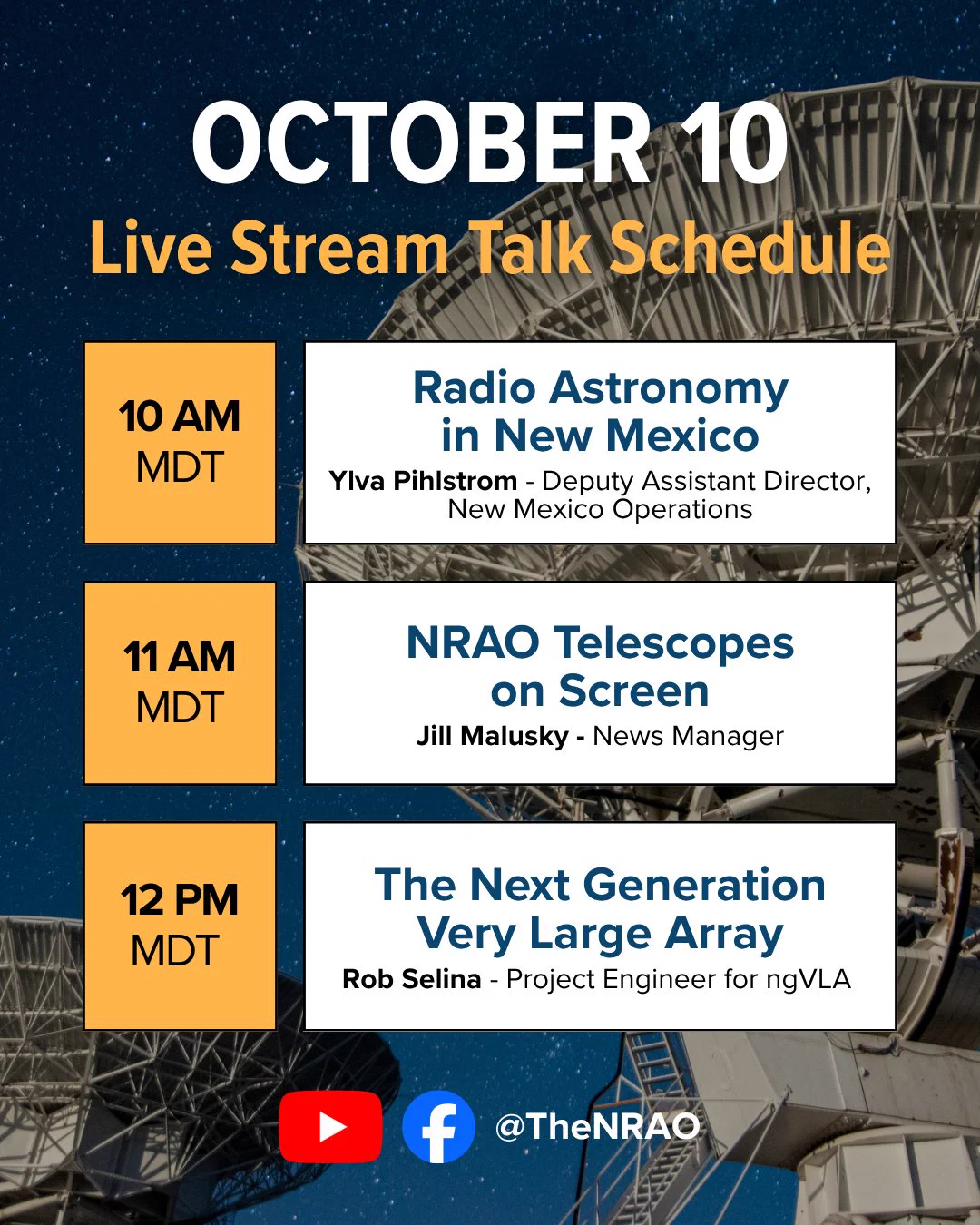
    In lieu of the in-person VLA Open House (which was canceled due to road damage from flooding) the planned talks will be livestreamed with Q&A on NRAO’s YouTube Channel and Facebook Page. 🗓️ Saturday, October 10 ⤵️
    Promotional graphic for NRAO's October 10 livestream talk schedule. Background: VLA telescopes at night. Text says: 10 AM MDT - Ylva Pihlstrom, Deputy Assistant Director, New Mexico Operations – “Radio Astronomy in New Mexico."  11 AM MDT - Jill Malusky, News Manager – “NRAO Telescopes On Screen.” 12 PM MDT - Rob Selina, Project Engineer for ngVLA – "The next generation Very Large Array."
    1